Trump and Congress are slow to regulate AI despite tech CEOs’ calls

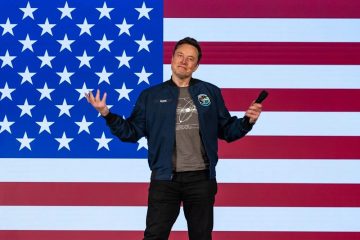
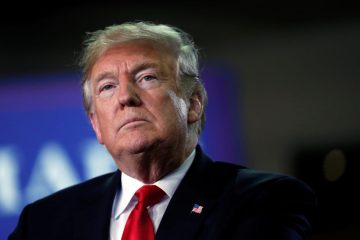
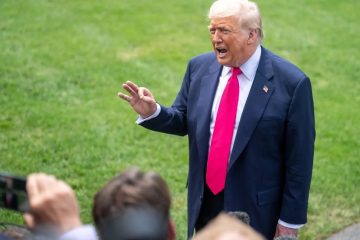
A new test of the federal government’s readiness and capacity to address what might turn out to be a pivotal issue of the moment is being presented by the technology industry’s increasingly urgent warnings about the possible harm of artificial intelligence, which are colliding with political intransigence in Washington. President Donald Trump is at the forefront of the resistance against recent appeals from technology executives for increased governmental regulation, including those from Anthropic’s Dario Amodei, OpenAI’s Sam Altman, and xAI’s Elon Musk. The president characterised the attempts to restrict the technology on Monday as a “conspiracy.” Other prominent Republicans, including Vise President JD Vance, have articulated a sense of caution. House Speaker Mike Johnson has predominantly yielded to the White House. Democrats are advocating for a more vigorous response, gathering privately on Tuesday in the House to deliberate on AI. Senator Bernie Sanders, I-Vt., is convening his colleagues for a briefing with experts on Wednesday. Leading contenders on this year’s ballot, including Sen. Jon Ossoff of Georgia, are advocating for comprehensive measures in Washington. Former President Barack Obama is urging individuals with ambitions for the White House to formulate a “very clear plan” to tackle concerns surrounding AI.
The contrasting responses illustrate a significant disconnect emerging between a tech sector warning of AI’s existential threats to humanity and a federal government often struggling to accomplish basic functions under the weight of intense partisanship and election-year pressure. “The signals we’re receiving from our political leaders are not representing an understanding of the crisis that I think we are in fact in,” said Max Stier. “Delay is going to prove very costly.” There are notable exceptions to the partisan divide. A Washington AI conference on Tuesday will feature speakers including Sanders and Trump ally Steve Bannon. Sen. Josh Hawley, R-Mo., opened an investigation last week into OpenAI for its artificial intelligence system hacking into another AI company on its own. Congress and the White House have demonstrated an ability to respond promptly to previous crises, and the escalating debate surrounding AI is presenting a new test of whether they can replicate that responsiveness. During Trump’s first term, his administration collaborated with Democrats who held congressional power to stabilise the economy while federal agencies focused on developing a vaccine to address the COVID-19 pandemic. As the economy faced potential collapse in 2007 and 2008, President George W. Bush’s Republican administration collaborated with congressional Democrats to infuse capital into the financial system.
However, Congress has historically shown hesitance in imposing regulations on the technology sector. The Biden administration urged lawmakers to formulate policies following a 2023 executive order concerning AI oversight, which was promptly revoked by Trump upon his return to office. As technology has advanced swiftly, Congress has abstained from implementing regulations or providing funding to facilitate individuals’ adaptation to the potential transformations brought about by AI. A bipartisan working group on artificial intelligence, established by then-Senate Majority Leader Chuck Schumer, published a report in 2024 advocating for a minimum expenditure of $32 billion by the U.S. over the next three years to advance artificial intelligence and to introduce necessary safeguards surrounding its use. However, there was minimal subsequent engagement. In a similar vein, a bipartisan initiative aimed at enhancing internet safety for children has encountered persistent delays. “We never do anything until we have a holy heck moment,” said Sen. Mark Warner. Lawmakers across the political spectrum concur that additional safeguards are necessary; however, even limited efforts at regulation have disintegrated, leading to a prevailing sense of scepticism. “Have we gotten election security done?” asked Sen. Rick Scott, R-Fla. “Did we balance a budget? Oh, did we pass a budget? See, what have we gotten done? So you think we’re going to get AI done?” Ossoff cast the AI debate as an example of Washington’s inability to tackle anything big. “What fills us with dread is the crushing weakness of our politics against the massive stakes of our times,” he said during a Sunday reelection rally in Athens, Georgia.
There are indications of a revived sense of urgency. Following the tech leaders’ call for increased oversight on Saturday, Senate Majority Leader John Thune, R-S.D., reported that he engaged in discussions that evening with Sen. Amy Klobuchar, D-Minn., regarding a “path forward” on the legislation they are collaborating on. “You don’t want to stifle innovation, but I think you also want to make sure that the more advanced threats can be mitigated and there’s a capability and place to do that,” he said. “I also think,” he added, “that there is a way in which Congress can put guardrails around those types of more consequential threats without, in any way, harming our ability to stay ahead in the AI race.” Sen. John Kennedy, R-La., said he plans to offer a so-called kill switch measure on Wednesday that would require developers to have the capacity to shut down their systems if needed. It would need the Senate’s full support to advance. “AI is becoming an issue, particularly in the last few days,” he said. However, with a limited timeframe approaching the November election, any swift progress on legislation appears improbable. In the House, Johnson appeared pessimistic regarding the likelihood of a legislative response, instead urging Trump to convene AI leaders for a meeting to address concerns. “The reflex of legislative bodies is to cover things up with red tape and hyper regulation,” he said.
Any forthcoming legislation would necessitate Trump’s backing, which currently seems improbable. “All I can tell you is my own perspective on this,” said Hawley, who has introduced bipartisan legislation requiring federal tracking of AI safety concerns tied to national security, civil liberties and labor protections. “We need to protect working people. We need to protect kids online. We need to protect folks who are threatened by data centers.” And “We also need to make sure,” he added, “these frontier models are not going to blow up the internet and/or the world.” For veterans of past crises, the congressional inertia is baffling. “Earth to Washington: You’re pushing an open door,” Rahm Emanuel, Obama’s chief of staff in the wake of the financial crisis and a potential 2028 presidential candidate, said in an interview. “In my entire time of public service, I’ve never had an industry or a CEO ask for regulation and oversight.” Rep. Don Beyer, a Virginia Democrat who is a leader in the Congressional Artificial Intelligence Caucus, said Congress is “capable” of passing stronger AI rules. He said he thinks there’s sufficient support for multiple bills, including a bipartisan measure that would establish guardrails for AI models and another that includes the kill switch provision. “It’s very much a leadership issue,” Beyer said as the House is poised to adjourn at the end of the week and not return until after the elections.