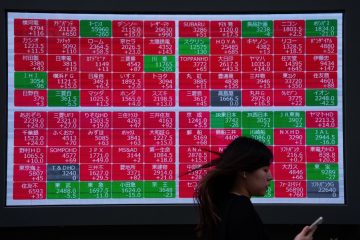
Asian Stocks Dip as Oil Soars Past $100
Asian stocks experienced a decline on Thursday, driven by a significant surge in attacks on shipping amid the escalating conflict in the Middle East. This situation has sustained oil prices above $100 a barrel, contributing to investor anxiety as they await US inflation data that is poised to impact monetary policy decisions. Benchmark 10-year US Treasury yields remained unchanged at 4.8406 percent after reaching their highest level since 2023 in the prior session. This stability followed the Treasury Department’s announcement of a $6 billion buyback of longer-dated bonds, which fell short of the expectations of some investors who were hoping for a larger amount. Brent crude futures increased to $101.4 per barrel in early trading, having surpassed the significant $100 threshold on Wednesday for the first time since July as traders navigated the implications of inflationary pressure. “I think that Brent pushing through the $100 level will be seen by many in the market as a significant event in the current scheme of things,” said Nick Twidale.
“This move now may convince some market participants that may have been holding fire on certain positions, with hopes of a peace deal in the Middle East, to now hit the trigger as the realities of a longer conflict kick in.” MSCI’s broadest index of Asia-Pacific shares outside Japan experienced a decline of 1 percent. Japan’s Nikkei and South Korea’s KOSPI experienced a decline exceeding 1 percent. “Markets are facing a cocktail of headwinds in September which has historically not been the best seasonal month for stock markets,” said Vasu Menon. There has also been an escalation in fighting between Saudi Arabia and the Houthis in Yemen, a second theatre of war that threatens global energy supplies from the Middle East as the six-month conflict shows no signs of easing.
Higher oil prices and elevated bond yields have impacted investor sentiment, preparing the ground for the upcoming series of central bank meetings. The euro remained relatively stable at $1.16322 in anticipation of the European Central Bank’s policy decision, which is expected to result in an increase in interest rates. Market attention is expected to center on remarks from policymakers to assess potential future actions. The Federal Reserve and the Bank of Japan are scheduled to convene next week. US producer price and consumer price inflation reports are scheduled for release later on Thursday and Friday, respectively. Analysts indicate that this data will be crucial in determining whether the Federal Reserve will raise interest rates during its meeting on September 15 to 16. Traders in Fed funds futures are assigning approximately a 60 percent probability to a rate increase in the upcoming week.
“The bond market is under pressure as oil prices reignite inflation fears. But it’s not just oil we should be watching,” said Prashant Newnaha. “Agricultural commodities are now breaking out and they are likely to lift food’s contribution to CPI in coming months. At a minimum the stage is set for headline CPI remaining elevated until early 2027.” The BOJ is widely anticipated to increase interest rates, and analysts assert that the communication from officials must adopt a hawkish tone to maintain the recent yen rally. The Japanese yen stood at 153.63 per US dollar, reflecting a 4 per cent appreciation in September. The sharp rise has been driven by heightened expectations of faster BOJ rate hikes, traders exiting short positions in the Japanese currency, and early signs of a potential rush of repatriation of Japanese capital. “Failure to deliver a hike, alongside clearer signals of a faster pace of tightening next week, will likely trigger a sharp renewed weakening of the yen,” said Carol Kong.