Samsung’s fortune soars to $45 billion in a year thanks to AI surge
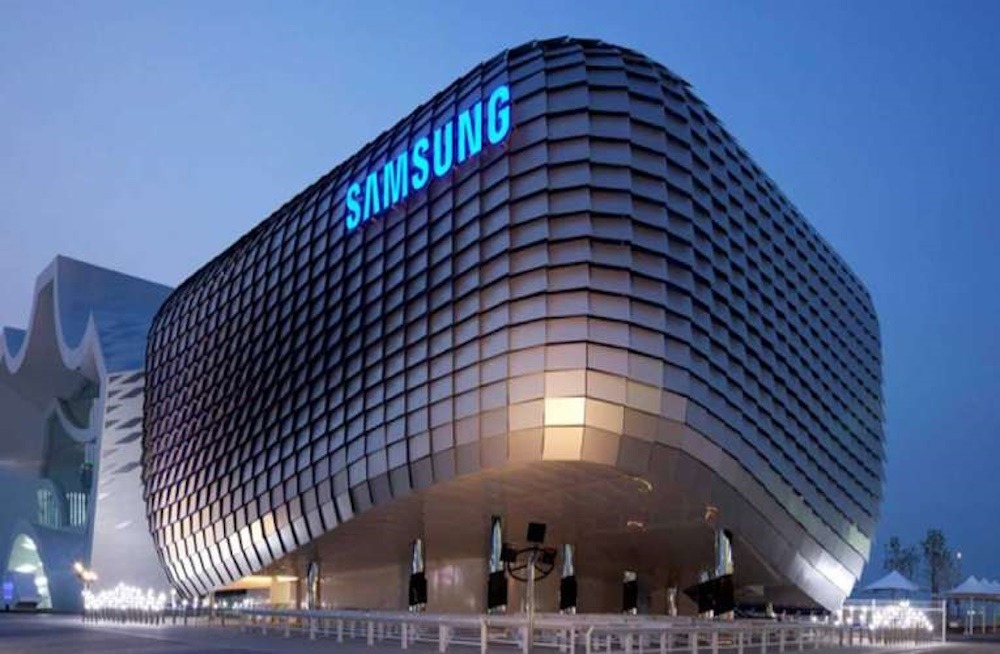
Upon the passing of Lee Kun-hee, the patriarch of Samsung Electronics Co. in 2020, his dynasty was confronted with a dual crisis: primarily, a multi-billion-dollar inheritance tax. In the subsequent year, his son Jay Y. Lee faced imprisonment following a conviction for bribing South Korea’s former President Park Geun-hye to secure backing for his succession. At that moment, certain analysts conjectured that the immense magnitude of one of the globe’s largest death levies might jeopardize the family’s dominance over the conglomerate. More than five years later, an AI-driven increase in semiconductor valuations has enabled the family to solidify its influence and amass greater wealth than ever before. The Lees’ total wealth increased to approximately $45.5 billion as of March, up from around $20.1 billion the previous year, as reported. Their ascent has positioned them as Asia’s third-richest family, a notable rise from the 10th place they held the previous year. The heirs are poised to finalize the last payment of their 12 trillion won inheritance tax this month, concluding nearly five years of financial obligations. A representative from the National Tax Service refrained from providing any comments. Samsung stands as the largest among South Korea’s family-controlled conglomerates, referred to as chaebol, alongside SK Group and Hyundai Motor Group.
Jay Y. Lee, who previously avoided public attention amid the turmoil of his sentencing, has reemerged. Last week, he was featured in a selfie alongside the nation’s President Lee Jae Myung and India’s Prime Minister Narendra Modi during a visit to New Delhi. In the preceding year, he participated in presidential visits to India, Vietnam, China, the United Arab Emirates, and the United States. In October, images surfaced of him enjoying beer and fried chicken alongside another of the world’s wealthiest tech magnates, Nvidia Corp. CEO Jensen Huang, which quickly gained widespread attention. The financial resurgence of the family underscores a wider disjunction in the market rally observed in South Korea. President Lee has prioritized the reduction of the “Korea Discount” and the enhancement of transparency within chaebol as key components of his electoral platform. Anticipations regarding reforms aimed at benefiting minority investors have propelled Seoul’s stock market to emerge as the top performer globally over the past year. Nonetheless, detractors argue that more profound reforms are essential to bridge the disparity with international counterparts. According to a report, Samsung is perceived as “behind the curve” in comparison to other major local groups regarding the implementation of value-up plans for investors. “At least for the near future, I don’t believe the controlling family, the Lee family, has any incentive,” to do more about improving corporate governance, stated Sangin Park. “The stock price experienced a significant increase, resulting in considerable satisfaction among shareholders,” Park stated.
In the long term, this suggests that Korea could forfeit a significant opportunity for meaningful reforms in corporate governance, as noted by the academic. A spokesperson for Samsung Electronics stated in an e-mailed response that the company is unable to comment on issues concerning the personal wealth of family members. The spokesperson indicated that the company is dedicated to improving shareholder value through mid-to-long-term return strategies. According to the email, Samsung intends to allocate more than 110 trillion won towards facilities, research, and development this year, aiming to strengthen its foothold in the AI semiconductor sector. Samsung’s economic influence has persisted in its expansion in tandem with the robust market rally. The aggregate revenue of seven prominent Samsung affiliates, including Samsung Electronics, constituted 19.3% of South Korea’s gross domestic product in 2025, an increase from 15.1% a decade prior, as per Bloomberg calculations. Samsung Electronics, representing approximately a quarter of the nation’s benchmark Kospi Index, experienced a remarkable surge of 126% last year, marking its most impressive annual performance in over twenty years. Investment in AI infrastructure is propelling an extraordinary semiconductor supercycle, with demand for AI memory chips anticipated to continue its ascent in 2026, as stated by Samsung Electronics co-Chief Executive Officer Jun Young-hyun during last month’s annual general meeting.
The company is set to announce its earnings for the March quarter on Thursday, following indications of a record preliminary operating profit, driven by increased orders from customers, particularly cloud service providers, for high-bandwidth memory and other chips utilized in data centers. The Lee family has successfully navigated the financial landscape, thereby avoiding the need to liquidate additional shares to settle inheritance tax obligations. According to the report, Jay Y.’s personal wealth has experienced a significant increase, reaching $26.9 billion over the past year. He surpassed finance tycoon Cho Jung-ho to reclaim the title of South Korea’s richest individual, a distinction he had relinquished the previous year. In 2022, the heir of Samsung obtained a presidential pardon regarding graft charges, enabling him to officially lead the conglomerate established by his grandfather in 1938. At the core of President Lee’s reform is a fundamental transition from managing family interests to governance that prioritizes shareholders. The parliament ratified the conclusive amendments to the Commercial Act in February, mandating that companies eliminate treasury shares that have historically been utilized by chaebols to reinforce their control. Many chaebol have yet to implement change, stated Lee Chang Hwan, chief executive officer of activist investor Align Partners Capital Management in Seoul. “What truly needs to occur is that management and the board of these companies take proactive steps to enhance or optimize shareholder value,” he added.
Indeed, Samsung units have been making strides in that direction. In 2018, the company made the strategic decision to delineate the responsibilities of the chairman of the board from those of the CEO. By 2020, it took a significant step by appointing an independent board director as chairman for the first time, as stated by a company spokesperson. The board now comprises a majority of independent directors. In light of calls for enhanced transparency and to mitigate excessive growth, Samsung Group has restructured its corporate framework, decreasing its total affiliates to 63, which is fewer than certain competitors, as reported by Korea’s Fair Trade Commission. The semiconductor and smartphone manufacturer distributed a special payout of 1.3 trillion won to shareholders last year, in addition to its regular dividends. The firm also canceled shares valued at over 14 trillion won in April, as stated by a spokesperson. Within the Lee family, strategies have differed regarding the repayment of the death levy. Lee Boo-jin and Lee Seo-hyun, siblings of Jay, along with their mother Hong Ra-hee, have engaged in block sales of shares in recent years. In contrast, Jay Y. Lee utilized loans that were backed by shares and various other assets. According to Jung In Yun, numerous controlling shareholders in Asia prioritize maintaining voting power rather than focusing on short-term liquidity. “A key long-term question is whether the next generation will be able to maintain control of Samsung under Korea’s high inheritance tax regime,” Yun stated.