Hyundai Unveils 100-Model Plan to Challenge Global Rivals
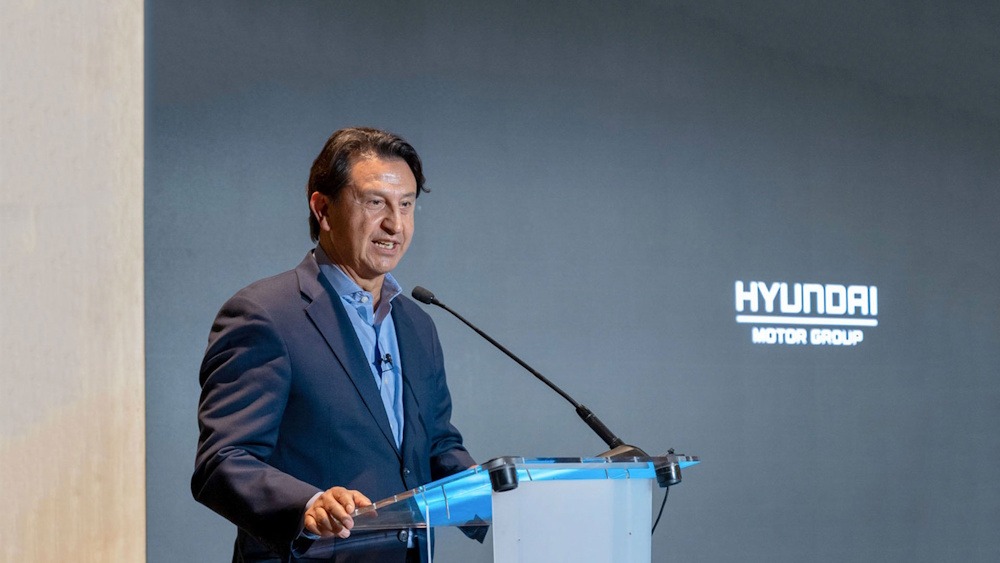
Hyundai Motor Co. Chief Executive Officer José Muñoz has announced an unprecedented product initiative, detailing over 100 model launches and updates aimed at competing with Toyota Motor Corp. in the burgeoning US hybrid market while also countering the threat posed by low-cost Chinese competitors globally. The plan, unveiled during Hyundai’s CEO Investor Day in Seoul on Wednesday, will enable South Korea’s largest automaker to penetrate 18 new segments, encompassing a midsize pickup, light commercial vehicles and body-on-frame vehicles. In total, 58 of the newly introduced and updated models will be designated for the United States, which represents Hyundai’s largest market. Meanwhile, 41 models will be rolled out in Europe, 26 in India, and 22 in China, with certain overlaps across regions. The lineup overhaul reflects Hyundai’s strategic initiative to diversify its powertrain offerings, aiming to balance electric vehicles with an expanded array of hybrids and extended-range electric vehicles, in response to the softening global demand for pure EVs.
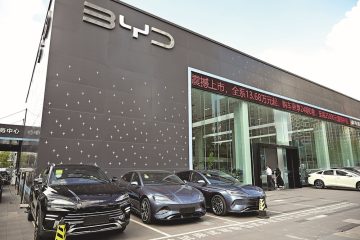
Expanding the variety of hybrids available in the US is likely to safeguard market share, as consumers increasingly gravitate toward gas-electric vehicles in response to elevated fuel prices. In the global landscape, it must counter competition from Chinese electric vehicle manufacturers like BYD Co. and Geely Automobile Holdings Ltd., which are inundating markets across South America, Southeast Asia, and Europe with competitively priced vehicles. Of the 100 planned models, seven are set to debut in the upcoming eight months. This lineup includes an all-new Tucson midsize sport utility vehicle and its hybrid variant, an all-new Ioniq 3 compact electric vehicle, as well as the inaugural Santa Fe extended-range electric vehicle. The latter aims for a total range exceeding 600 miles (966 kilometres) and is powered by a new battery technology that offers a 40% faster charging capability compared to earlier models. It will be constructed at the company’s facility in Alabama. Hyundai intends to increase its global production capacity by approximately 1.3 million units by 2030. This expansion includes 500,000 units in North America, 320,000 units in India, which serves as a crucial manufacturing center, and 200,000 units in Korea.
In North America, it anticipates providing over 10 hybrid models by 2030, with hybrids projected to represent nearly half of regional sales, while increasing local parts sourcing to 80% from the current 60%. That will assist in mitigating the effects of President Donald Trump’s auto tariffs. The luxury Genesis brand is set to launch its inaugural hybrid model, the GV80 SUV, alongside its first extended-range electric vehicle early next year, aiming for a target range exceeding 640 miles. Genesis intends to elevate its annual sales to 350,000 vehicles by the year 2030. Hyundai has confirmed the opening of the Robot Metaplant Application Center at its Georgia plant in June, where the Atlas humanoid robot, developed by its Boston Dynamics unit, is trained and analysed. The facility is set to expand tenfold by the end of the year, accumulating over 10,000 hours of robot learning data.
This expansion precedes a planned production start in 2028, targeting an annual capacity of 30,000 units. Hyundai and its affiliate Kia Corp. have utilised prior Investor Days, conducted in both the US and India, to delineate their mid-to-long-term product strategies and future technology roadmaps, encompassing autonomous driving and robotics. At the previous year’s Investor Day, Hyundai unveiled its strategy to introduce 18 hybrid models by the year 2030. At its event in April, Kia announced plans to introduce eight hybrid models in the US by 2030, which will include a midsize truck. The company also stated it will start utilising humanoid robots in its US plants from 2029 and aims to complete its first software-defined vehicle by the end of 2027. Wednesday’s event occurs as Hyundai recalibrates production capacity at its core manufacturing hubs, including its Georgia facility, which was initially designed to build EVs. This adjustment aims to ensure the company can pivot between electric and hybrid variants in response to market conditions and trade environments.