US Tightens AI Chip Export Rules to Block Chinese Data Center Access
The United States on Monday implemented new restrictions aimed at preventing Chinese companies from obtaining advanced artificial intelligence chips via data centers situated in other nations. The decision arises in response to increasing apprehensions in Washington regarding the circumvention of current export controls via foreign computing facilities, as indicated by a report. The new regulations, promulgated by the Bureau of Industry and Security of the US Commerce Department, mandate that firms in Singapore, Thailand, Malaysia, Indonesia, and Brazil secure US export licenses for advanced semiconductors. The department identified these countries as having a heightened risk of such chips being illegally diverted to China, according to the report. The regulations also focus on overseas data centers that supply substantial computing capacity remotely to firms in nations subject to US chip restrictions, including China. The new rules are set to come into effect on November 19. “The rule is designed to ensure that existing restrictions on access to sensitive American technology cannot be circumvented through remote computing arrangements involving data centres in third countries,” BIS said in a statement.
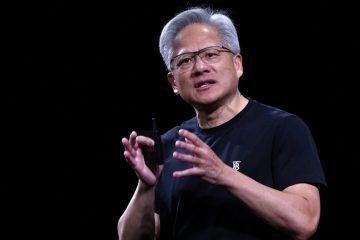
The latest move follows reports indicating that the Commerce Department was unable to prevent the illicit transfer of advanced Nvidia AI chips into China. Concerns have arisen regarding Chinese companies utilising data centers in nations like Singapore to gain access to computing power that would otherwise be inaccessible to them directly. Since Washington introduced export controls on advanced chips to China in October 2022, data centers in Southeast Asia have increasingly leased computing capacity to Chinese clients. This enables Chinese firms to operate AI models on servers situated beyond the borders of mainland China, according to the report. The report, referencing data from the US-based think tank Institute for Progress, indicates that remote access may constitute a quarter of China’s total AI computing capacity by the conclusion of 2026. The share could increase to one-third by the end of 2027. The issue has garnered increased scrutiny in light of allegations concerning former Nvidia Chief Executive Officer Jensen Huang and the potential diversion of advanced chips to China.
Huang has consistently maintained that permitting Nvidia to increase its chip sales in China would yield advantages for the United States. However, reports linking him to alleged Chinese spy Alice Huang, a former executive at Singapore-based data center company Megaspeed, have raised questions about whether Nvidia’s advanced processors reached China through illegal exports or remote access arrangements in Southeast Asia, according to the report. US Commerce Secretary Howard Lutnick has encountered scrutiny regarding the department’s choice to exclude Megaspeed from the Entity List, which serves as the US government’s trade blacklist. The company is under suspicion for allegedly facilitating the diversion of Nvidia chips to China. Will DePue stated in a post on X last week that his research indicated Chinese companies DeepSeek, Moonshot, Minimax, and Ant Group had developed their latest AI models utilising Nvidia’s advanced Blackwell chips. These processors are presently prohibited from being exported to China.
Apart from access to advanced chips, Chinese AI companies are also apprehensive that Washington might impose restrictions or outright bans on Chinese open-weight and open-source AI models. A source at a prominent Chinese AI laboratory informed Nikkei Asia that developers express concerns regarding such a move. US policymakers have engaged in discussions regarding the potential restriction of Chinese AI models, citing national security concerns, particularly following the launch of Moonshot’s Kimi K3 model in July. The model represented a significant advancement in bridging the divide between open-weight AI systems and the dominant proprietary models created by firms like Anthropic and OpenAI, all while providing services at a considerably reduced cost. Huang has emerged as a leading advocate against limitations imposed on open-weight models. Nvidia has signed open letters urging Washington not to impose such curbs and has supported industry efforts to promote open-source AI, according to the report.
Chinese open-weight models have garnered significant interest from US businesses, especially small and medium-sized enterprises, due to their cost-effectiveness. Despite Nvidia’s loss of access to China’s domestic chip market, the company may still gain advantages from the increasing adoption of Chinese AI models within the United States. Businesses implementing these models will persist in requiring computing infrastructure. Completely eliminating Chinese AI models from the internet presents significant challenges. According to a Chinese AI lab source, US lawmakers might make it illegal to download and deploy these models, potentially discouraging their use, the report stated. Chinese firms are increasingly turning to local semiconductor solutions. DeepSeek is leading the charge in this transition. Huawei’s Ascend 950 chips will power the training of the next-gen V5 model, set for 2027, according to reports. Many major Chinese tech firms still rely on Nvidia’s CUDA software for AI model training.