Australia’s $70 Billion AI Data Center Investment Faces Backlash
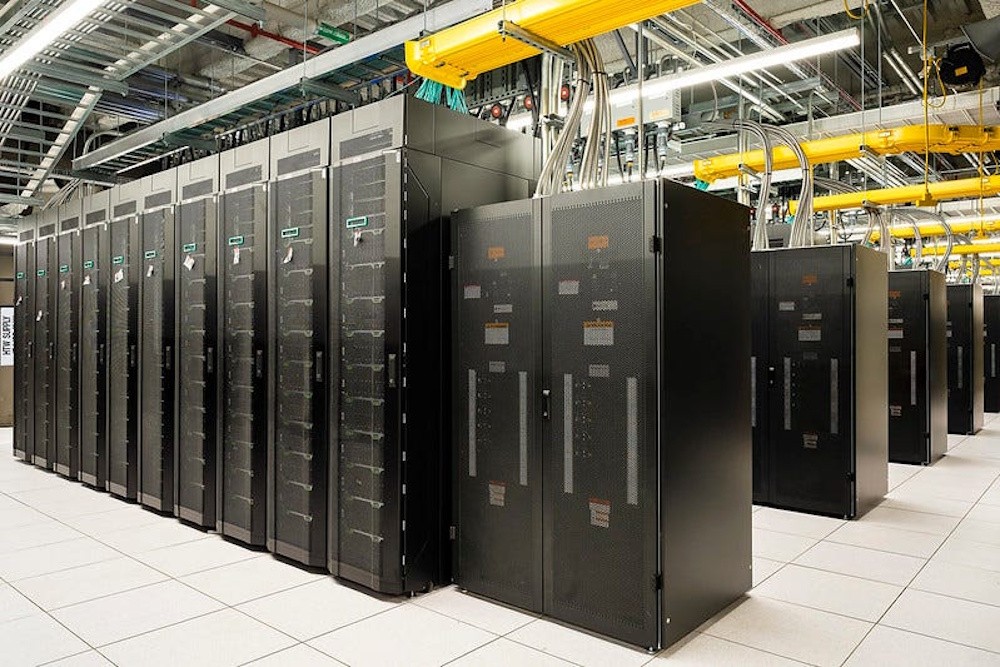
Over three-quarters of data centers planned for construction in Australia’s major urban centers face challenges due to strained power grids and community resistance, jeopardising the nation’s goal of establishing itself as an artificial intelligence center for the Asia Pacific region. Among the more than 40 large centers either planned or under construction in Sydney and Melbourne, which collectively signify over A$100 billion of anticipated investment, only 23% have publicly confirmed the acquisition of electricity supply or grid connections, as per a review of company disclosures. Those agreements, serving as an indicator of project progression, imply considerable setbacks and possible delays. Australia has made significant investments in a data-center boom aimed at leveraging its expansive landscapes and potential for clean energy. To date, however, the majority of the project pipeline is concentrated in Sydney and Melbourne, where nearly 40% of the population resides, aiming to leverage established fibre networks and dependable power sources. Those operations exert additional pressure on infrastructure that is already under strain, placing developers in direct conflict with residents. In Sydney, seven out of 28 active projects have confirmed power, as indicated by analysis. In Melbourne, the proportion decreases to three out of 15. Source reached out to 25 developers to confirm public disclosures regarding power supply and to assess the status of over 40 projects.
Operator GreenSquare refrained from providing details regarding its power arrangements, stating instead that it is “working closely with relevant authorities and infrastructure partners to support long-term operational performance.” CDC Data Centers stated it had “robust delivery plans in place for all sites currently under construction” with power delivery timelines as anticipated. The repercussions of friction and delays are already evident. Operator Nextdc Ltd reduced its profit forecast this week following the obstruction by Melbourne residents of the installation of towering transmission lines, resulting in a nearly 50% decline in the value of its shares. In Sydney, Goodman Group has decided to discontinue its A$1.2 billion Project Mars development as of last month. The proposed 90-megawatt facility was set to be constructed approximately 20 meters from the nearest residence and 160 meters from a public school, leading to the submission of hundreds of objections throughout the planning process. “Social license for Australian data centers is becoming an increasingly significant headwind,” analyst Nick Harris wrote this week. “Investors are becoming concerned more delays could occur and question what the knock-on effect might be.” The disparity between declared projects and those that will materialise is also starting to become evident in official statistics. According to the Australian Energy Market Operator, more than one-third of the proposed data centers intended to connect to Australia’s primary grid were cancelled last year.
One aspect of the problem lies in the immense scale of the construction effort. The country boasts over 20 gigawatts of capacity in announced and early-stage data center projects, juxtaposed with an operational fleet of merely 1.5 gigawatts, as reported by source. “Access to energy is already a major issue,” said analyst Tushna Mehta. “Data center capacity is being built much faster than the new generation needed to supply it.” These hurdles are prompting enquiries regarding the government’s initiative to position Australia as a central hub for the broader region, attracting investors and aiming to simplify approval processes despite ongoing practical limitations. While land availability may be abundant, the establishment of data centers necessitates proximity to high-voltage electricity lines and requisite infrastructure. Expanding beyond major urban centers presents certain benefits; however, it necessitates substantial capital outlay for the development of new transmission infrastructure and telecommunications systems.
Sydney’s electricity grid is currently facing challenges in managing the demands associated with the significant growth in consumption. Transgrid, the operator of the statewide power network, indicated in August that the city lacks sufficient transmission capacity to accommodate any of the 20 gigawatts of enquiries it has received from significant new power users. Transgrid reported that half of the proposed demand has arisen within a 12-kilometer radius of its Sydney West substation, which is comparable to the peak winter electricity load of the entire state of New South Wales, concentrated in a relatively small area. That strain is anticipated to escalate, and rapidly. Australia currently boasts over 160 operational data centers, primarily located in Sydney and Melbourne, which account for approximately 2% of the electricity supplied by the nation’s grids. AEMO has projected this could rise by a quarter each year to roughly 6% by 2030, and 13% by 2036. Another obstacle is the availability of water resources.
Analysis commissioned by the industry estimates Australian data centers consume approximately 5.5 gigalitres of water annually, primarily for cooling purposes, representing about 0.04% of the nation’s total consumption. However, the local impact may be significantly amplified when projects are aggregated, particularly in growth corridors that are already experiencing strain from drought conditions. Residents residing in proximity to Nextdc’s facility in Melbourne’s West Footscray – in some instances, as close as 15 meters – expressed to a parliamentary inquiry last month their desire for compensation due to concerns regarding noise, pollution, and potential fire hazards. “What we are seeing is rising public resistance to AI, particularly generative AI,” said Bronwyn Cumbo. “Many are planned to be built near homes, schools, farmland and natural areas, and alter the experience and livability of these places.”