AI Data Center Costs: The Hidden Debt of Tech Giants
The competition to lead in artificial intelligence is presenting a fresh financial hurdle for several of the largest technology firms globally. A study estimates that the combined off-balance-sheet, or “hidden”, debt of Alphabet, Microsoft, Amazon, Meta, and Oracle has surged eightfold in approximately four years to roughly $1.65 trillion. This is now higher than the roughly $1.35 trillion of debt shown on their balance sheets, complicating the ability for investors to accurately assess their true financial exposure. The figures may rise further as Alphabet, Microsoft, Amazon, and Meta are set to report their latest quarterly earnings this week. Hidden debt refers to financial commitments that are not directly visible on a company’s balance sheet but are instead revealed in the notes accompanying its financial statements. These commitments are legally binding and permissible under accounting regulations. However, they can complicate the ability of investors, particularly retail investors, to assess the extent of companies’ future spending commitments. In the context of AI companies, a significant portion of this concealed debt arises from long-term contracts for leasing data centers or procuring costly graphics processing units, servers, and other computing apparatus that have yet to be delivered or become operational. Given that these assets are currently in the development phase or have yet to be utilised, the associated commitments will continue to be recorded off the balance sheet until specific accounting criteria are satisfied.
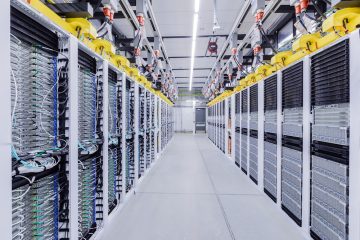
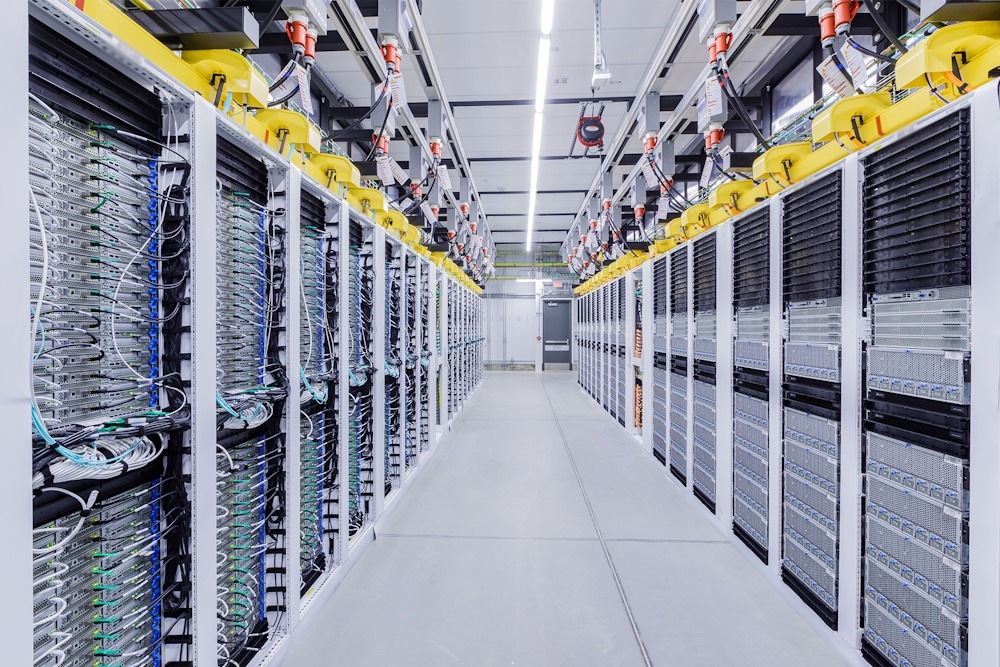
Technology companies are investing significantly to enhance AI capabilities through the construction of data centres and the acquisition of advanced graphics processing units, servers, and other computing equipment. Rather than acquiring ownership of numerous facilities, firms frequently engage in long-term lease contracts with data centre operators. In numerous instances, the operators supply the land, buildings, and power infrastructure, whereas the technology firms pledge to utilise these resources over an extended period. Given that these projects are currently in the development phase, a significant portion of the associated lease obligations continues to be excluded from the balance sheet until the facilities reach operational status. Among the five companies, Meta has the largest estimated hidden debt at approximately $420 billion, which is nearly three times its reported debt. Oracle has experienced one of the swiftest escalations. Its concealed liabilities amounted to approximately $273.3 billion by the conclusion of May, exceeding 30 times the level recorded four years prior. The company is broadening its substantial Stargate AI data centre initiative in collaboration with OpenAI by establishing long-term leasing agreements with external data centre operators. Although these commitments adhere to accounting standards, a growing number of investors and analysts are exercising increased caution, according to the report. Morgan Stanley has analysed the increasing off-balance-sheet obligations in a report for investors, while Moody’s has cautioned that lease commitments for projects that have yet to commence are escalating swiftly. The companies contend that anticipated earnings from AI and cloud computing will validate these investments. By the end of March, Microsoft, Alphabet, and Amazon had a combined cloud services order backlog of approximately $1.45 trillion, offering insight into prospective revenue streams.
Institutional investors are increasingly assuming a significant role in the financing of AI infrastructure. Meta has established a joint venture with investment funds overseen by Blue Owl Capital to construct a substantial data centre in Louisiana. The project was initially valued at $27 billion in 2025; however, Meta has since indicated that its total investment is anticipated to surpass $50 billion. Meta holds a minority interest in the operating company and is leasing the facility, which enables it to obtain computing capacity without immediately reflecting the entire financial obligation as debt. The agreement also encompasses safeguards for investors in the event that the project is deemed unnecessary and the lease is subsequently terminated. Numerous technology firms are currently securing capital via corporate bonds and equity offerings, as investments in AI are surpassing their earnings. The additional use of institutional funding has raised concerns that spending on AI infrastructure may be growing too quickly, as reported by a source. Economists at the Bank for International Settlements characterised this approach as “shadow borrowing,” wherein companies augment financial commitments without directly increasing debt on their balance sheets. Experts cautioned that should AI demand decelerate or data centres continue to operate below capacity, firms may encounter significant losses as these liabilities transition onto their balance sheets.
Notwithstanding these apprehensions, worldwide expenditure on AI persists in its upward trajectory. According to SenseAI Ventures’ ‘State of AI Report 2026’, global AI investment reached $800 billion in 2025. Venture capital funding nearly doubled to $226 billion, indicating a shift in the industry from experimentation to large-scale commercial deployment. The report indicated that 79 percent of AI funding originated from mega-rounds exceeding $100 million, suggesting that investors are increasingly making substantial, high-conviction investments in firms demonstrating evident business demand. It also indicated that the emphasis is transitioning from solely constructing AI models and infrastructure to implementing AI in products, business operations, and revenue-generating applications, with the application layer becoming the primary catalyst for commercial value.