IMF Chief: Global Economy Torn Between Oil Shock and AI Surge
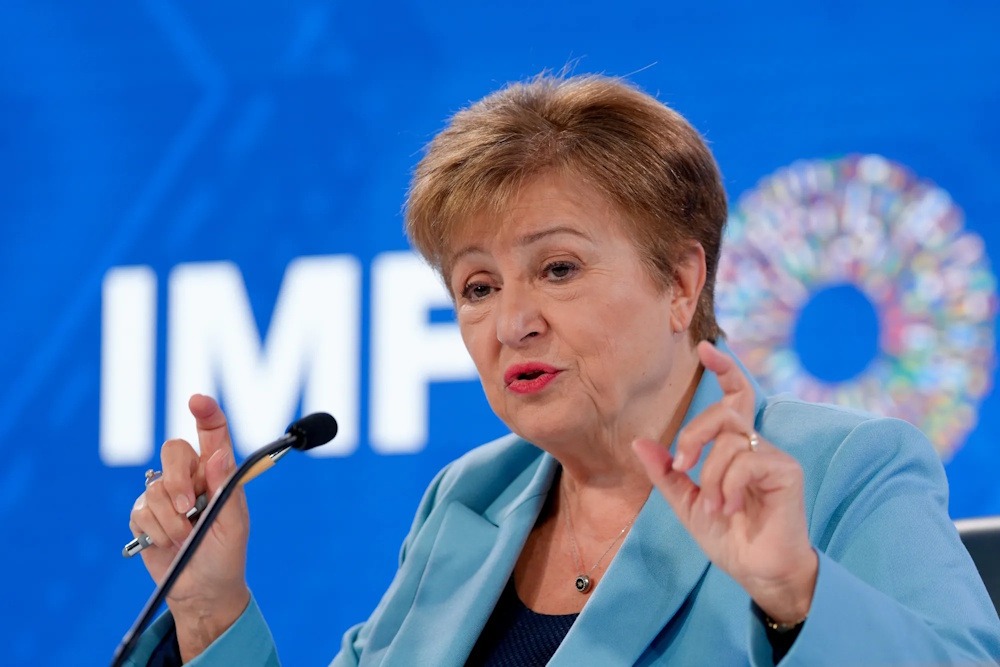
The global economy has navigated the oil shock resulting from the closure of the Strait of Hormuz “better than feared,” attributed to several factors, including a surge in investment in artificial intelligence, according to IMF Managing Director Kristalina Georgieva. “What started out as a US phenomenon with AI is now becoming a growth engine for the global economy, with other countries ramping up construction of data centres and other infrastructure,” Georgieva told on Tuesday. She stated that the global economy had “weathered the energy shock caused by the closure of the Strait of Hormuz better than we feared” due to a combination of factors, including drawdowns of oil and gas reserves and increases in non-Gulf supply.
“And it is enjoying the tailwinds from an AI investment boom, most notably in the US, where both corporate earnings and consumer demand remain strong,” Georgieva said ahead of the G-20 finance ministerial meeting in Asheville, North Carolina, next week. She stated that the global economy is currently experiencing a tug-of-war between the adverse supply shock originating from West Asia and the favourable demand shock driven by AI. “The net impact of these two forces is asymmetric across countries and depends on their exposure to energy disruptions, macroeconomic vulnerabilities, and their position in the AI chain,” Georgieva said. Georgieva indicated that the risks to the outlook have become more balanced compared to the period surrounding the Spring Meetings; however, they still lean toward the downside, with uncertainty continuing to be elevated. “Mounting fiscal pressures, as evidenced by rising bond yields, and a stalled disinflation process are sources of worry for both markets and policymakers,” she said.
The IMF chief indicated that oil and gas reserves are diminishing, and the onset of winter in the northern hemisphere is imminent. “This means the energy shock is not over: a renewed rise in oil prices could fuel inflation, forcing central banks to retain a restrictive policy stance, with knock-on implications for debt service and economic activity,” she said. Georgieva indicated that the prospective effects of AI are still fraught with considerable uncertainties, encompassing potential threats to financial stability. “Should the outlook deteriorate, it will further widen the dispersion of growth prospects around the world. Some countries, especially low-income countries that depend on fuel imports, are already in a tough spot,” she said.
For low-income countries, disruptions in the supply of oil, gas, and other key commodities such as fertiliser could translate into food insecurity, a problem potentially exacerbated by extreme weather, Georgieva said. “The risk of falling behind on AI is also more prominent in the developing world,” she said. In July, the IMF revised its 2026 global growth forecast downward to 3 per cent, citing downside risks stemming from the West Asia conflict, trade fragmentation, and uncertainties related to artificial intelligence. The institution’s forthcoming update of its growth forecast is scheduled for mid-October, coinciding with the annual meetings of the IMF and World Bank in Bangkok.