Walmart Shares Slide as Fuel Costs Weigh on Consumer Spending
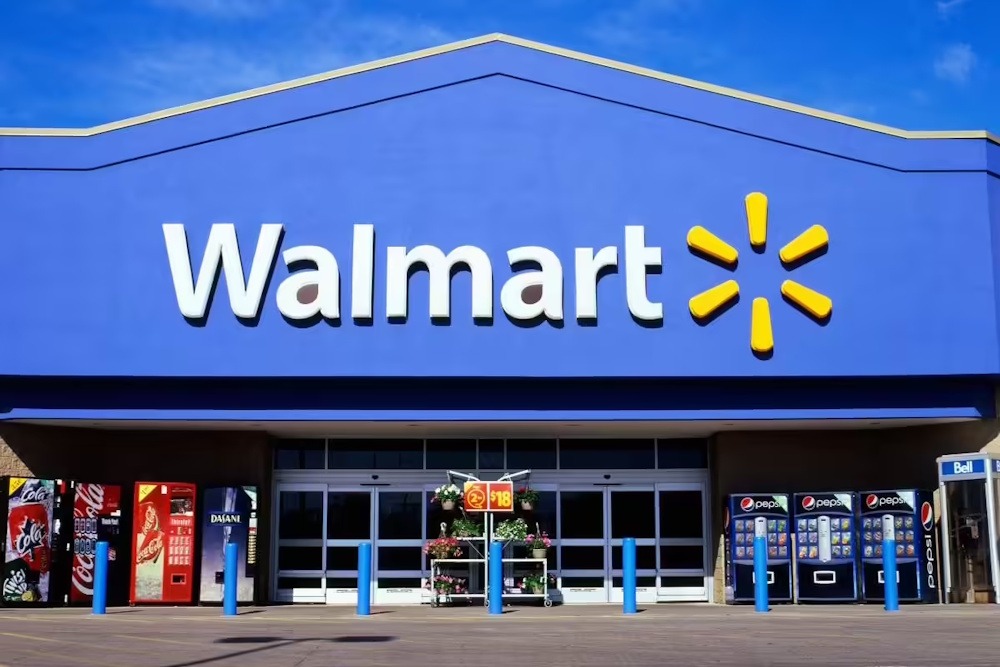
Walmart fell short of quarterly comparable sales estimates for the first time in at least five years on Thursday, highlighting the impact of increasing fuel costs on consumer spending and leading to an 8% decline in its shares during early trading. The world’s largest retailer has modestly adjusted its annual sales and profit projections upwards. However, it anticipates that fuel prices will stabilise, resulting in an anticipated $2 billion increase in fuel-related expenses beyond its initial guidance. “When fuel prices increase and get above $4, perhaps there’s a psychological impact to that … consumers are making trade-offs,” CFO John David Rainey said. The results provide a crucial insight into the retail bellwether’s capacity to draw in price-sensitive consumers, who are increasingly focusing on groceries and other necessities rather than discretionary expenditures as the back-to-school and holiday seasons approach.
Walmart’s second-quarter US same-store sales increased by 2.6%, falling short of the anticipated 3.8% rise, as per data compiled by LSEG. Average ticket, or spending per transaction, increased by 1.1%, significantly lower than the 3.1% rise observed a year prior. Walmart announced a reduction in prices on 11,000 items throughout the quarter, yet it advised that these rollbacks commenced in July, implying that the associated sales growth may not be evident until the following quarter. The report was atypical for the retailer, which has a history of raising forecasts throughout the year and consistently surpassing comparable sales estimates. E-commerce and delivery speeds represented a significant strength, as the company reported a doubling of units delivered in under 30 minutes compared to the previous year, with 70% of all e-commerce orders delivered on the same day or sooner. The company reported that it has received almost the entirety of the anticipated $2.9 billion in tariff refunds and is channelling these savings back into pricing, primarily within the grocery and general merchandise sectors, which constitute the majority of its retail sales.
However, “you don’t necessarily expect to have that offsetting benefit to the lower prices in the immediate period,” stated CFO Rainey, who further indicated that he anticipates price investments to yield results in the next quarter. “For the consumer economy, this is like Nvidia posting a slowdown,” said Brian Jacobsen. “Walmart has been winning the trade-down trade, but that tailwind may be fading.” Walmart has revised its expectations for fiscal 2027 net sales growth, now anticipating an increase of 4% to 5%, an adjustment from its previous forecast of 3.5% to 4.5% growth. Store traffic growth decelerated to 1.5% over the most recent three-month period, down from 3% in the first quarter. That was the primary concern for investors, and the figure they will be monitoring closely in the current quarter, according to analyst Jacob Aiken-Phillips. “Walmart is spending real money on price and has not yet gotten a trip acceleration in its largest business,” Aiken-Phillips said. “That is the number that has to improve in 3Q, and it is a higher bar than the comp itself.”
Walmart Connect, the US advertising division, experienced a growth of 43%, whereas its e-commerce sales saw an increase of 24%. However, growth rates in these businesses, while impressive, were not enough, Annex Wealth’s Jacobsen said. “The bread and butter of the company is still in-store and in-person shopping.” Sales declined in the US pharmacy sector, as reduced prices negotiated under the Inflation Reduction Act’s Maximum Fair Price program led to a decrease in consumer spending per visit. Excluding the impact from the act, core US comparable sales increased by 3.4%, marking its slowest growth rate since the first quarter of fiscal 2023. Walmart has revised its forecast for annual adjusted earnings per share, now anticipating a range of $2.80 to $2.87, an increase from the previous target of $2.75 to $2.85. Its quarterly earnings per share of 81 cents exceeded estimates by 7 cents. It anticipates third-quarter adjusted earnings per share in the range of 62 cents to 64 cents, which falls short of the estimates of 68 cents. Additionally, its net sales growth target of 3% to 3.75% is also lower than expected.