Trump Welcomes Chinese EV Makers in the US
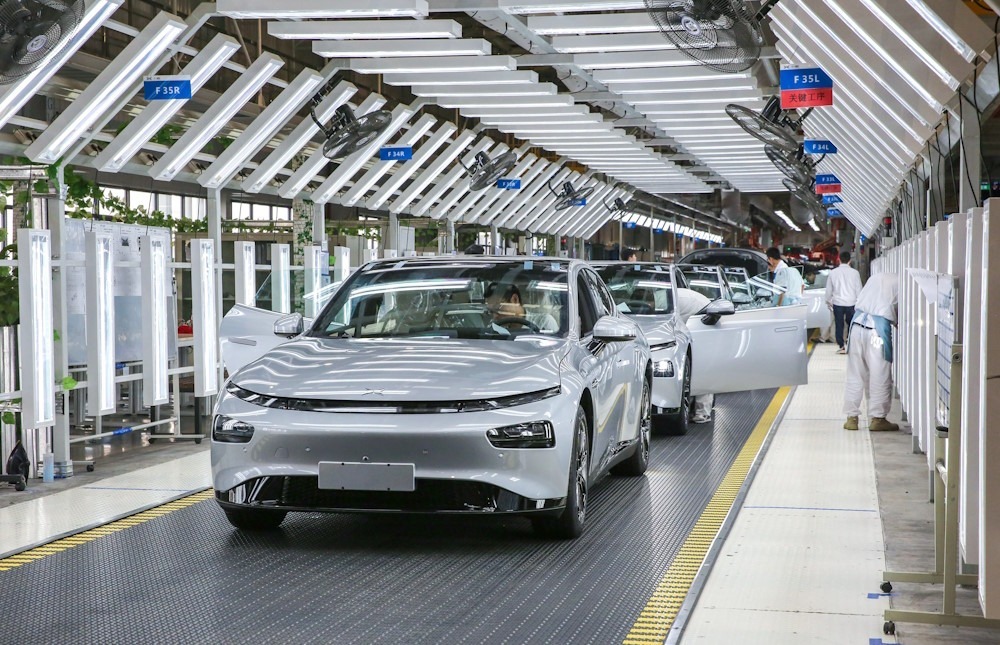
President Donald Trump indicated a potential openness to permitting a Chinese automotive manufacturer to produce electric vehicles in the United States, provided that the operation employs American labour. This stance comes alongside his commitment to uphold the existing US prohibition on the importation of vehicles from China. Trump, in an interview, dismissed the notion that he would permit the importation of Chinese automobiles into the United States. “We don’t allow his cars into the United States, and we never did,” Trump stated, referring to Chinese leader Xi Jinping, adding that if that wasn’t the case the US automobile market would be “overrun.” And “Now, if China wanted to come in, and open a plant to build their cars here, I’d be okay with it – Japan does it – but they hire our people,” Trump said. “The big thing is they hire our people, they use our people.” And “What I don’t want is them to build in Mexico and just, you know, build it inexpensively and ship it across the border,” he said. “That’s un-happening.”
Inexpensive, technology-rich electric vehicles from manufacturers such as BYD Co. and Geely Automobile Holdings Ltd. are swiftly increasing their presence in the global market. They are also emerging in both Canada and Mexico, heightening apprehensions among US auto executives that they may soon pursue opportunities in America. At present, Chinese automobiles face significant barriers to entry in the US market due to high tariffs and a ban imposed by the Commerce Department on national security grounds, which encompasses connected vehicle systems from US adversaries, including China. Trump’s remarks arrive just weeks ahead of a scheduled summit with Xi in Washington, although he has previously expressed similar sentiments. In a January address at the Detroit Economic Club, situated in the core of the American automotive sector, Trump expressed a willingness to permit Chinese automakers to establish production in the United States, stating, “let China come in.”
Ford CEO Jim Farley, along with members of the Trump administration, engaged in preliminary informal discussions earlier this year regarding a potential framework that would allow Chinese automakers to manufacture vehicles in the United States, while simultaneously providing a degree of protection for domestic manufacturers. No decisions were made at the time on the matter, according to individuals. Michigan Senator Elissa Slotkin, a Democrat representing a state that hosts the headquarters of Ford Motor Co. in Dearborn and General Motors Co. in Detroit, issued a caution earlier this week regarding the potential entry of Chinese automobiles into the US marketplace. “We hear rumors that Trump is planning to allow Chinese cars to be sold in the US, as part of a larger deal he’s putting together,” Slotkin said, adding that to do so would be a “strategic mistake” that would “irrevocably impact” not only the American auto industry but the overall manufacturing capacity of the US, risking jobs.
Trump informed that the notion he would permit the importation of Chinese cars into the US was a “total phoney rumor,” asserting he is the “only one stopping them.” Slotkin and Bernie Moreno, an Ohio Republican senator with a background in auto dealerships in the Cleveland area prior to his political career, have put forth legislation aimed at prohibiting connected vehicles, as well as software and hardware associated with adversarial nations, including China. The broadly written measure, backed by Ford, GM and the United Auto Workers, would prohibit the sale of connected vehicles by automakers that are more than 15 percent owned by Chinese entities. However, the legislation as originally drafted has raised concerns that it may inadvertently bar other foreign automakers like Mercedes-Benz Group, which has nearly 20 percent Chinese ownership.