Chinese Automakers Outshine Japanese Rivals in Europe
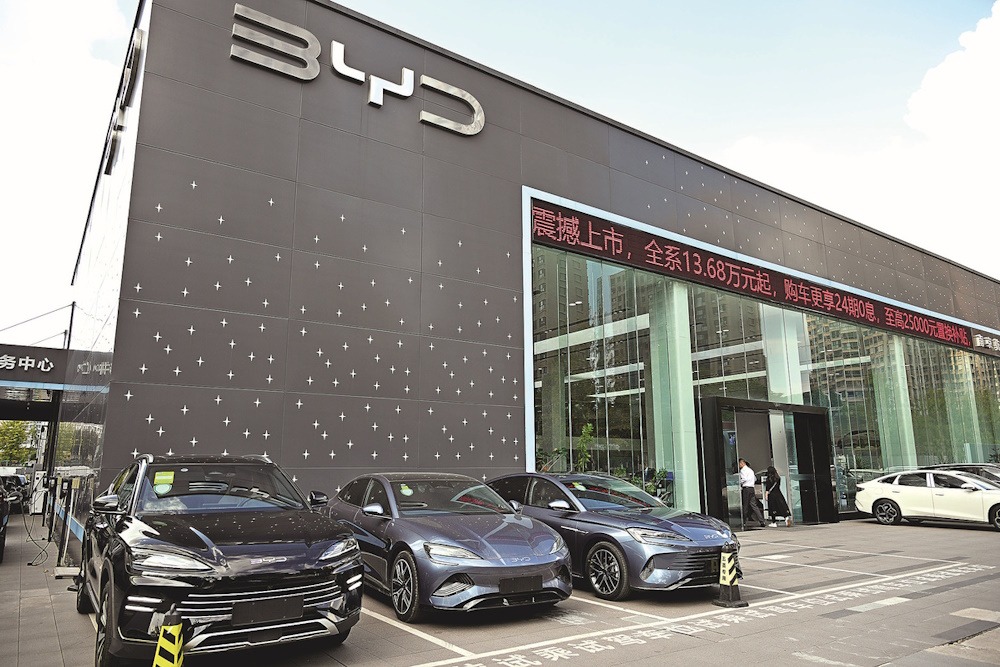
Chinese automakers have surpassed their Japanese counterparts in Europe for the first time over an entire quarter, highlighting the rapid ascent of brands such as BYD Co. and Chery Automobile Co. in the market. In September, registrations of Chinese-branded cars experienced a significant increase, approximately doubling from the previous year, and accounted for 12.7% of total sales in the region, with hybrids leading this growth, as reported by market researcher. That positions them ahead of Japanese manufacturers, including Toyota Motor Corp., at 11.9%. While European manufacturers such as Volkswagen AG and Renault SA continue to hold a dominant position in the region, the rapid ascent of China has taken many by surprise. Five years ago, Chinese brands represented a mere 1% of sales in Europe. Japan’s automakers have invested decades in establishing their foothold in Europe. Toyota has been engaged in automotive sales in the region since 1963 and currently maintains manufacturing facilities throughout the continent.
In parallel, Nissan Motor Co. has been manufacturing vehicles at its Sunderland plant in the UK since 1986. China’s offering has demonstrated notable success in the UK, with Chery’s Jaecoo 7 SUV emerging as the best-selling model in both March and September. The shift presents a dual challenge for Europe’s beleaguered manufacturers. China’s consumers are increasingly turning away from VW and BMW AG in their largest market, opting instead for domestic competitors that are producing new models more rapidly and at reduced prices. Declining demand in China is compelling BYD and other companies to seek out new markets. Earlier this month, Chery, BYD, and Geely’s Zeekr showcased a variety of new models at the Paris car show, presenting competitively priced vehicles such as the BYD Dolphin G DM-i, a compact plug-in hybrid tailored for the European market. Introducing their electric vehicle lineups to Europe strategically places them to capitalise on an anticipated surge in demand, particularly as fuel prices reach unprecedented levels. The European Union is attempting to moderate an expansion that is, in part, driven by state-supported subsidies.
Following the imposition of additional tariffs on battery-electric vehicles manufactured in China, the bloc has reached a preliminary agreement this month to restrict the rapidly increasing imports of hybrid vehicles from China. Amid speculation regarding forthcoming measures, there has been a notable acceleration in the shipments of hybrids. Separately, the EU is contemplating new regulations that would prioritise domestically manufactured vehicles when allocating subsidies and other incentives. The proposals include linking certain company-car tax benefits to European production, a potent instrument in numerous countries such as Germany, where corporate and fleet buyers hold significant influence.
Carmakers such as Mercedes-Benz Group AG have expressed appreciation for the political support; however, they have cautioned about potential distortions to global supply chains, which could lead to increased costs. Countries such as the UK, Turkey, and Morocco export vehicles and components to the EU, which may face challenges due to the Made in Europe regulations. Chinese manufacturers have been gearing up for local production for some time now. Chery is in the process of establishing production facilities in Barcelona, while BYD is approaching the final stages of completing a manufacturing site in Hungary. Zhejiang Leapmotor Technology Co. has commenced production of its B10 SUV at Stellantis NV’s facility in Zaragoza, Spain, as part of the companies’ collaborative venture.