Musk expects neocloud shakeout as SpaceX raises $40 bn in debt
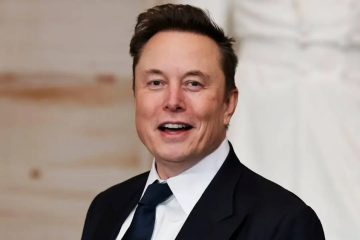
Elon Musk stated on Sunday that SpaceX has secured $40 billion in debt financing for graphics processing units, highlighting the escalating expenses associated with developing AI computing capabilities. Musk, in a post on X, attributed the successful debt raise to the company’s investment-grade status and revenue from its Starlink satellite internet and launch businesses. It was not immediately evident from Musk’s post what he intended by the deal being “closed” or whether investors had reached an agreement on the pricing for the debt. “This is primarily callable debt for GPU purchases that will arrive in Q1 and Q2. Not a major factor this quarter,” Musk said in the post. For the fourth quarter, the company anticipates capital expenditure in the range of $35 billion to $40 billion, as stated by Chief Financial Officer Bret Johnsen.
Earlier this month, source reported that SpaceX was engaged in discussions with banks and asset managers to secure $40 billion for the acquisition of Nvidia artificial intelligence chips. The funding underscores the substantial capital demands of the AI boom, as technology firms compete to acquire advanced processors and expand the computing infrastructure essential for AI development. Musk said debt markets “have almost entirely shut off access to money for any company that doesn’t have substantial revenue independent of AI data centers.” Consequently, he forecasted that neocloud companies would encounter considerable consolidation and failures, subsequently stating that SpaceX would not acquire any neoclouds, deeming it “pointless.”
In contrast to larger cloud providers that cater to a diverse array of sectors, neoclouds like Nebius and CoreWeave primarily target technology clients, providing capacity specifically designed for AI applications. Investors have begun to take positions against US neocloud and data center companies, as concerns over the sustainability of their debt-driven AI expansion have triggered a selloff. SpaceX’s revenue increased by 161% year-over-year, reaching $14.58 billion for the quarter ending September 30. AI revenue surged by nearly 10 times to $7.56 billion, providing the most compelling evidence to date that SpaceX’s substantial investment in AI is yielding significant returns. The shift is reshaping a company whose financial engine has long been its Starlink satellite internet services business and whose longer-term ambitions still hinge on getting Starship rockets into regular service.
Terafab, the chip manufacturing joint venture between SpaceX and Tesla in Austin, is expected to produce its first test chip around May or June of next year, with a goal of achieving volume production by the third quarter of 2028. Musk informed investors during a conference call last week that a merger of his two companies would be “a good idea,” pointing to the increasing overlap between them. Before its major IPO, SpaceX highlighted “manufacturing our own GPUs” as a key capital expenditure in its S-1 statement, alerting potential investors to its significant spending plans for AI and other technologies.