Trump may impose 7.5% tariff on China to reduce cheap imports
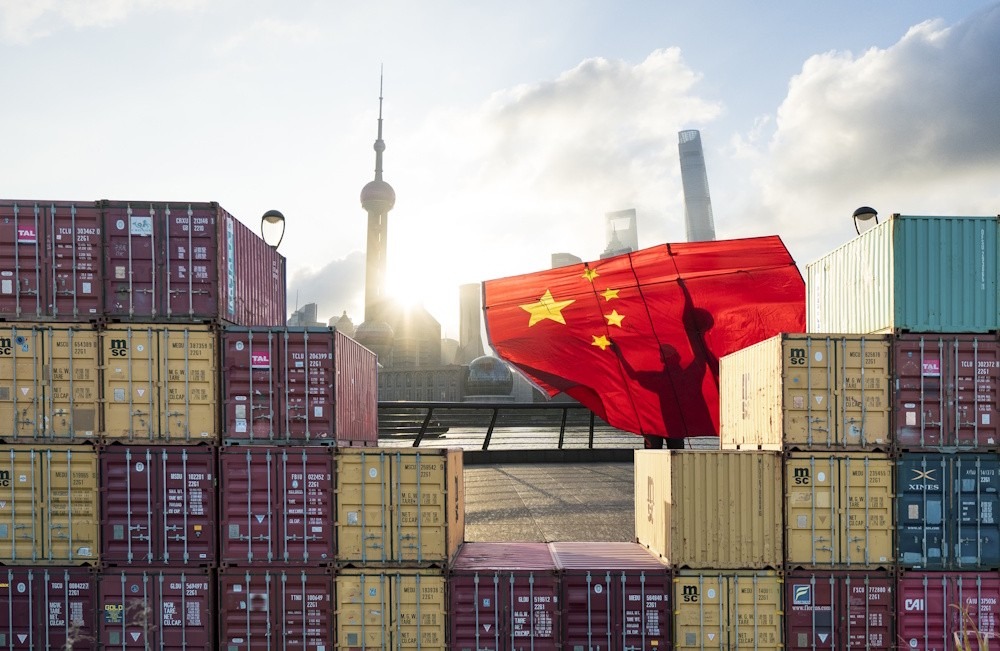
President Donald Trump is advancing plans to impose a new tariff on China, aimed at penalising the world’s second-largest economy for inundating the global market with undervalued goods, as reported. Two individuals indicated that Trump is contemplating establishing the new tariff at 7.5 percent. Administration officials believe this level would not jeopardise the one-year trade truce between Washington and Beijing or the anticipated White House meeting between Trump and Chinese President Xi Jinping, expected to occur in late September. The move, if finalised, appears to be a calculated effort by the White House to navigate around a Supreme Court decision earlier this year that invalidated Trump’s plan to execute a comprehensive, high-tariff scheme not witnessed since the 1930s. Following that decision, the Trump administration declared in March the initiation of formal investigations aimed at addressing excess industrial capacity and forced-labour regulations in China and other countries. It remains uncertain whether the US administration is approaching a conclusion in its investigations of other economies that it has identified for unfair trade practices.
This includes the European Union, Singapore, Switzerland, Norway, Indonesia, Malaysia, Cambodia, Thailand, South Korea, Vietnam, Taiwan, Bangladesh, Mexico, Japan, and India. The White House and the US Trade Representative’s office did not provide comments regarding the tariff deliberations, as reported. The Chinese embassy in Washington has yet to provide a response to a request for comment. The investigation into China’s excess industrial capacity was launched under Section 301 of the Trade Act of 1974, which empowers the president to impose tariffs on countries that engage in discriminatory practices against American businesses or trade. The new tariff would be implemented in addition to the existing tariffs imposed on China. The individuals acquainted with the discussions emphasised that Trump retains the option to reconsider the new tariff imposed on China. It would be in addition to the tariffs of 10 per cent to 12.5 per cent that were announced last month for 60 economies worldwide, which the Trump administration claimed were not adequately enforcing a ban on goods produced with forced labour.
Numerous nations, China among them, expressed their dissent regarding that action, which was implemented right as the deadline passed for the temporary tariffs that Trump had resorted to following the Supreme Court’s February decision to invalidate extensive “reciprocal” tariffs imposed on almost all US trade partners. Last month, China countered assertions regarding overcapacity, foreseeing that the United States would soon unveil the findings of its investigation and implement additional tariffs. Significant capacity across various Chinese sectors, including automobiles, solar panels, cement, and steel production, has garnered heightened scrutiny from Beijing’s trading partners in recent years. Despite the prioritisation of economic rebalancing by China’s leadership, the deceleration of domestic demand has led firms to seek opportunities in international markets. Surging exports propelled China’s trade surplus to an unprecedented level of nearly USD 1.2 trillion last year.
According to a recently published report titled “China’s Position on the So-called Excess Capacity Issue,” the Ministry of Commerce stated that China has never pursued a significant trade surplus. The deliberations arise as the Treasury Department on Monday cautioned nations engaged in trade with Iran that new secondary sanctions are forthcoming, targeting countries that persist in conducting business with Tehran. China ranks as Iran’s foremost trading partner. Washington has pledged that the new sanctions will intensify the strain on an Iranian economy already weakened by prior sanctions and a US naval blockade, as the conflict between the US and Israel against Iran approaches the six-month milestone. Treasury Secretary Scott Bessent’s announcement on Monday lacked specificity and did not identify the countries that might be subjected to secondary sanctions.