US claims Alibaba, DeepSeek ‘systematically’ stole AI models
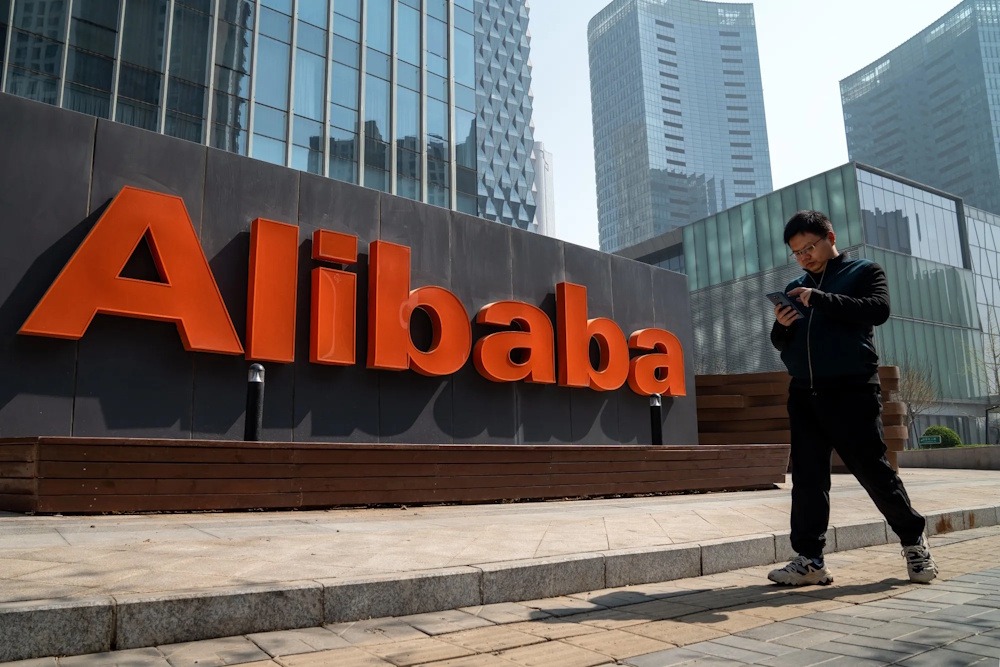
US security agencies have accused China’s leading AI companies, including DeepSeek and Kimi maker Moonshot AI, of systematically extracting proprietary knowledge from American firms. They have also issued a warning to Silicon Valley developers to safeguard their work. The Chinese firms have employed a technique referred to as distillation since at least 2024 to extract and utilise information from US AI models “at an industrial scale” for the purpose of training their own systems, as stated in a joint announcement released on Tuesday by the National Security Agency, FBI, and Cybersecurity and Infrastructure Security Agency. The agencies specifically accused DeepSeek, Moonshot, Alibaba Group Holding Ltd., MiniMax, StepFun, and Z.AI Co. of the practice. Issued weeks prior to President Donald Trump’s anticipated reception of his Chinese counterpart Xi Jinping in Washington for a significant summit, the allegations are poised to exacerbate tensions between the two largest economies globally.
AI has increasingly become a focal point in the US-China rivalry, as both nations strive for supremacy in the technology market. Officials from the Trump administration, along with American AI developers, have levelled accusations against Chinese firms for extracting insights from US AI models in previous instances to create their own products. The practice, which can be legitimately deployed by an AI developer utilising its state-of-the-art model to effectively teach a more power-efficient version, is regarded as an improper shortcut when executed without proper approval. Tuesday’s security alert advances those allegations, specifying the US systems that were extracted by each of the Chinese companies and the motivations behind these actions, which include enhancing their own models’ capabilities in solving mathematical problems and reviewing code. The security agencies asserted that the companies are likely extracting information from American models “with knowledge of the Chinese government” and accused the firms of deliberately circumventing US companies’ usage restrictions to gain access to their systems.
“China-based AI companies route distillation requests through multiple pathways to gain unauthorized access, consequently violating U.S. AI companies’ terms of use,” they said in the notice. In an emailed statement, Chinese embassy spokesperson Liu Chang rejected the US accusations, calling them a “deliberate attack on China’s development and progress in the AI industry.” He added that “China opposes politicizing and instrumentalizing trade and tech issues. Such actions will only stifle global AI advances and serve no one’s interests.” Representatives for DeepSeek, Moonshot AI, Alibaba, MiniMax, StepFun, and Z.ai did not provide immediate responses to requests for comment. The security agencies urged US AI developers to undertake “immediate action,” which includes modifying responses to suspected malicious distillation attempts and exchanging intelligence on distillation campaigns among themselves. OpenAI and Anthropic PBC have raised concerns regarding the unauthorised access to their models by Chinese competitors, who are reportedly leveraging this access to create their own chatbots at significantly lower costs.
In June, Anthropic alleged that Alibaba was engaged in a substantial campaign to “illicitly” gain access to its Claude model through the use of thousands of fraudulent accounts. The Trump administration pledged earlier this year to implement additional measures to tackle the practice. US lawmakers are contemplating actions designed to impose penalties on Chinese firms identified as engaging in unfair copying from their American counterparts. Tuesday’s security advisory may act as a catalyst for expediting those initiatives. US Treasury Secretary Scott Bessent cautioned in July regarding the potential for sanctions against any Chinese enterprise identified as participating in intellectual property theft. Bessent spoke days after Moonshot released Kimi K3, a model that sparked significant apprehension regarding the competitive edge of Chinese firms over the US in the realm of AI.