Larry Ellison Says AI Will Transform Enterprise Software
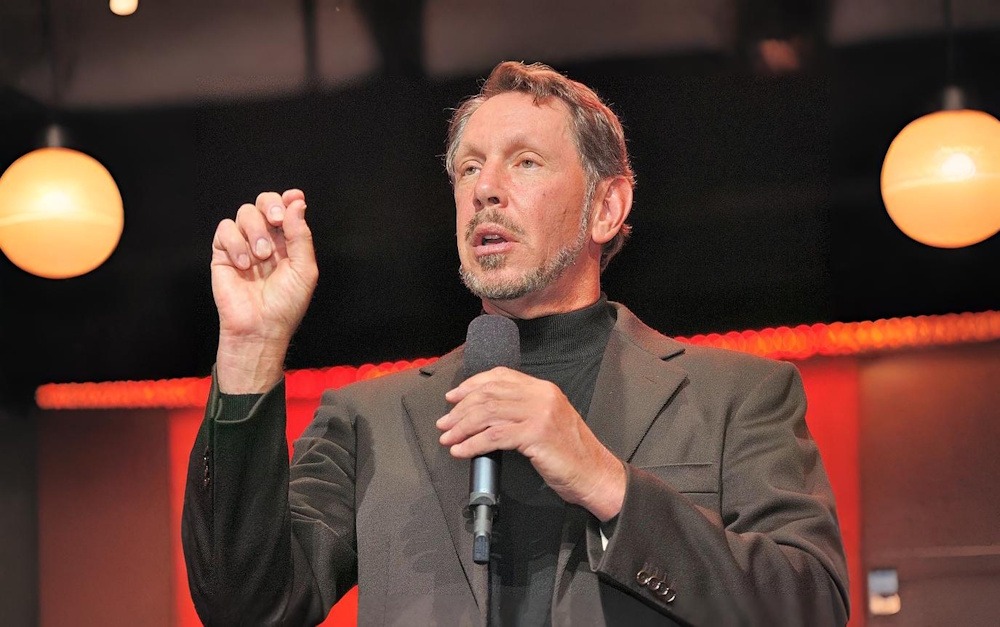
Oracle co-founder Larry Ellison has dismissed concerns that artificial intelligence will undermine the traditional software industry, asserting that it will instead enable companies to create comprehensive, ready-to-use applications for entire sectors that require no training and can be activated without protracted installations. Speaking at Oracle AI World, Ellison, the company’s executive chairman and chief technology officer, dismissed the notion of a “SaaS apocalypse,” where businesses would leverage AI to create their own applications rather than purchasing software-as-a-service products. “I don’t think that’s quite true. I think companies will continue to build applications, but they will be quite different because of AI. They will be much, much better,” he noted. Business software has, to date, never been completely finalised for any specific industry, Ellison stated. A hospital, bank, or hotel utilising even the most advanced commercial products has found it necessary to develop its own extensions or integrate applications from various vendors. “Because of AI for the first time, we as an industry, the software industry, can actually finish the applications if we start doing them industry by industry,” he said.
Oracle is developing comprehensive suites tailored for banking, retail, hospitality, and government sectors, yet it opted to initiate its efforts in healthcare, a sector that Ellison described as the most intricate industry globally. “It’s an enormously complex industry. Science is constantly evolving. The industry is constantly getting better, as AI showed up on the scene, we decided we could build a complete industry suite. And if we could build that, we could prove to ourselves and others that we could build banking and retail and hospitality and government because the others are not as complex,” he said. Ellison stated that applications ought to be as straightforward to utilise as posing a question. He described the experience of taking his son to the hospital due to a broken leg. There, an orthopaedic surgeon, a radiologist, and finally a systems expert had to navigate screen after screen to pull up the boy’s X-rays. “This is ridiculous. If you can ask a question describing what you want to see, you should then immediately see it. Any other user interface is nonsense. But you have to have AI to deliver that, to understand the question, to navigate the screens for you transparently and show you what you want to do.” And “There should be no training required to use any of these applications,” Ellison said.
People would still need to train to become doctors, accountants or lawyers, he said, “but once you can ask the question, you should get the answer.” He also criticised software installations that can take up to two years and cost “a lot of money”. With Oracle Health, the company’s healthcare division, a hospital currently utilising a different records system can effortlessly activate a new module that identifies existing processes and seamlessly integrates with them. Ellison characterised Oracle Health as the company’s inaugural system that is “completely based on AI,” encompassing its interface and installation. He indicated that Oracle would continue to integrate AI into its other business software. “In time everything’s going to be AI,” he said. Explaining his emphasis on healthcare, Ellison remarked that his mother was diagnosed with cancer during his time as a student, describing her death as “one of the worst experiences in my life”. Ellison stated that AI has already significantly transformed drug development and forecasted that the majority of cancers would be eradicated within the next five to ten years. The cures, he stated, would not be “just for very wealthy people in New York or California”.
Systems like Oracle Health’s clinical trials module enable patients to participate in trials regardless of their geographical location, rather than being limited to a select few research hospitals in the United States. “We think that drug discovery is going to go through a golden age.” Ellison rejected the idea that AI would replace all people. “I think that’s kind of nonsensical,” he said. “The tools make people much better. Makes us much more productive,” he said. He cited aeroplane autopilots, which he said have flown better than human pilots for a long time. “But there are still pilots,” he said, adding that some jobs, such as those of taxi and ride-share drivers, would be replaced. As automation increasingly assumes various tasks, it is imperative for governments to reconsider their tax structures, as articulated by Ellison. “We need to change from taxing human labour to taxing value added,” he said. Taxing the value that robots add could fund what he called “universal high income”. He said this would take “more than a decade to come about”. Eventually, robots will do more and more work, but they will be adding value too. “Because of AI, we will all become so wealthy,” he said, adding that people would also become healthier.