Trump’s Fear Factor: A 2.2 Million Drop in US Immigrant Population
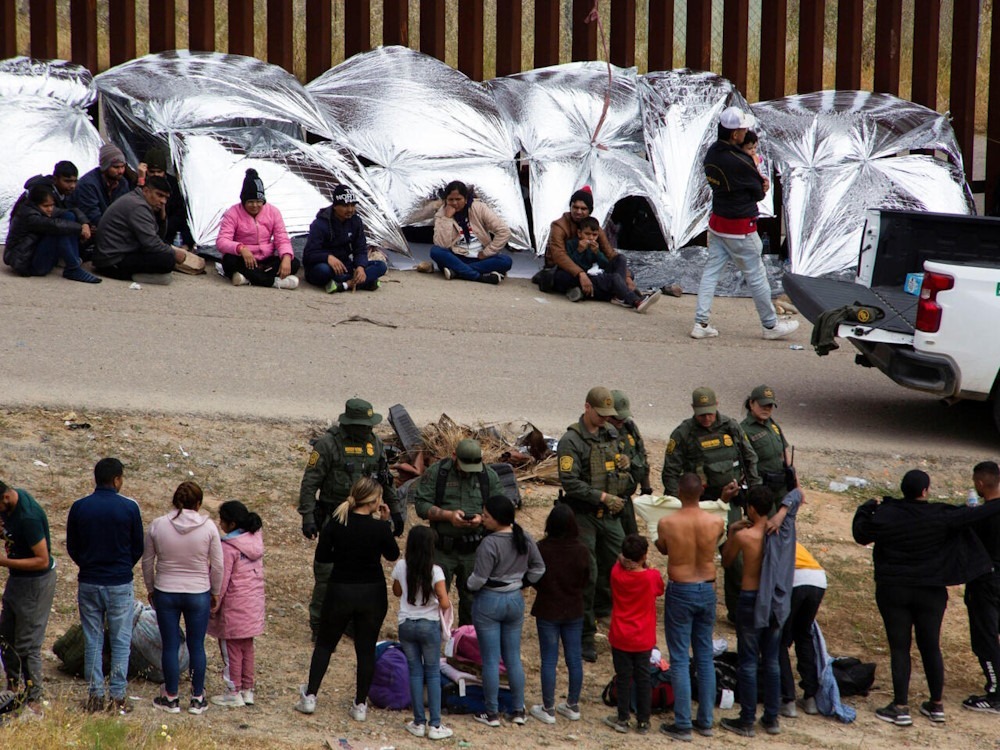
According to new government data, the immigrant population in the United States may have decreased by approximately 2 million people in the first half of the year. The data presents an initial indication that President Donald Trump’s recent immigration enforcement measures may be influencing the statistics. In an analysis, Steven Camarota, director of research at the Washington-based Center for Immigration Studies, stated that the estimated decline of 2.2 million foreign-born individuals in the Current Population Survey represents the largest single-year drop in three decades. “Either something has fundamentally changed in America, or the response rate has dramatically changed,” he stated. Demographers indicate that it may be a combination of both factors. However, they also warn that the data has its limitations.
The recent immigration numbers in the US raise important questions. What do they reveal about current trends and policies? Analysts are keen to understand the implications of these figures on the broader socio-economic landscape. An examination of raw data from the US Bureau of Labor Statistics’ Current Population Survey indicates that the total foreign-born population decreased by 2.2 million from January to July. Camarota and Karen Zeigler of CIS reported that illegal immigrants could represent 1.6 million of that decline, referencing evidence of heightened out-migration and stricter enforcement measures. “We preliminarily estimate that the number of illegal immigrants has fallen by 1.6 million in just the last six months,” they explained.
According to their analysis, the findings reveal a significant drop: a total fall of 2.2 million foreign-born individuals, marking the steepest six-month decline recorded in the survey’s history. All of the decline was among non-citizens, while the number of naturalised US citizens rose slightly. A 10 percent reduction in the estimated illegal immigrant population brings the figure down to 14.2 million. There was a notable decline of one million employed foreign-born workers between January and July, contrasted by an increase of 2.5 million US-born workers during the same period.
Julia Gelatt, associate director of US immigration policy at the Migration Policy Institute, expressed concern that many households may now be hesitant to disclose their non-citizen status. “Because of the atmosphere – the mass deportation campaigns, the constant announcements – immigrants might be more reticent to answer,” she told USA Today. She stated that respondents might feel too intimidated to disclose to survey takers whether they or their household members are immigrants. “They may be afraid to say they are a noncitizen,” Gelatt remarked. Jed Kolko, a senior fellow at the Peterson Institute for International Economics, emphasized the importance of exercising caution. “Even with fewer immigrants coming to the US and more people leaving or being deported, an annual rate of 4 million is an extraordinary number that is way outside the range of immigration estimates that leading researchers have made,” Kolko stated to the US-based media outlet.
A significant decline in figures aligns with a range of extensive policies implemented following Trump’s return to the White House in January. There has been a significant increase in visa revocations, frequently occurring due to minor infractions. A recent poll indicates that one in six Indian H-1B visa holders express feelings of being threatened with deportation. Expanded enforcement powers under Executive Order 14159 have led to a swift increase in removals without court hearings, while also implementing penalties for undocumented immigrants. Other orders have halted refugee admissions, limited birthright citizenship for children of non-citizens, and terminated categorical parole programs, including CBP One appointments. A new law known as the “Big Beautiful Bill” has been passed, allocating $45 billion for the expansion of detention facilities through 2029. The Justice Department is currently investigating the denaturalisation of naturalised citizens who are connected to alleged fraud or security issues.
Sanctuary cities face mounting pressure, including threats of losing federal funding and even proposals for military intervention should they fail to comply. Lawmakers have expressed concerns that oversight of detention centres is being hindered by regulations mandating a week’s notice prior to visits, a policy currently under constitutional scrutiny. The Current Population Survey collects data from approximately 60,000 households every month, in contrast to the more extensive American Community Survey, which encompasses 2 million households. Experts caution that the smaller sample size may lead to exaggerated shifts in the population. Even Camarota, whose team published the analysis, acknowledged that increased enforcement might be causing some foreign-born respondents to refrain from participating in the survey or to withhold their identities. “It is possible that the observed decline in the foreign-born was due, at least in part, to a greater reluctance by immigrants to participate,” he wrote.