Trump urges GOP senators to resolve historic government shutdown
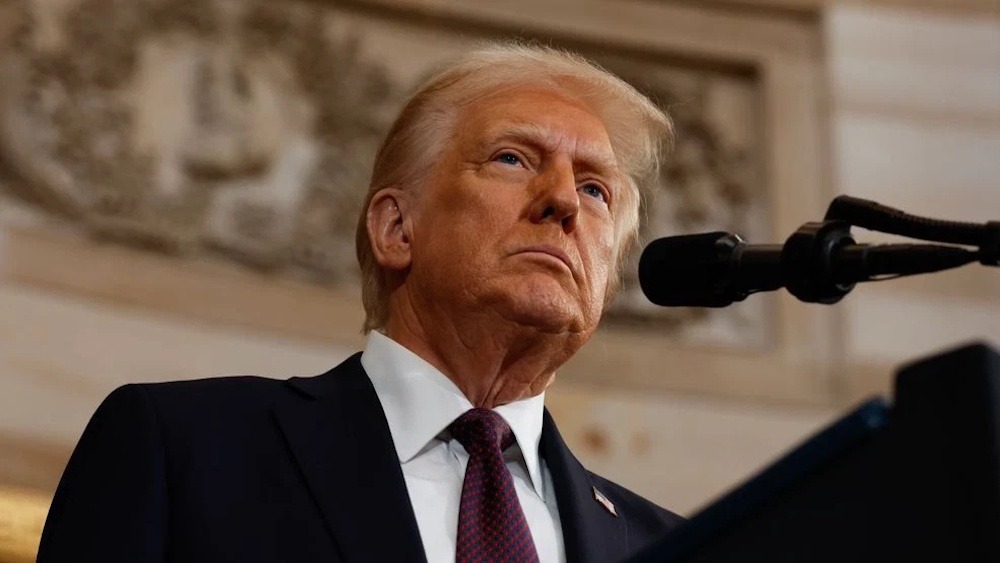
US President Donald Trump on Wednesday criticized Senate Republicans for failing to end the government shutdown, which has now become the longest in history. He attributed the unprecedented stalemate to the party’s losses in key elections, while Democrats, encouraged by their recent off-year successes, prepared for a confrontation. Trump, whose first term at the White House set the previous government shutdown record, stated that this one was a significant negative factor in Tuesday’s races. He reiterated his calls for Republicans to abolish the Senate filibuster as a means to reopen the government – a request that senators have consistently declined. Riding high on electoral victories, the Democrats strengthened their determination. The Democratic leaders asserted that it is time for Trump to engage earnestly in negotiations to resolve the stalemate. They demanded he get off the sidelines and meet with the congressional leaders to resolve the problem of expiring healthcare subsidies that are central to the debate. “The election results ought to send a much needed bolt of lightning to Donald Trump that he should meet with us to end this crisis,” Chuck Schumer said.
As the shutdown enters its 36th day, the ramifications are becoming increasingly profound across the nation. The federal closures are disrupting the lives of millions of Americans with programme cuts, flight delays and workers scrambling to make do without paychecks. Officials have issued a warning about an impending deterioration in conditions, highlighting the potential for turmoil in the skies if the shutdown extends into the following week and air traffic controllers fail to receive another paycheck. Expectations were high that the logjam would break once results were tallied in elections that were widely watched as a gauge of voter sentiment over Trump’s second term. But Trump’s demands on Wednesday that Republican senators get rid of the filibuster as a way to end the shutdown complicated an already difficult situation. “It’s time for Republicans to do what they have to do, and that’s terminate the filibuster,” Trump said during a breakfast meeting on Wednesday with GOP senators at the White House.
Trump advocated for abolishing the Senate rule that mandates a 60-vote threshold for advancing the majority of legislation, aiming to overpower the Democratic minority regarding the shutdown and to advance a comprehensive agenda of other Republican priorities. Republicans currently maintain a 53-47 majority in the Senate, while Democrats have successfully obstructed legislation aimed at funding the government, having voted against it more than a dozen times. “We must get the government back open soon,” Trump told the senators. The push is expected to be disregarded by Republican senators, yet it may motivate them to engage with the Democrats. With Trump having stayed out of the shutdown debate, instead keeping a robust schedule of global travel and events, including at his private Mar-a-Lago club in Florida, the talks have intensified among a loose coalition of centrist senators trying to negotiate an end to the shutdown. Trump has refused to negotiate with Democrats over their demands to salvage expiring health insurance subsidies until they agree to reopen the government. But skeptical Democrats question whether the Republican president will keep his word, particularly after the administration restricted SNAP food aid despite court orders to ensure funds are available to prevent hunger.
Trump’s approach to the shutdown is notably different from his first term, during which the government experienced a partial closure lasting 35 days due to his insistence on funding for the US-Mexico border wall. At that time, he met publicly and negotiated with congressional leaders. Faced with the inability to secure the funds, he ultimately relented in 2019. This time, it’s not just Trump declining to engage in talks. The congressional leaders find themselves in a standoff, as House Speaker Mike Johnson sent lawmakers home in September following the approval of their own funding bill, thereby refusing any further negotiations. “A sad landmark,” Johnson said on Wednesday. He dismissed the party’s election losses and expressed optimism for a midterm election in 2026 that will more accurately reflect Trump’s tenure. In the meantime, food aid, child care money and countless other government services are being seriously interrupted. Hundreds of thousands of federal workers have been furloughed or expected to come to work without pay. Central to any resolution will be a series of agreements that would need to be upheld not only by the Senate, but also the House, and the White House, which is not at all certain in Washington. Senators from both parties, particularly the members of the powerful Appropriations Committee, are pushing to ensure the normal government funding process in Congress can be put back on track. Among the goals is guaranteeing upcoming votes on a smaller package of bills where there is already widespread bipartisan agreement to fund various aspects of government such as agricultural programs and military construction projects at bases. “I certainly think that three-bill package is primed to do a lot of good things for the American people,” said Senator Katie Britt.