Trump Could Lead Peace Board After Presidency

A US official stated that President Donald Trump could continue to lead his proposed Board of Peace even after departing from the White House. An official, speaking on the condition of anonymity, stated on Tuesday that the chairmanship is Trump’s to retain until he chooses to resign it. An upcoming US president may have the authority to appoint or designate the official US representative to the board, the official added. The potential for a chair-for-life status for Trump introduces a new dimension to the development of the signature diplomatic initiative, which is facing pushback from other Group of Seven leaders. This development coincides with the administration’s efforts to define the composition of the board, its operational structure, and its overall functionality. Last week, the White House announced multiple representatives on the Executive Board — including Secretary of State Marco Rubio, special envoy Steve Witkoff, and Trump’s son-in-law, Jared Kushner — but it remained unclear whether they were acting as representatives of the US or in their personal capacities. Adding to the complexity of Trump’s proposal is a draft charter, which requests that countries contribute a minimum of $1 billion to obtain a permanent position on the board. The draft indicated that Trump himself would have control over the funds. When asked if the $1 billion serves as an entry fee for the board, the US official clarified that it does not. He stated that countries making substantial contributions to projects and wishing to maintain an oversight role would be permitted to remain involved.
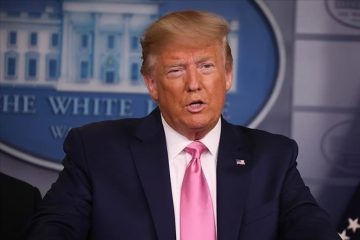
On Tuesday, Trump proposed that the Board of Peace might replace the ineffective United Nations, while maintaining that the long-established organization could still play a role in his peacekeeping initiatives. “The UN just hasn’t been very helpful. I’m a big fan of the UN potential, but it has never lived up to its potential,” Trump told. “You must allow the UN to persist, as the potential is immense.” Trump expressed his desire that “we didn’t need a board of peace,” noting that “with all the wars I settled, the United Nations never helped me on one war.” The UN has not yet provided a response to a request for comment regarding Trump’s remarks made on Tuesday. The president made a rare appearance in the White House briefing room before his scheduled departure Tuesday night from Washington for the World Economic Forum in Davos, Switzerland. He had hoped to hold a signing ceremony on Thursday to launch the board, but that prospect now seems unlikely to materialize quickly. Trump has extended invitations to numerous world leaders to join the board, a crucial component of his 20-point strategy aimed at achieving enduring peace in Gaza. So far, only a handful of countries have confirmed their intention to join. Several prominent allied leaders explicitly refused, prompting criticism from Trump. The US president issued a threat to France, proposing a 200% tariff on champagne, while also ridiculing President Emmanuel Macron following his rejection of an invitation. Trump also shared a text message from Macron in which the French leader invited him to dinner in Paris on Thursday to discuss various topics, including Trump’s interest in acquiring the Danish territory of Greenland. Concerns have arisen regarding the composition and role of Trump’s Board of Peace proposal, as well as the US president’s control over the initiative.
On Monday evening, Trump confirmed that he had extended an invitation to Russian President Vladimir Putin to join the board, despite ongoing efforts by the US to negotiate a resolution to the Kremlin’s invasion of Ukraine. Some nations express concern that the board may receive a mandate that extends far beyond Gaza’s reconstruction, potentially paving the way for an alternative or rival international entity to the UN, which has been a target of Trump’s criticism for an extended period. UN spokesperson Farhan Haq informed on Monday that the UN Security Council had granted authorization to the Board of Peace solely for its efforts in Gaza, emphasizing that the organization preferred not to engage in discussions regarding additional operations that have been circulating in recent days. “We would have to see in terms of details what the Board of Peace becomes as it actually is established to know what sort of relationship we would have with it,” Haq stated. The plan has faced criticism from Israeli Prime Minister Benjamin Netanyahu, who remarked that the specifics of the board had not been coordinated with his country — a notable instance of disagreement from a leader typically aligned with Trump.
Furthermore, although decisions would be made by a majority, they would require the chairman’s approval, as stated in that draft. Under the draft charter, Trump would assume the role of inaugural chairman, seemingly bestowing upon the US president ultimate decision-making authority. European allies were engaged in efforts to adjust the terms and align a response, according to sources, while also attempting to encourage Arab nations to advocate to Trump for modifications. More broadly, Trump is advancing with plans for the second phase of his Gaza peace deal, despite numerous obstacles, including Hamas’s refusal to disarm. A crucial aspect of that second phase entails a group of technocrats assisting in the administration of Gaza, as diplomats aspire to witness the reinstatement of daily governance and public services under the overarching supervision of the Board of Peace. Israel has expressed doubts regarding the continuation of efforts while Hamas maintains control over approximately half of Gaza and remains unwilling to disarm. Trump has stated his expectation for Hamas to disarm and has warned of severe repercussions for the group if it does not comply.