Trump calls not winning the Nobel Peace Prize an ‘Insult to US’
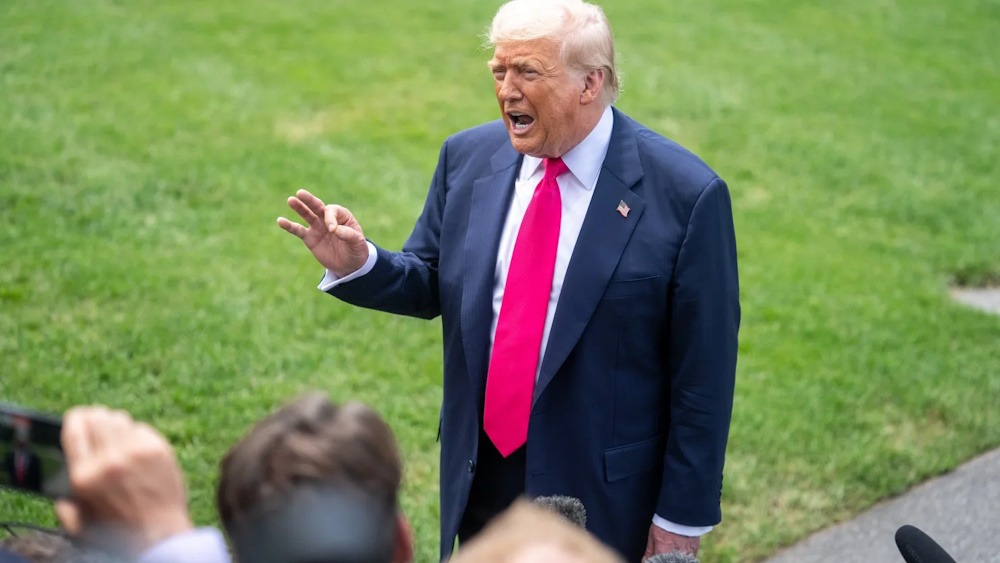
On Tuesday, US President Donald Trump stated that it would be a “insult” to the United States if he were not awarded the Nobel Peace Prize for his “contributions to ending the seven global conflicts,” according to reports. Trump delivered these comments during a discussion with senior US military officials at Quantico, Virginia. When asked whether he would receive the Nobel Peace Prize, the US President stated, “They’ll give it to some guy that didn’t do a damn thing. They’ll give it to the guy who wrote a book about the mind of Donald Trump and what it took to solve the wars,” he added. “The Nobel Prize will go to a writer.” His remarks follow the presentation of the 20-point peace plan aimed at resolving the Israel-Gaza conflict. Trump conveyed a sense of hope that the hostilities between Israel and Hamas could cease with the implementation of his peace plan, contingent upon Hamas’s acceptance of the proposal, which would signify his resolution of eight conflicts.
Trump stated, “If this works out, we’ll have eight, eight in eight months.” That is quite commendable. He stated, “No, but let’s see what happens, but it will be a big insult to our country.” I will inform you of that. I don’t want it (Nobel Prize). I want the nation to understand it. “And it should get it because there’s never been anything like it.” The White House has also stated that it is “well past time” for Trump to receive the peace prize. Numerous international leaders have expressed their backing for Trump in his pursuit of a Nobel Peace Prize, among them Israeli Prime Minister Benjamin Netanyahu, Pakistani Prime Minister Shehbaz Sharif, and Pakistan’s Field Marshal Asim Munir. Days after welcoming Shehbaz Sharif and Asim Munir to the White House, Trump once more emphasized his assertion of resolving the conflict between India and Pakistan. He stated that it was a “very big” conflict, adding, “I have settled so many wars since we’re here.” We’ve been here for nearly nine months, and I’ve acclimated in seven. And yesterday we may have addressed the most significant issue of all, though I’m uncertain; the situation between Pakistan and India was substantial, both being nuclear powers, and I resolved that.
In May, India and Pakistan were involved in four days of military confrontations following New Delhi’s initiation of ‘Operation Sindoor,’ which aimed at nine terrorist infrastructure sites in Pakistan and Pakistan-occupied Kashmir. This action was a direct response to the terror attack in Pahalgam on April 22. Trump and Pakistan assert that the conflict concluded due to Trump’s involvement, whereas India has minimized these assertions, emphasizing that the agreement was achieved following discussions between the two nuclear-armed neighbors. The conflict between Israel and Iran escalated in June, lasting for 12 days. Initially, Trump opposed Israel’s military action against Iran; however, US troops subsequently allied with Israel, targeting Iran’s primary nuclear facilities. This series of events culminated in a ceasefire announcement by Trump. The 817-kilometer border between Thailand and Cambodia has experienced violence for decades. The recent conflict occurred in July, resulting in the deaths of at least 38 individuals and displacing hundreds of thousands from their homes. Trump engaged in distinct phone conversations with the leaders of both nations, cautioning that trade negotiations would be halted if a ceasefire was not established. In June 2025, Trump asserted that he halted the conflict between Serbia and Kosovo. During Trump’s first term in 2020, an economic normalisation deal was signed between the two countries. Trump asserted that he intervened to prevent Serbia, which he claimed was on the brink of initiating a conflict.
In June, representatives of Rwanda and the Democratic Republic of Congo signed a peace agreement, brokered by the US. Trump hailed it as a “Great Day for Africa”; however, report indicates that there is scant evidence to suggest that the conflict is abating. As per reports, the circumstances surrounding Trump’s intervention in the Egypt-Ethiopia conflict remain ambiguous, particularly given that the two nations were not in a state of war. The two, however, found themselves entrenched in a contentious disagreement following Ethiopia’s official inauguration of a substantial hydroelectric dam earlier this month. The two former Soviet Republics have been engaged in a conflict over Nagorno-Karabakh for nearly four decades. In August, Trump welcomed the leaders of Armenia and Azerbaijan to the White House, receiving praise from both nations’ leaders for his involvement in facilitating the signing of the deal.