Supreme Court restricts Trump’s Fed control
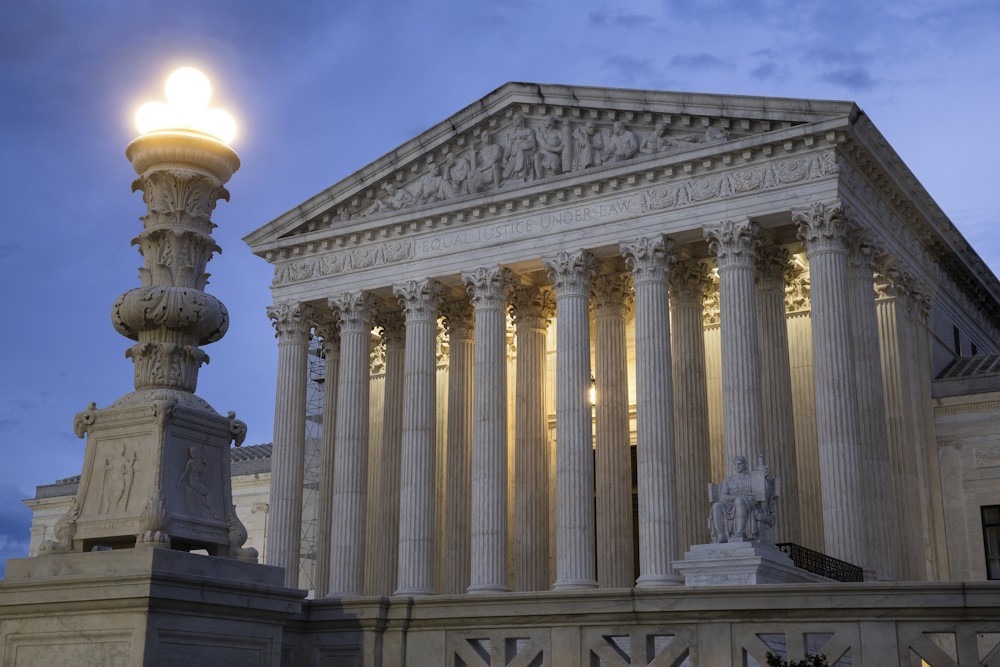
The Supreme Court has, over the past year, consistently permitted President Donald Trump to dismiss leaders of independent agencies; however, it seems to be establishing a boundary concerning the Federal Reserve. The court has indicated for months that it perceives the Fed in a different manner. The president has the authority to dismiss directors of other agencies for any reason; however, the removal of Fed governors is permitted only “for cause,” a term frequently understood to signify neglect of duty or malfeasance. Last year, the court permitted President Donald Trump to dismiss – at least temporarily – Gwynne Wilcox, a member of the National Labor Relations Board, and Cathy Harris, a member of the Merit Systems Protection Board, while making a specific distinction for the Fed. The two officials contended that if Trump had the authority to dismiss them, he could similarly remove members of the Fed’s board of governors. “We disagree,” the court stated at that time. “The Federal Reserve is a uniquely structured, quasi-private entity that follows in the distinct historical tradition of the First and Second Banks of the United States. That is currently being examined in a case before the Supreme Court concerning Trump’s effort to dismiss Fed governor Lisa Cook.” On Wednesday during oral arguments, the court appeared to favor retaining Cook in her position. “Allowing Cook’s firing to go forward would weaken, if not shatter, the independence of the Federal Reserve,” said Justice Brett Kavanaugh.
However, the court largely avoided addressing a crucial question: What, precisely, is the legal principle that safeguards the Fed, while excluding other agencies? Numerous legal experts assert that the justices find themselves on unstable footing. The Fed, they contend, bears resemblance to the Federal Trade Commission or the National Labor Relations Board, agencies that Congress designed to operate independently, yet whose officials Trump has managed to dismiss without resistance from the Supreme Court.”There’s no historical grounds for distinguishing the Fed from other independent agencies that Congress has designed,” said Jane Manners, a law professor at Fordham University. “The entire argument was based on the notion that the Fed is distinct.” They have not provided a clear explanation for the reasons behind this. Peter Conti-Brown, a professor of financial regulation at the University of Pennsylvania, remarked, “I’ll say as a legal scholar and as a historian I think that differentiation is hocus pocus.” In a recent oral argument, the court indicated that it would probably permit Trump to dismiss FTC Commissioner Rebecca Slaughter. The conservative majority on the court indicated it might overturn a 90-year-old precedent that significantly restricted the president’s authority to dismiss top officials at independent agencies. Chief Justice John Roberts and numerous colleagues advocate for the “unitary executive” theory, asserting that the president should possess complete authority over the staffing of agencies within the executive branch.
Agency directors, such as Slaughter, “are exercising massive power over individual liberty and billion-dollar industries” without being accountable to anyone, Kavanaugh remarked during the December oral argument. In contrast, the Supreme Court’s conservative justices have adopted a distinct perspective regarding the Federal Reserve: they contend that the Fed’s monetary policy, which includes the determination of short-term interest rates and the regulation of the money supply, has not traditionally been subject to oversight by the executive branch. Some legal experts have similarly highlighted a distinction between the Fed and other independent agencies. In a concise submission regarding the Cook case, Aaron Nielson, a law professor at the University of Texas and a former leading attorney in Texas government, stated that, “Whereas the modern FTC indisputably exercises executive power, the Fed’s core function is monetary policy, which need not and often does not require executive power.” The First and Second Banks of the United States served as nationwide banks, representing the nearest approximation to a central bank during the early decades following the nation’s founding. Both “conducted early monetary policy,” as noted by Nielson, yet they were not part of the executive branch agencies. Lev Menand, a law professor at Columbia University and author of a book about the Fed, contended that the Fed indeed wields executive power in its regulation of the banking system. “And monetary policy, when it adjusts the money supply, is part of that regulation,” he said.
Menand argues that there are only three types of government authority: legislative, executive, and judicial, placing the Fed in the executive category. “There is no fourth type of government power,” Menand said. “There is no other place to locate the Fed.” Nevertheless, the justices largely refrained from exploring the reasons behind the Fed’s distinctiveness during Wednesday’s oral argument, partly because, as Menand pointed out, neither party pressed the issue. Cook’s lawyers found no grounds to challenge a distinction that seemed to benefit their position. Even the government’s leading Supreme Court attorney, D. John Sauer, conceded that Trump could only dismiss Cook “for cause,” whereas in other instances, the White House had aimed to remove officials for any reason, including differences in policy. The distinction complicated the White House’s position regarding the immediate removal of Cook from office. “There is a long tradition of having this exercise of monetary policy be exercised independent of executive influence,” Sauer said. “We acknowledge that this reflects the actions of Congress.” Paul Clement addressed the justices, stating, “it’s kind of why this case is, I think, problematic for the government because they could have come in here and said, you know, Fed, schmed, it’s not that different.” “This is just like the FTC.” In contrast, Clement remarked, “they come in and say, no, we’re going to accept that the Fed is different, at least for purposes of this case.”
The Supreme Court will first address the specific issue of whether Cook may retain her position as the broader conflict regarding her termination is contested in the lower courts. At some stage, it may be necessary for the court to deliver more detailed rulings that provide a more thorough rationale for the justices’ perception of the Fed as distinct. Currently, the Fed’s scale and influence on the financial markets might be providing it with a degree of security. “I don’t mean to denigrate any other agency, but there’s a reason that monetary policy has been treated differently, for lo these many years,” Clement said. “And there’s a reason that the markets observe the Fed with greater scrutiny than they do any other government agency.”