China Warns the US, Vows Retaliation Over Tariff Threats
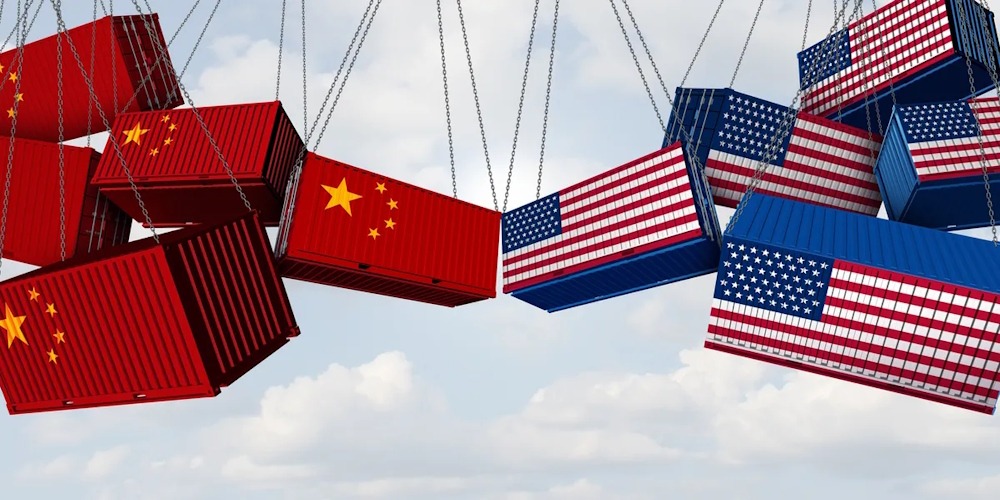
China stated that the US must cease its threats of increased tariffs and called for continued negotiations to address unresolved trade matters, emphasizing that it will not hesitate to respond if Washington continues its actions against Beijing. On Friday, President Donald Trump declared a new 100% tariff on China, alongside export controls on “any and all critical software” set to take effect on Nov. 1. This announcement came just hours after he threatened to cancel a forthcoming meeting with Chinese leader Xi Jinping. That followed China’s implementation of new port fees on US vessels, the initiation of an antitrust investigation into Qualcomm Inc., and the announcement of extensive new restrictions on its exports of rare earths and other essential materials. Beijing defended its actions as necessary for self-protection and charged that the US has implemented new restrictive measures aimed at China since the discussions held in Madrid in September, as stated by the Ministry of Commerce on Sunday. Last month, the US Commerce Department announced a significant expansion of its export controls, effectively addressing loopholes in existing measures aimed at preventing Beijing from accessing advanced chips.
“Threatening with high tariffs at every turn is not the right way to get along with China,” the Commerce Ministry stated. “If the US persists in its own course, China will resolutely take corresponding measures to safeguard its legitimate rights and interests.” Last week, Beijing announced extensive new restrictions on its exports of rare earths and other essential materials. On Thursday, it was announced that overseas exporters of items containing even traces of specific rare earths sourced from China will now be required to obtain an export license, citing national security concerns. Certain equipment and technology for processing rare earths and manufacturing magnets will also be subject to controls. Vice President JD Vance addressed China on Sunday, asserting that the US holds greater leverage in the intensifying trade dispute. He stated that the Trump administration is prepared to be reasonable, provided that Beijing is willing to reciprocate. “If they respond in a highly aggressive manner, I guarantee you, the president of the United States has far more cards than the People’s Republic of China,” Vance said.
The Commerce Ministry stated on Sunday that China’s export control does not constitute a ban on exports, and that applications adhering to the regulations will receive approval. Prior to the announcement of the measures, China had informed pertinent countries and regions via the bilateral export control dialogue mechanism, it stated. The ministry stated that China has thoroughly evaluated the potential effects of the measures on industrial and supply chains beforehand and is confident that the relevant impact is quite limited. The country expressed its readiness to enhance dialogue and exchanges regarding export control with other nations to more effectively uphold the security and stability of global industrial and supply chains. Beijing has introduced new port fees for US ships, aligning with the date when Washington intends to implement new charges on large Chinese vessels arriving at American ports. The US’s implementation of Section 301 measures targeting China’s maritime, logistics, and shipbuilding industries has significantly harmed China’s interests and undermined the atmosphere of bilateral economic and trade talks. China is resolutely opposed to these actions, according to the Commerce Ministry.
The ministry added that the actions taken by China are “aimed at safeguarding the legitimate rights and interests of Chinese industries and enterprises, as well as maintaining a fair competitive environment in the international shipping and shipbuilding markets.” On Sunday, China’s market regulator announced its intention to initiate an antitrust investigation into tech giant Qualcomm. The State Administration for Market Regulation emphasized discussions with Qualcomm regarding its acquisition of Israel’s Autotalks Ltd., as stated in a recent announcement, subsequent to the declaration of the investigation last week. Qualcomm had informed that it would cancel the deal in March 2024; however, it proceeded to finalize the move without any prior communication, it stated. The investigation into Qualcomm is grounded in clear facts and robust evidence, the agency stated.