Investors watch China’s major policy meeting on tech and stimulus
China is set to commence its most significant annual political meeting next week, as investors look for insights into how Beijing plans to advance its technological aspirations while rejuvenating a delicate consumer economy. During the weeklong gathering of the National People’s Congress beginning March 5, officials are anticipated to establish a 2026 growth target of 4.5 per cent to 5 per cent, a decrease from approximately 5 per cent in previous years — indicating that leaders may be willing to accept a slower pace of expansion amid ongoing challenges such as a property slump and deflation. The meeting assumes greater significance as policymakers will delineate priorities associated with a new five-year plan. Investors are keenly awaiting insights into Beijing’s plans to bolster innovation and revive the momentum of Chinese stocks, which experienced a significant surge last year due to AI but have faced a downturn this year. They will also be pursuing tangible actions to enhance domestic demand — a frequently stated objective that remains vague in its details thus far. “The policy meeting could provide a fresh catalyst for stocks, which have been lackluster this year amid a lack of policy support,” said Marvin Chen. He observed that cyclical and property stocks have traditionally provided the most significant returns in the month after the event.
The key areas that traders and analysts are closely monitoring in anticipation of the meeting are as follows: From DeepSeek in early 2025 to a surge in robotics shares, tech stocks have driven China’s market rebound. Investors are currently looking for confirmation that the rally has more momentum ahead. An AI “scare trade” has unsettled tech shares worldwide, prompted by possible economic disruptions. In China, traditional Internet giants are experiencing a decline in pressure, as capital shifts away from Alibaba Group Holding Ltd. and Tencent Holdings Ltd. towards smaller companies perceived as more immediate beneficiaries of AI, such as MiniMax Group Inc. and Knowledge Atlas Technology JSC Ltd. “Technology will remain a key focus for capital allocation,” according to a note. In addition to the established leaders in AI supply chains, analysts identify potential winners in the realms of cloud computing, smart driving, and quantum technology. Reviving domestic demand has been a consistent theme in recent policy meetings at the highest levels. The shift arises as an increasing number of countries resist China’s low-cost exports, intensifying the pressure on Beijing to depend less on external demand. “We see meaningful likelihood of enhanced consumption support that goes beyond consumer durables,” stated Homin Lee. Earlier this year, investors shifted their focus to consumer sectors due to worries over inflated tech valuations; however, this rebound was brief, lacking a lasting increase in consumer demand and prices. The CSI 300 Consumer Discretionary Index and CSI 300 Consumer Staples Index are both positioned as some of the least favored sub-sector gauges in China this year.
In 2025, China initiated the “anti-involution” campaign aimed at addressing the intense competition characterized by overcapacity and price wars. The government urged industries like solar and electric vehicles to prioritize quality and innovation over mere volume. Initial indicators suggest that the initiative is building momentum. Prices in segments of the solar and materials supply chains have experienced a rebound, while shares of photovoltaic companies have surged to approach a two-year high. UBS Group AG states that despite the ongoing issue of excess capacity, the campaign could guide the economy towards a reflationary environment in 2026. Investors will continue to assess policymakers’ commitment to reducing excess capacity while also managing the pressures of growth and employment. A prolonged downturn in the property market has significantly hindered China’s economic performance, and reversing this trend would necessitate far more robust policy measures. Officials are expected to reaffirm their support for a new development model that focuses on higher-quality housing and market stabilization, with any additional easing likely delegated to local governments, as stated by Citigroup Inc. Shanghai has recently relaxed its homebuying regulations, with Beijing and Shenzhen anticipated to adopt similar measures. Morgan Stanley analysts, among them Stephen Cheung, expressed caution, indicating it may be premature to adopt a positive outlook. They highlighted potential risks such as policy disappointment at the NPC, an increase in profit warnings, and a further decline in home sales.
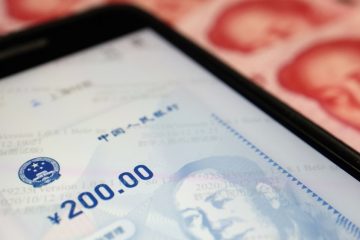
In the bond market, focus will be directed towards the fiscal budget and the extent of supply pressure that government issuance might generate, particularly at the long end. Beijing is anticipated to increase the issuance of ultra-long special sovereign bonds to bolster domestic demand and stabilize growth. Morgan Stanley estimates that issuance could reach 1.5 trillion yuan ($219 billion), an increase from 1.3 trillion yuan last year. China’s yield curve has steepened due to an accommodative monetary policy and an increased debt quota. The gap between 30- and 10-year government bond yields increased to over 40 basis points by the end of 2025, up from 24 basis points the previous year, highlighting worries regarding supply-demand imbalances in longer-term debt. The Communist Party’s proposal for the next five-year plan through 2030 included a pledge to “push forward the internationalization of the yuan.” That represents a more assertive approach than the earlier strategy, which aimed to pursue the objective in a “stable and prudent” fashion. Investors will seek indications of how China intends to leverage diminishing confidence in the US dollar and further Xi’s goal for a “powerful currency.” The onshore yuan continues to hover close to a three-year high against the greenback, even following a slight retreat after the People’s Bank of China’s recent attempt to temper the rally.