Artemis II Crew Returns to Earth After Historic Moon Mission
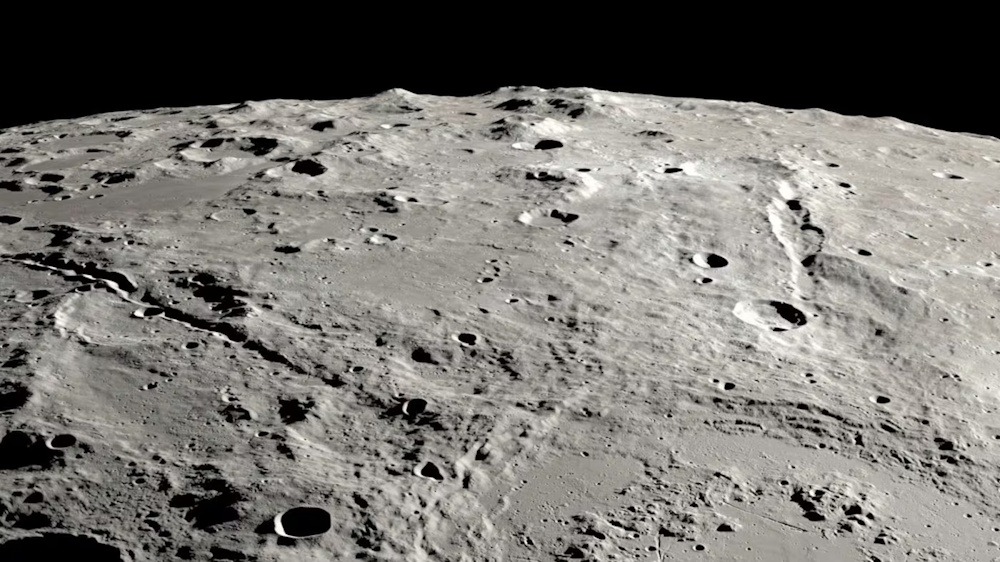
Nasa’s four Artemis astronauts have completed their mission behind the moon and are now en route back to Earth, achieving a remarkable feat by breaking space travel distance records and bringing humanity closer to the lunar surface than it has been in over half a century. “All of your flight controllers and your flight director have reversed their Artemis II patches.” Jenni Gibbons stated “We are Earth-bound and ready to bring you home,” a Canadian space agency astronaut and backup crew member for Artemis II, as the astronauts emerged from an anticipated communications blackout around the moon. At its closest approach to the moon, the Orion capsule, constructed by Lockheed Martin Corp. for Artemis II, reached an estimated distance of 4,067 miles from the lunar surface, as per NASA’s calculations. From the perspective of the crew, the moon would have seemed approximately the size of a basketball held in an outstretched hand. The spacecraft achieved its furthest distance from Earth shortly thereafter, attaining 252,756 miles, as noted by Nasa Administrator Jared Isaacman in a post on X. The astronauts have recently set a new record for the longest distance traveled in space.
On Monday, they exceeded the distance traveled by the Apollo 13 crew in 1970, which was 248,655 miles (400,170 kilometers) from Earth, according to NASA. “We will continue our journey even further into space before Mother Earth succeeds in pulling us back to everything that we hold dear,” Canadian astronaut Jeremy Hansen remarked as the crew achieved a new milestone. “However, we primarily seize this opportunity to urge both this generation and the next to ensure that this record does not endure.” Hansen subsequently proposed the designation of two craters located on the lunar surface. The initial proposal was Integrity, named after the crew’s capsule, while the subsequent suggestion was Carroll, in honor of mission commander Reid Wiseman’s late wife. Wiseman and the crew were visibly emotional during the suggestion and all shared a moment of embrace. The close approach marked a significant milestone in NASA’s Artemis II mission, which was launched into space on Wednesday, April 1, transporting NASA astronauts Wiseman, Victor Glover, Christina Koch, and Hansen towards the moon. During the flyby, the Artemis II crew experienced the anticipated communications blackout as they traversed the far side of the moon, obstructing their direct line of sight with Earth. Comparable blackouts were observed during the uncrewed Artemis I mission as well as during the Apollo missions. “This is a poignant moment, as it’s the first time in over 50 years that we have humans completely unreachable by anyone else on Earth,” stated Leah Cheshier Mustachio, public affairs officer at Nasa’s Johnson Space Center, as the crew slipped behind the moon. “Regardless of how remote or isolated we may be, we can connect with anyone residing on the planet.” However, as the crew navigates behind the moon, establishing communication with them is entirely unfeasible.
The crew was afforded a distinctive opportunity to witness a solar eclipse from Orion. The spacecraft observed the sun obscured by the moon, allowing the astronauts to capture images and analyze the sun’s outer atmosphere, referred to as the corona. They were presented with the chance to observe and capture images of a range of planets, including Venus, Mars, Saturn, and, naturally, Earth. “Regardless of the duration of our examination, our cognitive faculties are failing to interpret the image presented before us. “It is absolutely spectacular, surreal,” Wiseman remarked regarding the eclipse. “There is no adjective.” I will have to create some new terms to articulate what we observe through this window. The mission functions as a comprehensive preparatory exercise designed to evaluate the vehicles intended for facilitating human landings on the lunar surface within a timeframe of approximately two years. In the lead-up to the closest approach, the crew captured a multitude of images focusing on the highest priority targets on the lunar surface, providing a detailed account of the colors and lighting conditions they observed with their own eyes. Nasa has expressed optimism that the astronauts will utilize their eyes – “the best cameras in the universe,” as Nasa flight director Judd Frieling stated during a conference – to observe sections of the far side of the moon that have remained unseen by humans until now. “It turns out there’s about 60 per cent of the far side, I think, that has never been seen by human eyes because of the lighting conditions,” Wiseman stated prior to the launch. “Apollo always sought that illumination on the lunar near side to enhance their landing and launch capabilities.”
In the days following the launch, Nasa scientists have been engaged in efforts to finalize the scientific objectives and compile a list of lunar targets for the crew to focus on during the flyby. Through the examination of specific targets from various perspectives and lighting conditions as the capsule progresses, the crew aims to assist scientists in gaining insights into the evolutionary history of the moon’s surface. “The human eye, particularly when paired with a well-trained brain, which I can confidently assert these four individuals possess, is capable of, in the briefest moment, making nuanced color observations that Apollo data indicated can provide scientific insights,” stated Kelsey Young during a conference on Saturday. The Artemis II crew achieved more than mere distance records on Monday. Glover marks a historic milestone as the first Black astronaut to journey to the moon, while Koch achieves the distinction of being the first woman to accomplish this feat. Hansen has become the inaugural Canadian to journey to the moon. “To all of you down there on Earth and around Earth, we love you from the moon,” Glover communicated prior to the interruption in communications.