US Futures and Dollar Dip Amid Trump Tariff Turmoil
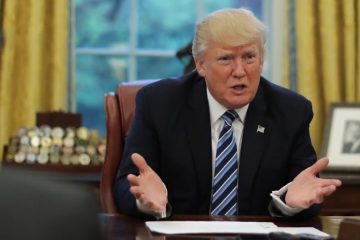
On Monday, US Futures and the dollar experienced a decline as uncertainty surrounding U.S. trade policy reignited the “sell America” trade. This shift followed President Donald Trump’s decision to impose a new 15% tariff in response to the Supreme Court’s ruling against his global levies. Gold rose alongside safe-haven currencies like the Japanese yen and Swiss franc. European stock futures declined as investors sought to understand the implications for the world’s major economies, while shares in Hong Kong surged amid the belief that U.S. tariffs on China might decrease. The U.S. Supreme Court invalidated Trump’s emergency tariffs on Friday, prompting the president to swiftly declare a new 10% rate on the rest of the world, which was subsequently raised to 15% on Saturday. “The tariff landscape is now more uncertain than before, uncertainty is not good news for any economy or market,” said Rodrigo Catril. “Unless common sense prevails, we may find ourselves in a repetitive cycle where new tariffs are introduced, possibly reversed, only for additional tariffs to be proposed, leading us to repeat this process once more.”
S&P 500 futures declined by 0.2%, while Nasdaq futures experienced a 0.4% decrease, having previously fallen by as much as 1%. U.S. stock markets are poised for a significant test later this week with the upcoming earnings report from Nvidia. This announcement is expected to create considerable impact, as the chip designer constitutes nearly 8% of the S&P 500 index. The dollar decreased by 0.14% against the yen, settling at 154.82, whereas the euro appreciated by 0.16%, reaching $1.1799. The dollar experienced a decline of 0.22% against the Swiss franc, while gold saw an increase of 1%, reaching $5,153 per ounce. Additionally, silver rose by 2.8%, now priced at $86.96 per ounce. The timeline for the implementation of the new tariffs remains uncertain, as does the potential for exclusions and the applicability of the 15% rate to all countries. Some nations, such as the UK and Australia, previously imposed tariff rates of 10% under the former regulations, whereas numerous countries in Asia maintained higher rates.
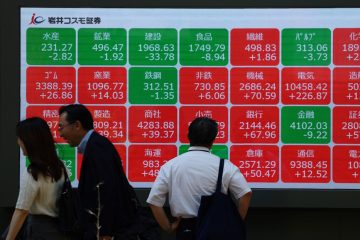
The Yale Budget Lab reported that the overall average effective tariff rate is projected to be 13.7% following Trump’s announcement on Saturday, a decrease from 16% – the highest rate since 1936 – prior to the Supreme Court’s ruling. It stated that it anticipated the 15% tariffs would come to an end after 150 days, in accordance with the 1974 Trade Act under which they were implemented. If so, the average rate would fall to 9.1%. “Trump is Trump – he won’t abandon his America first mantra and will keep pushing the limits as long as he’s in power,” said Tomas Hildebrandt. “(There) may be some relief for some European exporters, but the tough anti-Europe attitude of the Trump administration isn’t fading away.” Asian markets displayed a mixed performance, yet stocks generally advanced, as evidenced by the MSCI Asia index, which excludes Japan, rising by 0.86%. Hong Kong’s Hang Seng index surged by 2.53%, driven in part by anticipations that China will encounter reduced tariffs following the ruling. Analysts at Goldman Sachs observed that China might experience a decline of 6.6 percentage points in its tariff rate.
Brent crude oil prices decreased by 0.6% to $71.31 a barrel, reversing some of the gains achieved last week following Trump’s statement that the U.S. could take military action against Iran amid a significant buildup of forces in the region. Further discussions between the U.S. and Iran are set for Thursday. Government bonds experienced a modest increase in both the United States and Europe, as the 10-year U.S. Treasury yield decreased by just under a basis point to 4.078%. Yields move in the opposite direction to prices.