Stocks Slide as Investors Worry About Tech Valuations
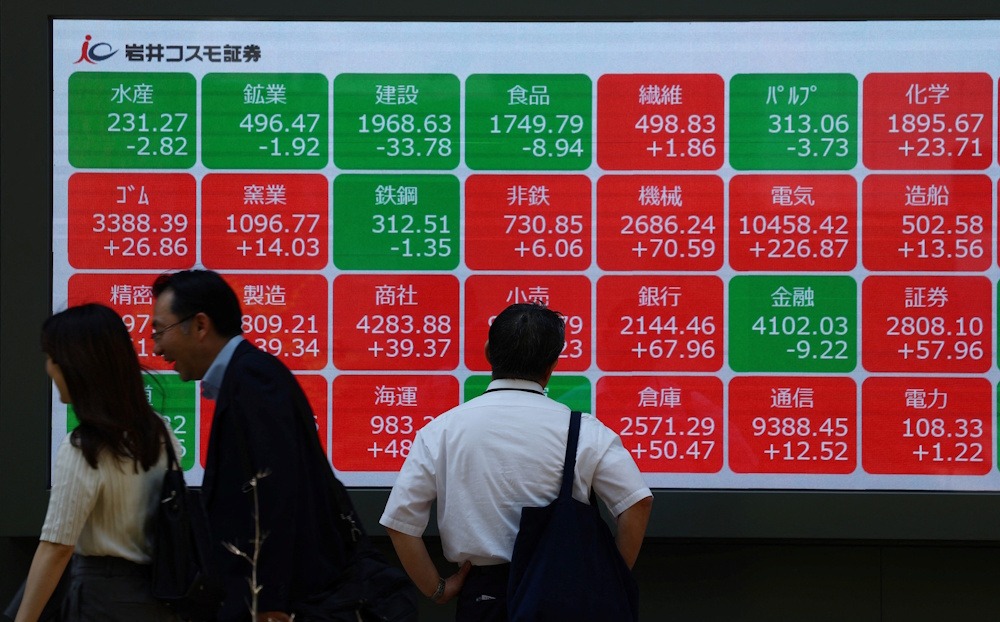
On Wednesday, stocks experienced a decline, as a selloff in global tech shares impacted markets from Tokyo to Frankfurt. This movement drove volatility to levels not witnessed since April, simultaneously bolstering safe-haven assets such as gold and government bonds. Asia stocks faced significant declines overnight, with Japan’s Nikkei dropping nearly 7 per cent from Tuesday’s record highs at one point. Meanwhile, shares in South Korea fell as much as 6.2 per cent before recovering slightly to close down 2.9 per cent. In Europe, the technology sector lagged behind, marking the lowest performance within the STOXX 600, which experienced a decline of 0.2 percent for the day. Meanwhile, Germany’s DAX saw a decrease of 0.3 percent, and Amsterdam’s AEX index, which includes Nvidia supplier ASML, fell by 0.1 percent. US e-mini futures fell by 0.1 percent, indicating that Tuesday’s 1.2 percent decline for the S&P 500 could persist.
Stocks are pulling back from record highs amid concerns that equity markets may have become overstretched, following remarks from the CEOs of Morgan Stanley and Goldman Sachs, who questioned the sustainability of sky-high valuations. Economist Samy Chaar stated that the overall backdrop remains favorable for equities, as interest rates are expected to continue their decline, while economic growth largely persists. “Statistically speaking, we’ve had a couple of good years, so there is some anxiety here. The data’s still OK, governments are spending, central banks are cutting,” he said. “Earnings are approximately 9 percent higher than initially anticipated.” The private sector is performing admirably. Valuations are indeed extremely demanding. “So there is no room for comfort or error here,” he said.
In a recent statement, JPMorgan Chase’s CEO Jamie Dimon cautioned about an increased likelihood of a substantial correction in the US stock market occurring within the next six months to two years. The warnings arrive amid a notable surge in enthusiasm for generative AI, which has captivated stock markets globally this year, prompting comparisons to the dotcom bubble. “At some point, profits need to be booked. Especially when we’ve seen repeatedly solid runs to record highs,” said Matt Simpson. “Those with money on the line aren’t likely seeking answers right now – they’re just copying each other like kids in an exam. And the answer is to run.” In premarket trading, shares in AMD and Super Micro Computer experienced declines of 4.5 per cent and 6.8 per cent, respectively. In contrast, Big Tech shares displayed greater stability, with Meta rising by 0.3 per cent and Nvidia decreasing by 0.8 per cent. Chinese shares increased by 0.2 percent after the State Council’s tariff commission announced a one-year suspension of the 24 percent additional tariff on US goods, while maintaining a 10 percent levy. This decision follows last week’s meeting between President Xi Jinping and US President Donald Trump.
In currencies, the dollar remained steady, having experienced a decline overnight against the safe-haven yen before recovering those losses to trade at 153.695, nearly unchanged on the day, following the release of minutes from the Bank of Japan’s September policy meeting. The euro was last slightly stronger at $1.1491, having reached a three-month low after five consecutive days of declines. Meanwhile, the pound rose by 0.2 percent to $1.304, recovering from its lowest point since April the previous day, following finance minister Rachel Reeves’ speech on Tuesday, which appeared to signal potential tax increases in her forthcoming budget. Gold, a prominent safe-haven asset, increased nearly 0.85 per cent to $3,965 an ounce. Meanwhile, US Treasury prices maintained some of their overnight gains, resulting in the yield on benchmark 10-year notes remaining steady at 4.09 per cent. In a volatile trading session, Bitcoin dipped below $100,000 for the first time since June. It was last up 2.3 percent at $102,582.