Asian markets soar on Fed easing, AI earnings prospects
Asian share markets mirrored Wall Street’s gains on Friday, buoyed by the increasing likelihood of additional US rate cuts, which are expected to reduce borrowing costs worldwide. This development offers relief to strained bond markets while exerting downward pressure on the dollar. Indexes in Japan, South Korea, and Taiwan all reached record highs, driven by lofty expectations for AI-related earnings growth.
The US consumer price report was the final significant obstacle for the Federal Reserve in considering a cut to interest rates next week, and it turned out to be non-threatening, albeit somewhat firm. Indeed, costs in the CPI that contribute to the Fed’s favored measure of core personal consumption expenditures were on the softer side, prompting analysts at Citi to forecast a steady reading of 2.9 percent for August. “It’s an encouraging reading for Fed officials preparing to engage in a series of rate cuts,” said Veronica Clark. “We maintain our expectation of 125 basis points of rate cuts over the upcoming five FOMC meetings, with an increasing risk that the Fed may reduce rates below 3 percent.” Markets persist in indicating a 100 per cent likelihood of a quarter-point reduction to 4.00 per cent-4.25 per cent next week, while also increasing the probability of two additional easings this year to approximately 90 per cent.
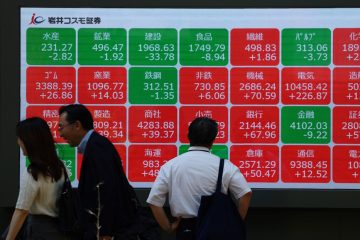
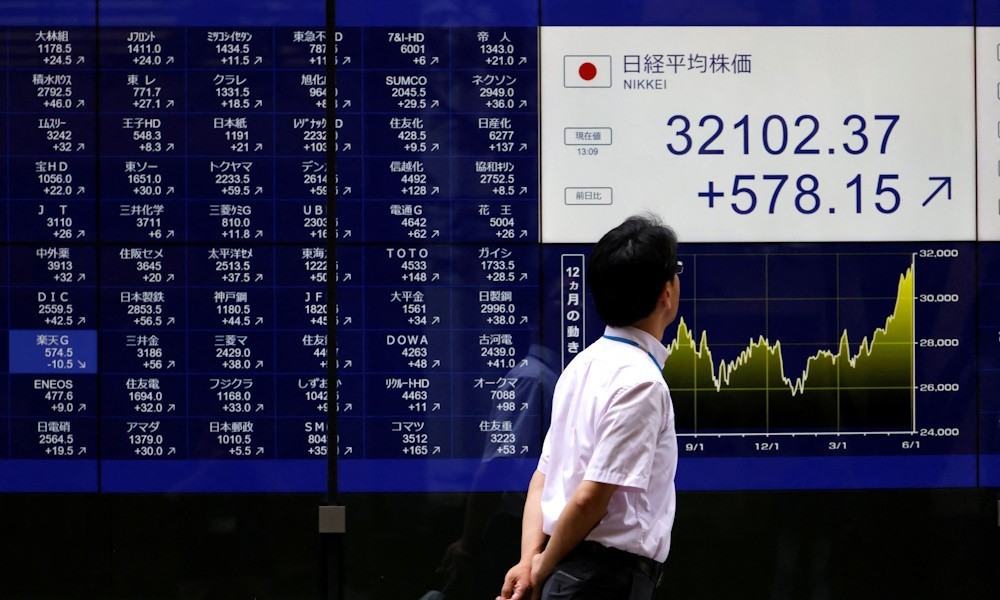
The Treasury market has already softened, with 10-year yields decreasing by 20 basis points over the past two weeks, effectively acting as a rate cut since mortgage rates are linked to yields in the United States. The decline alleviated worries in several other significant bond markets, especially in Europe, which are facing challenges from political instability and increasing fiscal pressures. In Asia, Japan’s Nikkei rose by 0.6 per cent, reaching yet another all-time high and marking a weekly gain of 3.7 per cent. South Korea experienced an increase of 1.1 per cent, bringing its weekly rise to over 5 per cent. Chinese blue chips increased by 0.2 per cent, reaching their highest level since early 2022. MSCI’s broadest index of Asia-Pacific shares outside Japan surged by 1.2 per cent. The positive sentiment extended to European shares, with the EUROSTOXX 50 futures, FTSE futures, and DAX futures all rising by 0.3 percent. S&P 500 futures and Nasdaq futures remained unchanged after reaching new highs overnight. In currency markets, the dollar stood at 147.23 yen, after having briefly reached a peak of 148.20 in the previous session. On Friday, the finance ministers of Japan and the United States issued a statement confirming that neither nation would aim to manipulate currency levels in their respective policies.
The euro remained steady at $1.1730, receiving a slight boost on Thursday when the European Central Bank maintained its rates and indicated it was in a “good place” regarding policy. “This suggests the Governing Council is not inclined to ease in the absence of a large growth shock,” stated Greg Fuzesi. “We have thus moved back our call for a final rate cut from October to December. We acknowledge that the ECB may have reached the end of its rate cuts, yet we maintain that the risks to growth and the inflation outlook warrant a bias towards easing.” Following the meeting the December gathering would present the most plausible opportunity to discuss the necessity of an additional cut to support the economy. Markets suggest a mere one-in-five likelihood of a December easing, alongside an approximate 60 percent probability that the ECB has concluded its actions for this cycle.
In commodity markets, gold remained steady at $3,633 an ounce, slightly below the record high of 3,673.95 reached earlier in the week. Oil prices faced downward pressure following the International Energy Agency’s prediction of an even larger record oil surplus for the upcoming year, as OPEC persists in increasing production. Brent fell by 0.4 percent to $66.09 a barrel, while US crude decreased by 0.5 percent to $62.07 per barrel.