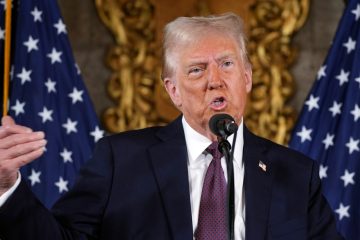
White House Requests Historic $1.5 Trillion for Military During Iran Conflict
The White House is requesting around $1.5 trillion for defense in its fiscal 2027 budget proposal, a move that would raise military expenditure to unprecedented levels in contemporary history, coinciding with the Trump administration’s continued conflict with Iran, as reported. The blueprint, revealed on Friday, acts as a symbolic illustration of the President’s priorities, proposing an increase in government defense spending by over 40 percent relative to the previous year. The strategy emphasizes enhancing munitions and augmenting the US naval fleet, alongside initiating the construction of President Donald Trump’s proposed “Golden Dome” missile defense system. Furthermore, the proposal encompasses substantial salary increases ranging from 5 percent to 7 percent for all military personnel, aimed at enhancing recruitment and retention efforts. Of the $445 billion that the administration plans to allocate to the defense budget, the White House proposes that $350 billion be approved through forthcoming legislation. It has reported that Republicans plan to employ a legislative strategy that necessitates merely a simple majority in the Senate, thus circumventing the requirement for Democratic backing.
The current levels of expenditure are indicative of the administration’s prioritization of the conflict with Iran, implying a lack of intention to reallocate resources to other areas, despite Trump’s earlier assertions regarding a swift reduction of hostilities in the Middle East. In line with this defensive strategy, the Department of Energy budget suggests a substantial increase of over $3.5 billion in funding for the National Nuclear Security Administration, aimed at the development and modernization of warheads and naval technology. However, it is observed that these annual budget requests are predominantly regarded as aspirational, given that Congress retains ultimate authority over government expenditures and has a history of overlooking substantial elements of administration proposals. In stark opposition to the military escalation, the budget aims to reduce non-defence expenditures by 10 per cent, translating to a $73 billion reduction that predominantly impacts social services and healthcare. The administration has criticized these domestic programs as “woke,” a term that is referenced 34 times in the 92-page document.
Included in the proposed cuts to safety net initiatives are the $4 billion Low Income Home Energy Assistance Program and the $775 million Community Services Block Grant. It is reported that the proposal also encompasses the cancellation of $15 billion in funding from the prior administration’s infrastructure law and a reduction of over $1 billion from climate research. The proposal would lead to a 50% reduction in funding for the Environmental Protection Agency, thereby eliminating several environmental programs. The budget asserts that environmental justice initiatives foster “divisive racial discrimination”, all the while suggesting a 12 per cent reduction in funding for the Interior Department. Despite these extensive cuts, the plan designates $10 billion for a compulsory fund aimed at developing “targeted, priority construction and beautification projects in and around Washington DC.” While housing assistance for low-income Americans is subject to reductions, the budget allocates $5 million to the Melania Trump Foster Youth to Independence Initiative, as reported.
The blueprint additionally focuses on the Department of Homeland Security, suggesting reductions in funding for FEMA and the Cybersecurity and Infrastructure Security Agency. The White House claimed that specific grant programs contributed to “mass illegal migration” or were “weaponised to target Americans exercising their First Amendment rights.” Finally, it is reported that the administration plans to initiate the privatization of airport screeners and aims to pursue a $5 billion reduction from the National Institutes of Health. Further reductions encompass a $1.4 billion decrease in funding for the Internal Revenue Service, which Trump asserts has been “weaponised” against citizens, alongside the removal of $4.2 billion in subsidies for electric vehicle chargers.