US launches unfair-trade probes to bolster Trump’s tariffs
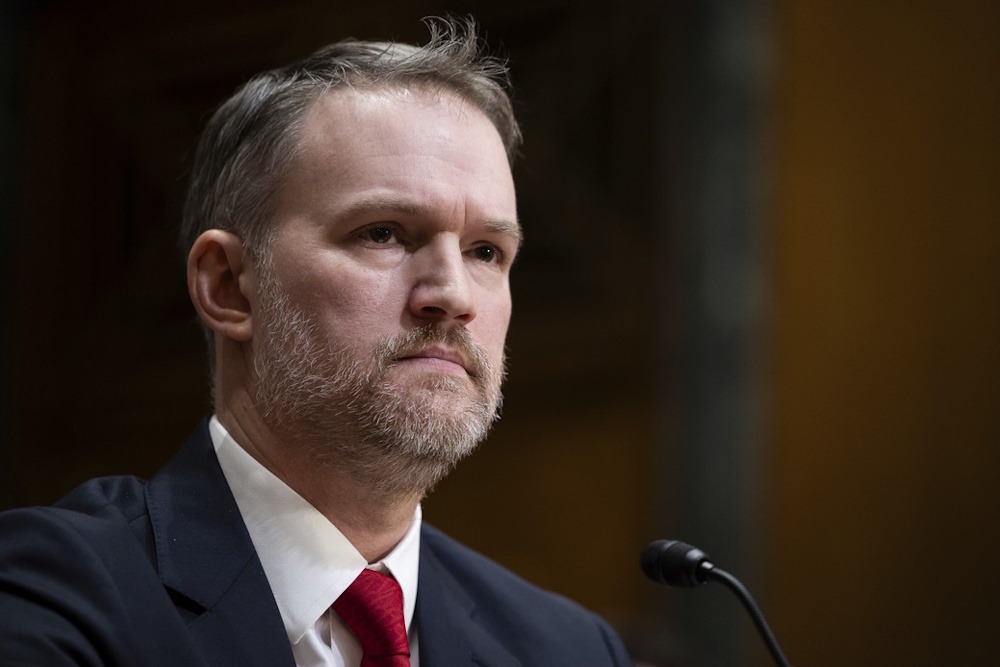
The administration of US President Donald Trump announced on Wednesday the initiation of two new trade investigations. These inquiries will focus on excess industrial capacity among 16 major trading partners and the issue of forced labour, aiming to restore tariff pressure following the US Supreme Court’s dismantling of a significant portion of Trump’s tariff program last month. US Trade Representative Jamieson Greer stated that the “Section 301” unfair trade practices investigation may result in new tariffs being imposed on China, the European Union, India, Japan, South Korea, and Mexico by this summer. Other trading partners involved in the excess capacity investigation include Taiwan, Vietnam, Thailand, Malaysia, Cambodia, Singapore, Indonesia, Bangladesh, Switzerland, and Norway. Canada, recognized as the second-largest trading partner of the US, was not identified as a target of the investigation. “So these investigations will focus on economies that we have evidence appear to exhibit structural excess capacity and production in various manufacturing sectors, such as through larger persistent trade surpluses or underutilized or unused capacity,” Greer told reporters on a conference call.
The official notice from USTR regarding the excess capacity investigation pointed to the automotive industry in both China and Japan, highlighting that an increasing number of companies are facing unprofitability or struggling to fulfill interest payments from their operations. It was reported that despite China’s electric vehicle capacity exceeding national demand, the country’s leading EV manufacturer, BYD, was “aggressively expanding” its overseas manufacturing footprint, with factories in Uzbekistan, Thailand, Brazil, Hungary, and Turkey, and was anticipated to increase capacity in Europe, where current automotive plants are functioning at only 55% of capacity. USTR pointed to significant US trade surpluses in Germany and Ireland as proof of EU excess capacity. Singapore exhibited an excess of global capacity in semiconductors, even in light of a trade deficit with the US. Similarly, Norway demonstrated excess capacity, as evidenced by substantial exports of fuels and seafood, it added. Greer also stated that on Thursday he would commence another investigation under Section 301 of the Trade Act of 1974 to prohibit US imports of goods produced with forced labor.
The investigation encompasses over 60 nations. The United States has implemented restrictions on solar panel imports and various products from China’s Xinjiang region, following the enactment of the Uyghur Forced Labor Protection Act, which was signed into law by former President Joe Biden. This investigation may broaden the scope of these measures to include additional countries. Greer expressed his desire for other nations to implement bans on products made with forced labor, akin to those established in a trade law that has been in place for nearly a century. The US claims that Chinese authorities have set up labor camps for ethnic Uyghur and other Muslim groups in the western region, while Beijing refutes the allegations of abuse. Greer expressed his hope to finalize the Section 301 investigations, along with proposed remedies, prior to the expiration of the new temporary tariffs imposed by Trump in late February, which are set to end in July. Following the Supreme Court’s decision on February 20 to invalidate Trump’s global tariffs as unlawful under a national emergencies law, he enacted a 10% tariff for a duration of 150 days, citing Section 122 of the Trade Act of 1974. He presented a clear timeline for the excess capacity investigation, indicating that public comments would be accepted until April 15, with a public hearing scheduled for approximately May 5.
The probes provide the Trump administration with a means to reestablish a credible tariff threat against trading partners, ensuring ongoing negotiations and the implementation of trade deals that were designed to mitigate his elevated tariff rates under the International Emergency Economic Powers Act. Greer stated that the new probes, which have been anticipated by administration officials, should not catch trading partners off guard, and they are expected to adhere to their agreements. However, he refrained from asserting that this would exempt them from all new Section 301 tariffs. He stated that Trump was resolute in his pursuit of tariffs and “will find a way to deal with unfair trading practices.” He will discover a method to reduce our trade deficit. He will discover a method to safeguard US manufacturing. “We have a lot of tools to do it,” Greer said. The probes arrive as officials from the Trump administration, led by US Treasury Secretary Scott Bessent, prepare to engage with their Chinese counterparts in Paris this week, laying the groundwork for a meeting between Trump and Chinese President Xi Jinping in Beijing at the end of March. The Supreme Court’s decision, along with subsequent temporary tariffs, effectively reduced Trump’s tariffs on Chinese goods by 10 percentage points, diminishing US leverage in trade and export controls with China. During his first term, Trump utilized a Section 301 probe to support his tariffs on numerous Chinese imports, which were approximately 25%.
This law is generally regarded as legally sound, having successfully endured previous court challenges. The investigation into excess capacity focuses on a significant issue that has been brought to China’s attention by various administrations, from Trump’s initial term to the Biden administration, regarding the increasing state-supported manufacturing output that inundates the global market with inexpensive products. Greer stated that this encompasses production “untethered” to market demand and that the issue has extended to other countries. He stated that the investigation will concentrate on evidence such as substantial global current account surpluses, government subsidies, repressed domestic wages, noncommercial operations of state-owned enterprises, insufficient environmental and labor standards, subsidized lending, and currency practices.