US Greenlights Some Nvidia Chip Sales to UAE in Strategic AI Diplomacy Move
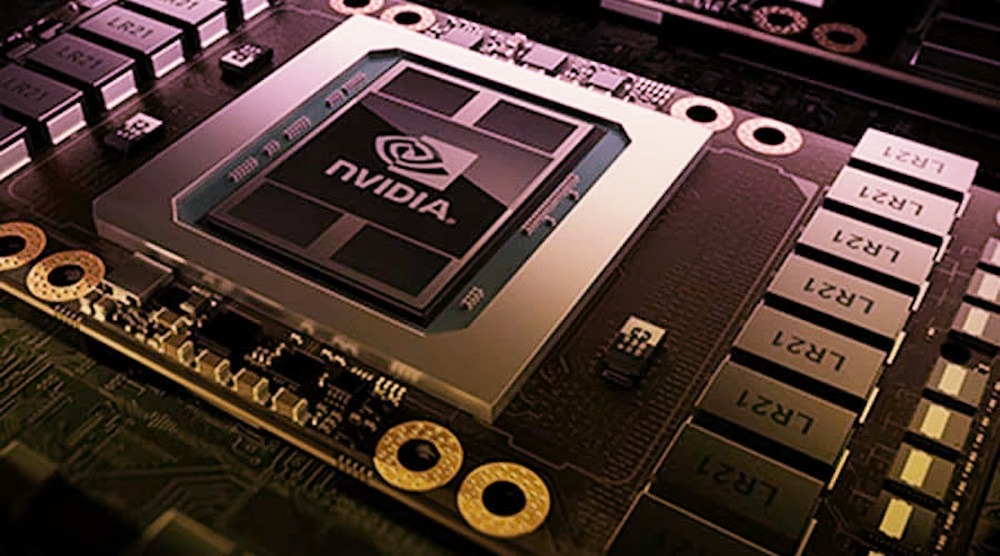
The US has sanctioned the export of several billion dollars in Nvidia Corp. chips to the United Arab Emirates, marking a preliminary move in the execution of a contentious agreement that may outline a framework for American AI diplomacy. The Commerce Department’s Bureau of Industry and Security has recently granted Nvidia export licenses as part of a bilateral AI agreement established in May, according to sources. The approval followed the UAE’s establishment of definitive plans for a corresponding investment in the United States. The official refrained from disclosing the precise value of the sanctioned chip shipments and Emirati investment. A representative for the UAE did not provide a response to a request for comment, and Nvidia chose not to comment as well. “The Commerce Department is fully committed to the transformational U.S.-UAE AI partnership deal,” a spokesperson stated. The number of active investors on the National Stock Exchange has surged by 44 per cent over the past year, reaching 47.9 million by the end of September 2024. The increase in active clients is supported by the market rally, particularly with the Nifty 50.
The licenses signify the initial permits for Nvidia AI chip sales to the Gulf nation following President Donald Trump’s inauguration. They represent a concrete indication of advancement regarding an agreement revealed almost five months prior, focused on a substantial five-gigawatt data center in the capital of the Gulf nation, which lists OpenAI as a key tenant. The accord has generated considerable concern in Washington, with certain officials in the Trump administration and on Capitol Hill expressing doubts about the prudence of establishing such a large site outside the US, particularly in a region where Beijing has cultivated substantial business and economic connections. Securing the permits stands as a paramount concern for the UAE, where certain officials have expressed frustration regarding what they perceive as a sluggish pace of US approvals. The Gulf nation has identified AI as a key priority, allocating substantial resources towards infrastructure development both domestically and internationally. At the core of the AI agreement lies an Emirati commitment to invest an impressive $1.4 trillion in the United States over the coming decade, a promise that the Gulf nation has yet to detail in terms of specific initiatives. The US, meanwhile, intended to authorize the production of up to 500,000 advanced American AI chips each year, with one-fifth designated for the Abu Dhabi AI powerhouse G42. The initial batch of permits does not encompass any chips for G42, which is collaborating with OpenAI on a campus in the UAE’s capital city, as reported by sources. G42 did not provide a response to the request for comment.
According to sources, the timeline for issuing additional licenses remains uncertain, noting that it will largely depend on the progression of the UAE’s specific investment plans. Under the accord, the oil-rich UAE will match in investment what it receives in chip shipments, on a dollar-for-dollar basis. The Persian Gulf demonstrates a significant demand for AI and possesses the financial resources to support it, positioning the region as one of the most crucial markets and financiers for technology leaders such as Nvidia and OpenAI. Gulf nations, including the UAE and Saudi Arabia, have faced US restrictions on advanced AI chip shipments since 2023 due to concerns that the technology might be diverted to China, which is under more extensive semiconductor controls. Under President Joe Biden, US officials notably decelerated the approval of those licenses, as they focused on establishing a global framework that ultimately limited the volume of chip sales to various nations, including the UAE. Under that policy, which Trump’s team is not enforcing and has stated it will formally rescind, companies could circumvent national limits in exchange for security commitments. According to sources, Biden’s team granted several licenses for chip shipments to the UAE as his term was drawing to a close. Additionally, during his tenure, G42 formed a partnership with Microsoft Corp., largely influenced by the Emirati company’s commitment to sever connections with China’s Huawei Technologies Co.
Trump’s team, on the other hand, aims to expand their efforts. The Abu Dhabi data center was among several AI announcements that surfaced during Trump’s visit to the Middle East in May. Officials have stated that the strategy aims to secure substantial investment in the US while also preventing Chinese companies like Huawei from gaining overseas customers in the ongoing AI competition between the world’s two largest economies. “President Trump’s policy boxes China out of the Middle East whereas the previous administration’s policy forced these countries into China’s arms,” David Sacks stated this week. Huawei has made efforts to attract customers in the UAE, although it had seen minimal success at that point. The company was providing prospective clients with several thousand of its Ascend 910B AI chips, an older generation model, along with remote access to more sophisticated systems situated in China. While Sacks and others have argued that this is a reason for the US to move faster, some Trump officials viewed the small size of Huawei’s pitch as evidence that the Chinese hardware giant has a limited capacity to compete. Before Trump’s visit, sources indicated that the US strategy had initially involved the approval of approximately 100,000 advanced AI chips each year. That later escalated to as many as 500,000 chips annually — a rise that has led some officials to believe the US did not receive adequate benefits in return, especially concerning matters related to China. Certain officials expressed concerns that the bilateral accord established in May did not provide adequately detailed security conditions for the chip shipments, which are destined for areas with strong connections to Beijing.
Sacks previously stated that the “vast majority” of advanced chips in the UAE “will be owned and operated by American cloud companies” – consistent with the agreement for G42 to receive a fifth of the total shipments to the country. However, the timing of when local companies such as G42 may obtain those licenses, as well as the conditions surrounding them, remains uncertain. Shortly following the conclusion of Trump’s trip, Commerce Secretary Howard Lutnick informed lawmakers that “we are going to allow our allies to buy AI chips, provided they’re run by an approved American data center operator, and the cloud that touches that data center is an approved American operator.”