Trump’s strike threats could backfire on Iran deal
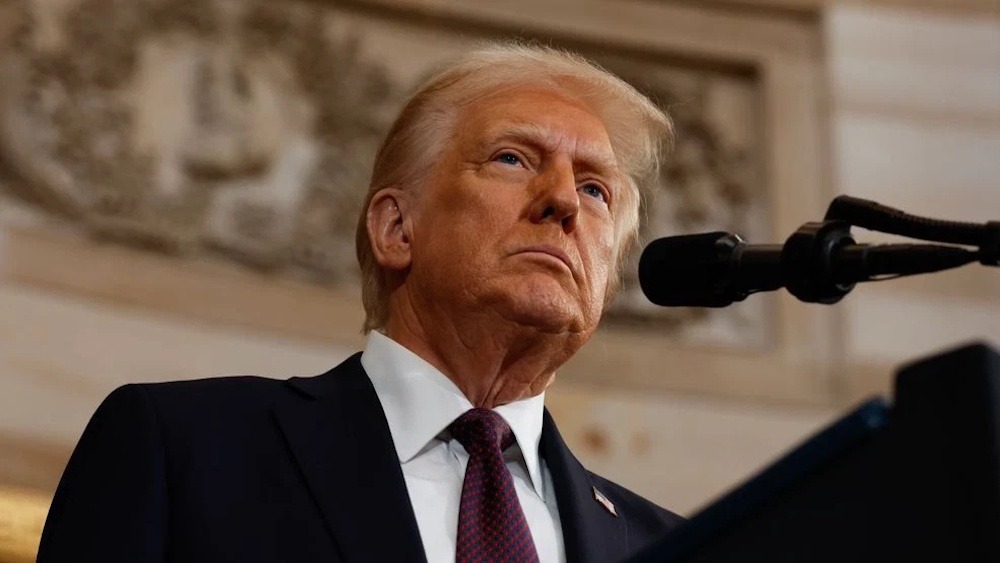
President Donald Trump stated he is contemplating limited military strikes to compel Iran into agreeing to a new nuclear deal, yet such bombings could potentially backfire, leading to a new destabilizing conflict in the Middle East. The Pentagon has orchestrated a significant deployment to the region that includes two aircraft carriers, fighter jets, and refueling planes, providing Trump with the option to initiate limited or extended operations against Iran. However, Trump and other officials from the administration have provided inconsistent public statements regarding their actual desires for a new agreement with Tehran. Experts on Iran contend that conducting bombings during negotiations could undermine a potential agreement and may trigger a lethal cycle of retaliation. Hormuz Warning Shot, US Warship Buildup – Increasing Risks from Iran A senior government official in the region, who requested anonymity due to the sensitivity of the discussions, indicated that Tehran would likely suspend its participation in talks if the US were to initiate a strike. “He’s not going to get a diplomatic agreement out of the Iranians if he attacks them again,” stated Barbara Slavin. The military threats alone — even if the US doesn’t ultimately act on them — “is going to make them less willing to make a deal.” Trump has set a deadline of 10 to 15 days, yet it remains uncertain what a new series of airstrikes — whether limited or otherwise — would truly accomplish.
In June, Israel and the US conducted extensive bombings of the country’s nuclear sites and air defenses, with the president stating, “key nuclear enrichment facilities have been completely and totally obliterated.” The US and Israel may consider targeting Iran’s ballistic missiles; however, the risk lies in the possibility that Tehran might launch them at US or allied targets before they are neutralized, as noted by Slavin. Israeli Prime Minister Benjamin Netanyahu — whose administration has recently engaged in military actions in Gaza and Lebanon, and conducted bombings in Syria and Iran — has consistently advocated for US airstrikes on Iran over the years. He recently traveled to Washington to advocate for more comprehensive demands in the ongoing diplomatic talks between the White House and Tehran. During a news conference on Friday, when asked about his message to the Iranian people, Trump stated: “They better negotiate a fair deal. They better negotiate.” During an appearance, Middle East envoy Steve Witkoff stated, “zero enrichment” is non-negotiable for any deal with Iran. “And we must retrieve the material. They’re probably a week away from having industrial-grade bomb-making material and that’s really dangerous, so you can’t have that,” he stated. “This is something they have to stick with until they prove to us that they can behave.” He remarked that Trump is “curious” why Iran hasn’t capitulated to the demands in the face of US military power.
Trump has demonstrated a tendency for swift military actions — such as short bombing campaigns in Yemen, Syria, and Nigeria, along with the special operations raid that apprehended Venezuela’s Nicolas Maduro in January — yet an assault on Iran might trigger a response that could draw the US into a more extended conflict. “Historically, Tehran has not acted in line with US assumptions and limited strike campaigns don’t always unfold as envisioned,” said Becca Wasser. “Air and missile strikes are incredibly attractive to senior leaders because they can be done from afar and ostensibly can achieve quick wins,” she said, adding that limited campaigns often turn into “long, costly endeavors.” The evolving US rationale for negotiations — and military actions — complicates the understanding of US intentions further. Trump’s initial threat of airstrikes was made in support of the protests in Iran during December and January, which the regime has since violently suppressed, resulting in the deaths of thousands. Secretary of State Marco Rubio has emphasized the need for concessions regarding Iran’s ballistic missile program, as well as support for militant groups like Yemen’s Houthis and the treatment of protesters, to ensure a “meaningful” deal. However, Iranian officials have resisted the idea of a broader agreement. Trump now appears to be advocating for a limited nuclear deal, despite having rejected the 2015 Iran agreement negotiated during the Obama administration in his first term — a withdrawal that may render significant, upfront concessions from Tehran even less probable. According to a report, the indirect negotiations occurring between the US and Iran are centered on the technical aspects of Tehran’s atomic program, including the location, level, and quantity of uranium centrifuges.
US officials have acknowledged Iran’s red line regarding the continuation of uranium enrichment, as reported by ISNA, citing a statement from one of the country’s diplomats. It remains uncertain if Trump will initiate strikes or if he is merely exerting pressure on Tehran. The significant and visible buildup of US forces in the region — with military aircraft having their transponders activated — is probably a deliberate message, according to a former US official knowledgeable about US Central Command planning. A preemptive strike by the US could target Iran’s anti-ship missile batteries, the individual stated, which would eliminate a crucial capability and reduce the risk of civilian casualties due to their locations being distant from population centers. Iran has been significantly weakened by prior airstrikes and has recently encountered its most severe unrest in decades. However, the nation still possesses the ability to retaliate against the US. According to the former US official, Iranian retaliation is likely to involve the use of short-to-medium-range ballistic missiles, potentially targeting US bases in the region, along with the activation of its regional proxies. “Right now, they’re trying to buy time, and they’re trying to make concessions that are symbolic rather than real,” said Dennis Ross. “The Iranians are signaling there will be a long war, knowing Trump doesn’t want a long war. Trump is telling the regime it will pay a price it hasn’t before,” he added. “Neither side wants a war.”