Trump’s love of UK nobility gives Starmer an opportunity to improve relations
When Donald Trump and Keir Starmer spoke for the first time last year, it was evident that the US president had a distinct affinity for Britain. “I love the UK, I love the Royal Family, I love the King,” he said to Starmer shortly after the British premier reached out to express his support following the shooting incident at Trump’s campaign rally. The British state has leveraged that affection in the months since Trump retook the White House to curry favor with an unpredictable leader known for provoking conflicts with allies, often leading to diplomatic and economic strains.
In February, during his visit to the White House, Starmer presented a hand-signed letter from King Charles III, inviting the president to a “really special, unprecedented” second state visit to Britain, following his first term when he was hosted by Queen Elizabeth II. Trump expressed his enthusiasm: “That’s a great, great honor.” Royal biographer Hugo Vickers noted that the prime minister “was playing to Trump’s Achilles heel,” using King Charles as bait to draw him across the Atlantic. “The reason there’s a second state visit is because Starmer wants it for political reasons, so he’s using the King as his diplomat,” said Vickers. The visit has been expedited to this week. It follows a turbulent period for Starmer, particularly marked by his dismissal of Peter Mandelson as the UK’s ambassador in Washington after damaging emails revealed Mandelson’s connections to deceased convicted pedophile Jeffrey Epstein. The clarity of the president’s trip timing will soon emerge. Trump will make his second visit in two months, following the UK’s facilitation of his trip to Scotland in July, which he primarily used to promote his two golf resorts.
It could be viewed as a bold use of a diplomatic strategy distinctive to the UK and a handful of other monarchies, yet it has yielded benefits for Starmer’s government. Britain became the first country to secure a trade agreement with the US, allowing it to evade the harsh tariffs imposed on other allies. Starmer’s charm offensive, along with efforts from figures such as Nato Secretary General Mark Rutte and Finland’s President Alexander Stubb, has arguably contributed to softening Trump’s stance on Ukraine, where he has at times seemed to align more closely with Russian leader Vladimir Putin’s perspective on the conflict than that of Europe. The visit will mainly occur at Windsor Castle, located west of London, instead of the typical venue, Buckingham Palace, where Trump’s initial state visit happened in 2019. While that’s ostensibly due to ongoing renovations, it also serves to prevent the president from facing mass protests called against him and his MAGA policies. Away from the capital, the president and First Lady Melania Trump will meet King and Queen Camilla on the grounds of Windsor, before taking a carriage procession through the estate alongside the Prince and Princess of Wales. The Palace aims to involve William more in diplomatic events. Trump expressed admiration for him during their meeting in Paris last year, noting they had a “good talk” and calling the prince “very handsome.”
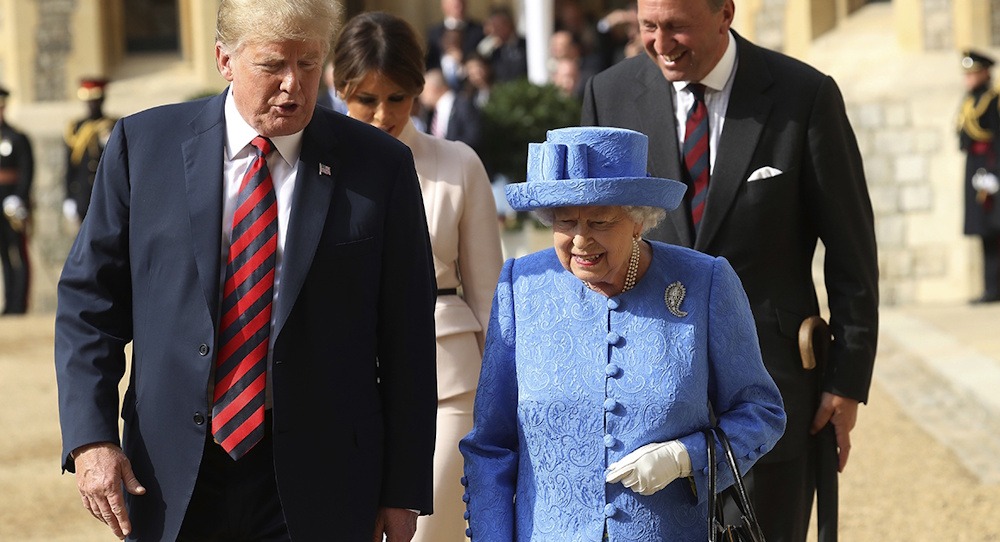
They will later have a private lunch in the State Dining Room with other members of the Royal Family, followed by a visit to St George’s Chapel to lay a wreath on the tomb of the late Queen. Trump previously visited Windsor in 2018, where he met Queen Elizabeth. However, this visit was for a working trip following a NATO summit, not a more formal state occasion. Upon disembarking from Air Force One, he will be the first US president to undertake two state visits; only Barack Obama and George W. Bush have previously had formal state visits to the UK. The evening features Trump dining at a grand banquet with approximately 150 guests, including celebrities and businesspeople, during which both the president and the king will deliver speeches. The visit features a bilateral meeting with Starmer at Chequers, the prime minister’s countryside residence, where they will examine Winston Churchill’s archives. Trump will not address the UK Parliament, breaking with tradition as most heads of state do on such visits. Parliament will be in recess, conveniently sidestepping the possibility of a significant protest in Westminster — and the threat of Trump admonishing Britain’s lawmakers on matters such as their differing stances on Israel, free speech, and trade.
Awkward diplomacy remains possible, especially during the joint press conference featuring Starmer and Trump at the conclusion of the visit. UK officials express concern over Trump potentially challenging Starmer regarding his commitment to recognize Palestine should Israel fail to implement a ceasefire in Gaza. Starmer’s office will finalize the decision that week, prior to the United Nations General Assembly in New York, but aims to delay the announcement until after Trump’s departure to prevent a political clash. It exemplifies how, despite the strong connection between the America First president and the Labour prime minister, their significant ideological differences pose a risk to the so-called special relationship. Vice President JD Vance targeted the UK in his provocative address at the Munich Security Conference, claiming that the “basic liberties of religious Britons, in particular” were at risk. During his summer visit to Scotland, Trump referred to London Mayor Sadiq Khan, who belongs to the same political party as Starmer, as a “nasty person.” Starmer interjected to remind Trump of their friendship as Trump started to criticize Khan, stating that he has “done a terrible job” in his role.
Starmer’s dismissal of Mandelson, who played a crucial role in planning the state visit, lingers as a significant issue. Some British officials express concern that Starmer’s decision suggests he thinks individuals connected to Epstein should not hold high office — especially as Trump also faces scrutiny regarding his Epstein ties. The Royal Family faces differing opinions and approaches regarding the president. King Charles has actively championed the fight against climate change. Earlier this year, he visited Canada to open Parliament and commemorate the beginning of Prime Minister Mark Carney’s term, coinciding with Trump’s threats to make Canada the 51st US state. Charles did not respond to Trump’s comments, yet many interpreted his attendance as a symbolic gesture of solidarity in his capacity as Canada’s head of state. The king aims to sidestep any awkwardness this week, focusing on entertaining and charming the president with the full pomp and ceremony of a state visit. Charles will draw inspiration from his mother, the late Queen, whose “enormous role all through her life was as a conciliator,” said Vickers.
During Trump’s first state visit, the Queen remarked on how the cultural, economic, and security ties between their two countries unify the US and the UK. “Mr President, as we look to the future, I am confident that our common values and shared interests will continue to unite us,” she stated during her address at the state banquet. “To have somebody who just talks a bit of quiet common sense and tries to smooth things down rather than stir things up, that’s what a constitutional monarch does, unlike a politician or even a president,” Vickers said.