Trump’s Greenland Dreams Threaten Maga’s Far-Right European Bonds
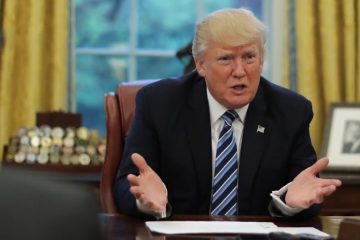
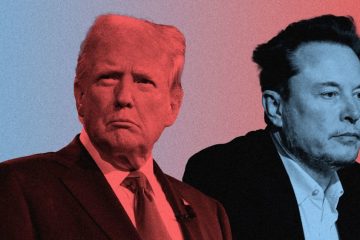
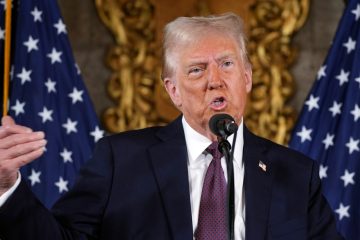
The disagreements surrounding US President Donald Trump’s intentions to take control of Greenland have created a rift in the previously strong connection between MAGA and Europe’s far-right groups. The divide suggests that just sharing similar beliefs might not ease the concerns of European nationalists regarding Trump’s actions overseas. Leaders on the far-right in Germany, Italy, and France have voiced strong criticism of Trump’s plans for Greenland. Even Nigel Farage, who has been a supporter of Trump and leads the Reform UK nationalist party, described Trump’s actions regarding Greenland as “a very hostile act.” In a debate on Tuesday in the European Parliament, far-right lawmakers, often associated with Trump, largely backed the idea of stopping an EU-US trade agreement due to their concerns about his threats, labeling them as “coercion” and “threats to sovereignty.” The difference between Trump and his European supporters was somewhat unexpected. In 2024, far-right parties gained significant power throughout the European Union, shaking up the established authorities in all 27 countries, from Spain to Sweden. Their political groups currently occupy 26 percent of the seats in the European Parliament, as reported. Less than a year ago, far-right parties in Europe came together in Madrid to celebrate Trump’s election with the slogan “Make Europe Great Again.” At that time, Elon Musk, before he fell out of favor with Trump, had supported European far-right influencers and groups on X, including Germany’s radical right Alternative for Germany party.
US Vice President JD Vance faced criticism from Germany and other parts of Europe after his meeting with AfD leader Alice Weidel during the elections in February. The party, which mainstream parties won’t collaborate with, shook up German politics by increasing its representation in the Bundestag, making it the second-largest party in the country. There are significant splits within MAGA regarding Trump’s foreign policy, which have been felt in Europe. His decisions about Greenland, Venezuela, and Iran have led his political supporters to prioritize their beliefs over their loyalty to the US president. France’s far-right National Rally has sometimes highlighted its similar views to Trump, especially regarding immigration. One year back, the party sent a senior member, Louis Aliot, to be present at Trump’s inauguration. Trump has strongly supported party leader Marine Le Pen, calling her conviction for misusing EU funds a “witch hunt.” Jordan Bardella has expressed admiration for Trump’s nationalist ideas. He told last month that a “wind of freedom, of national pride” is sweeping through Western democracies. Recently, Bardella seems to be moving away from the US administration. In his New Year’s speech, he criticized US military action in Venezuela that aimed to capture then-President Nicolas Maduro, describing it as “foreign interference” intended to benefit “the economic interests of American oil companies.” Bardella criticized Trump’s “commercial blackmail” regarding Greenland on Tuesday. He stated, “Our subjugation would be a historic mistake.”
Another supporter of Trump, Italian Prime Minister Giorgia Meloni, shared this view. During an interview, she mentioned that she informed Trump in a call that his threat of tariffs regarding Greenland was “a mistake.” However, the responses from European right-wing leaders have not been uniform. Hungarian Prime Minister Viktor Orban, seen as a leader of Trump’s style of populism, has been cautious not to criticize the US president in any way. As he approaches what may be his most challenging election in 16 years this April, Orban has shaped his political persona by aligning himself with Trump, assuring voters that his strong bond with the president will bring significant benefits. Orban has stated that Trump is Europe’s only hope for peace during the war in Ukraine and a protector of national sovereignty. Orban has tried to frame Trump’s comments about Greenland and the situation with Maduro as either advantageous for Hungary or irrelevant to it. “It’s an in-house issue. It’s a NATO issue,” Orban stated regarding Trump’s Greenland plans during a news conference earlier this month, noting that any changes to Greenland’s sovereignty should be addressed within NATO. Even though he strongly supports national sovereignty, Orban commended the US actions in Venezuela, labeling the nation a “narco state” and proposing that removing Maduro could help Hungary by leading to lower oil prices in global markets.
Hungary’s hesitation to challenge Trump’s actions showed a similar stance among far-right leaders in Eastern Europe. Polish President Karol Nawrocki, who is considered a supporter of both Orban and Trump, stated in Davos this week that the issues regarding Greenland should be addressed “in a diplomatic way” between Washington and Copenhagen, rather than involving a larger European coalition. He urged Western European leaders to soften their criticisms of Trump’s behavior. In the nearby Czech Republic, Prime Minister and Trump supporter Andrej Babis has chosen not to criticize the US threats to Greenland and has cautioned the EU against letting this issue lead to a conflict with Trump. In Slovakia, Prime Minister Robert Fico has not commented on Trump’s plans for Greenland, despite having met with the president at his Mar-a-Lago resort last week. Despite this, Trump’s removal of Maduro prompted Fico to clearly denounce the move, labeling it a “kidnapping” and referring to it as the “latest American oil adventure.” Daniel Hegedus mentioned that the beliefs connecting MAGA and its European partners could endure recent conflicts by focusing more on their common past complaints. He highlighted recent votes in the European Parliament where far-right lawmakers opposed Brussels’ leadership regarding the EU migration pact and the suspension of the large trade agreement with the Mercosur group of five South American countries. “If Trump keeps acting this way, threatening the independence of European nations, it will certainly split the European radical right,” he stated. “We’re unsure if this split will last or if they can come together again on issues where they can work together.” The problems can be serious for the European Union.