Trump Sues BBC for $5 Billion Over Edited Clip
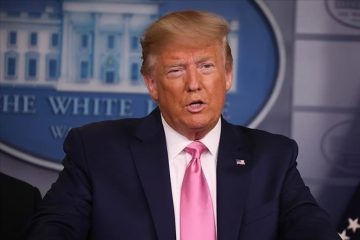
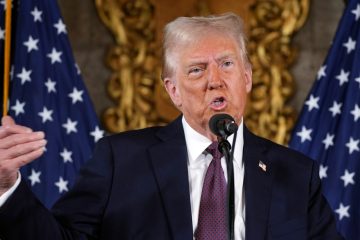
On Monday, US President Donald Trump initiated a $5 billion defamation lawsuit against the British Broadcasting Corporation. He claims that the broadcaster employed a misleading edit in a documentary aired last year, which inaccurately implied that he explicitly encouraged violence, according to the reports. During a statement at the White House, Trump remarked: “I’m suing the BBC for putting words in my mouth.” They literally put words in my mouth. “They had me saying things that I never said coming out.” The lawsuit, initiated in a federal court in Miami, focuses on the presentation of Trump’s remarks prior to the January 6, 2021, assault on the US Capitol. Trump has contended that the edit fostered a misleading perception of his involvement in the events.
According to the report, Trump had warned of legal action after BBC chairman Samir Shah acknowledged on November 10 that an edited video of Trump’s speech, aired on the Panorama programme in 2024, wrongly gave “the impression of a direct call for violent action.” Days following the acknowledgment, the BBC released a second apology while denying Trump’s request for compensation. The documentary, as stated in the report, suggested that Trump urged supporters to “walk down to the Capitol” and “fight like hell” prior to the riot, and encouraged them to “cheer on our brave senators and congressmen and women”. Trump’s remark to “fight like hell,” however, was extracted from a different segment of the speech. The lawsuit claims that the BBC edit was a “brazen attempt to interfere in and influence the election’s outcome to President Trump’s detriment.”
His lawyer stated, “This instance of doctoring — in the form of distortion of meaning and splicing of entirely unrelated word sequences — is part of the BBC’s longstanding pattern of manipulating President Trump’s speeches and presenting content in a misleading manner in order to defame him, including fabricating calls for violence that he never made.” Dispute over BBC response and compensation In November, the BBC addressed certain demands from Trump by issuing an apology and retracting the episode titled Trump: A Second Chance, which had aired just a week prior to the 2024 presidential election. However, Trump found the response to be insufficient. He subsequently increased his compensation demand from $1 million to $5 million. The report indicates that Trump has consistently turned to legal action against media organizations whose reporting he deems unfair or biased.
He has also employed, or threatened to employ, legal and regulatory pressure, leading some major US outlets to make concessions. CBS has reached a settlement of $16 million in a lawsuit where Trump alleged that the network engaged in election interference by editing a clip from an interview with then-presidential candidate Kamala Harris on its program 60 Minutes. Trump asserted that the edit presented Harris as more coherent than she actually was. ABC reached a settlement of comparable magnitude following anchor George Stephanopoulos’s on-air statement that Trump had been “found liable for rape” in E Jean Carroll’s civil case. A jury, however, determined that Trump was liable for sexual abuse, but not for rape, and did not support Carroll’s claim of rape. Trump has defamation suits seeking multi-billion-dollar damages pending in Florida against The New York Times and The Wall Street Journal, both of which maintain their stance of denying any wrongdoing. The Times lawsuit references what Trump characterizes as a continuous pattern of reporting that harmed his brand and reputation. The Journal case originates from a report claiming that Trump transmitted a crude birthday message to Jeffrey Epstein in 2003. The conflict with the BBC presents significant distinctions compared to Trump’s previous legal confrontations with American media outlets. The Panorama documentary did not air in the United States and was restricted on the BBC’s streaming service. Furthermore, Trump would have to satisfy the “actual malice” standard that applies to public figures under US defamation law — a rigorous benchmark set by the US Supreme Court in 1964 to protect freedom of speech.