Trump seeks ‘about 7’ nations for Strait of Hormuz coalition

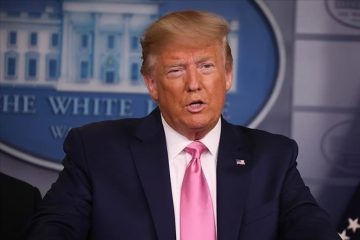
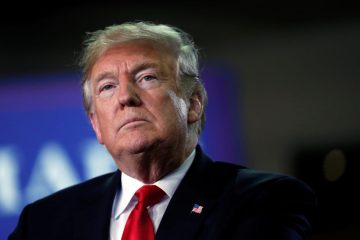
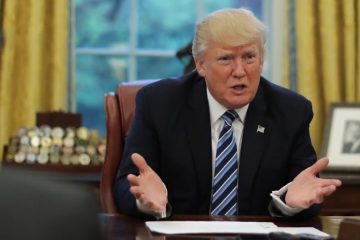
President Donald Trump stated on Sunday that he has “demanded” the participation of approximately seven countries that are heavily dependent on West Asia oil in a coalition to oversee the Strait of Hormuz. Approximately one-fifth of the oil traded globally passes through this waterway. While aboard Air Force One returning to Washington from Florida, Trump addressed questions. The president refrained from disclosing the names of the countries with which the administration is engaged in negotiations for the protection of the strait. “I’m demanding that these countries come in and protect their own territory, because it is their own territory,” Trump said about the strait, asserting that the vital shipping channel is not something the United States needs due to its own access to oil. US President Donald Trump’s appeal to China, France, Japan, South Korea, Britain, and others to send warships to keep the Strait of Hormuz “open and safe” yielded no commitments on Sunday, as oil prices surged amid the Iran conflict. Iran’s Foreign Minister Abbas Araghchi informed that Tehran has been “approached by a number of countries” seeking safe passage for their vessels, “and this is up to our military to decide.” He stated that a collection of vessels from “different countries” had been permitted to proceed, though he did not offer further specifics. Iran has declared that the strait, through which one-fifth of global oil exports typically flows, remains accessible to all nations except the United States and its allies.
Araghchi stated that “we don’t see any reason why we should talk with Americans” regarding a resolution to the war, emphasizing that Israel and the US initiated the conflict with coordinated attacks on Feb. 28 during indirect US-Iran discussions on Iran’s nuclear program. He also stated that Tehran had “no plan to recover” the enriched uranium that is under rubble following US and Israeli attacks last year. Countries are exercising caution following Trump’s remarks. US Energy Secretary Chris Wright that he has been “in dialogue” with several of the nations Trump referenced, and expressed his expectation that China “will be a constructive partner” in the effort to reopen the strait. However, nations offered no commitments. On Sunday, Prime Minister Keir Starmer of Britain emphasized to Trump the significance of reopening the strait “to end the disruption to global shipping,” and also engaged in separate discussions with Canada’s prime minister regarding the matter. A representative from China’s embassy in the US, Liu Pengyu, stated, “all parties have the responsibility to ensure stable and unimpeded energy supply” and emphasized that China would “strengthen communication with relevant parties” to promote de-escalation.
South Korea’s Foreign Ministry stated it “takes note” of Trump’s call and that it “will closely coordinate and carefully review” the situation with the US. There is a strong anticipation that Trump will pose a direct inquiry to Japan during his meeting with Prime Minister Sanae Takaichi on Thursday at the White House. France has indicated its collaboration with various nations – President Emmanuel Macron referenced partners in Europe, India, and Asia – regarding a potential international mission to escort ships through the strait. However, he emphasized that this initiative must occur when “the circumstances permit,” specifically when hostilities have diminished. Foreign Minister Johann Wadephul of Germany, which was not mentioned in Trump’s call, stated to ARD television: “Will we soon be an active part of this conflict? No.” In a recent statement, the International Energy Agency noted that emergency oil stocks “will soon start flowing to global markets,” characterizing the coordinated effort to reduce prices as “by far the largest ever.” It revised last week’s announcement of 400 million barrels to nearly 412 million. Asian member countries intend to release stocks “immediately,” while reserves from Europe and the Americas will be released “from the end of March.” Gulf Arab states, including Saudi Arabia, Kuwait, and Bahrain, have reported an increase in missile and drone attacks. This escalation follows Iran’s call for the evacuation of three major ports in the United Arab Emirates, marking the first instance in which it has threatened a neighboring country’s non-US assets.
Tehran has alleged that the US conducted Friday’s strikes on Kharg Island, which hosts Iran’s main oil terminal, from the UAE, although no evidence has been presented to support this claim. It has issued a warning to target US-linked “oil, economic and energy infrastructures” should its own oil infrastructure come under attack. US Central Command stated that it had no response to Iran’s assertion, while Anwar Gargash dismissed it. The Gulf countries that host US bases have firmly denied permitting their land or airspace to be utilized for military operations against Iran. During the conflict, Iran has launched hundreds of missiles and drones at its Arab Gulf neighbors, resulting in considerable damage and unsettling economies, despite the fact that many of these attacks are intercepted. Tehran asserts its focus on US assets, despite reports of Iranian strikes impacting civilian locations, including airports and oil fields. As the conflict escalates, the human cost continues to rise in the region. Iranian strikes have resulted in the deaths of at least a dozen civilians in Gulf countries, the majority of whom are migrant workers. In Iran, the International Committee for the Red Cross reported that more than 1,300 people have been killed. According to Mizan Iran’s Health Ministry reported that 223 women and 202 children are among the deceased. On Sunday, Iran’s government presented to journalists the buildings in Tehran that were damaged by strikes on Friday. A police station sustained damage, along with surrounding buildings. Some apartments’ outer walls had been stripped away. “God had mercy on all of us,” said Elham Movagghari.
In Israel, 12 individuals have lost their lives due to Iranian missile fire, with additional injuries reported, including three on Sunday. At least 13 US military members have lost their lives, with six fatalities resulting from a plane crash in Iraq last week. According to Lebanon’s Health Ministry, at least 820 individuals have lost their lives since the Iran-backed Hezbollah launched attacks on Israel, prompting a response from Israel that included airstrikes and the deployment of additional troops into southern Lebanon. In a mere span of 10 days, over 800,000 individuals – almost one in every seven inhabitants of Lebanon – have been forced to flee their homes. Iranian missile strikes targeted Israel, as reported by Israel’s military early Monday, indicating that Iran has launched missiles toward the nation. Earlier, multiple strikes impacted central Israel and the Tel Aviv area, resulting in damage at 23 locations and igniting a small fire. Magen David Adom, Israel’s rescue service, has released video footage depicting a significant crater in a street alongside shrapnel damage to an apartment building. Israel’s military reports that Iran is deploying cluster bombs capable of evading certain air defenses, dispersing submunitions over various areas.