Trump Orders US Agencies to Halt Use of Anthropic Products
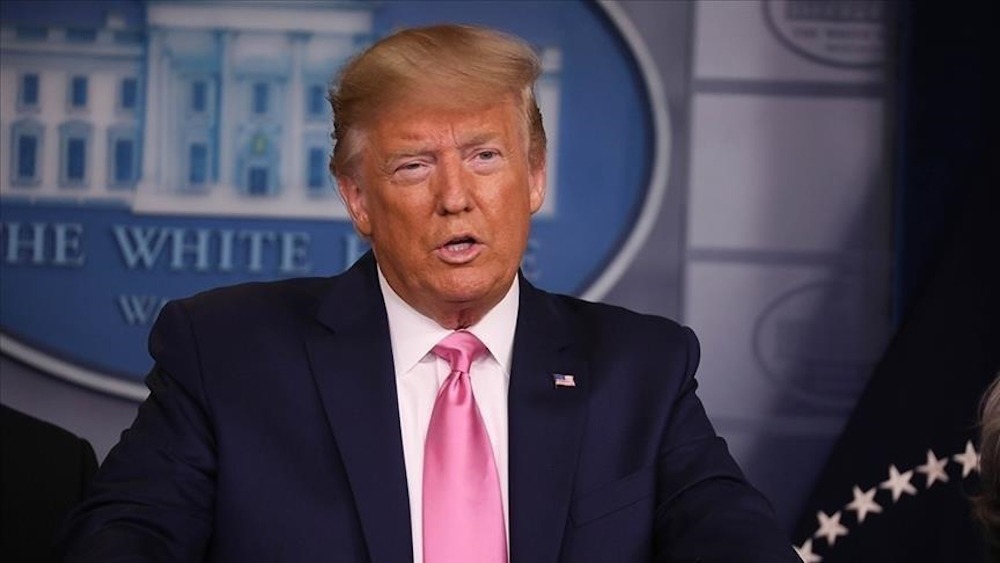
The Pentagon has classified Anthropic PBC as a supply-chain risk following President Donald Trump’s directive for US government agencies to cease using its products, marking the culmination of a conflict between the artificial intelligence company and defense officials regarding the security measures surrounding its technology. Defence Secretary Pete Hegseth has directed the Pentagon to prohibit its contractors and their partners from engaging in any commercial activities with Anthropic. In a post on X, Hegseth established a six-month timeline for Anthropic to transfer AI services to an alternative provider. “America’s warfighters will never be held hostage by the ideological whims of Big Tech,” Hegseth wrote. “This decision is final.” Hegseth had granted the company a deadline of 5:01 p.m. on Friday to permit the Pentagon to utilize the Claude chatbot for any purpose permissible by law — all while imposing no usage restrictions from Anthropic. The firm has maintained that Claude should not be utilized for mass surveillance against Americans or in fully autonomous weapons operations. Anthropic stated on Friday that it has not received any direct communication from the government regarding the status of negotiations and will contest any supply chain risk designation in court.
Since its inception, Anthropic has established itself as a company dedicated to the responsible application of AI, aiming to prevent catastrophic harms associated with the technology. That position had propelled Chief Executive Officer Dario Amodei into a significant confrontation with Hegseth, who has pledged to eliminate “woke” practices at the extensive agency he oversees. Before the deadline arrived, Trump wrote on social media that he was ordering federal agencies to drop Anthropic, warning that if the company failed to cooperate with the handover it would face “major civil and criminal consequences” that he didn’t specify. “The Leftwing nut jobs at Anthropic have made a DISASTROUS MISTAKE trying to STRONG-ARM the Department of War, and force them to obey their Terms of Service instead of our Constitution,” the president posted on social media. “Therefore, I am directing every Federal Agency in the United States Government to immediately cease all use of Anthropic’s technology.” In its statement on Friday, Anthropic asserted that being designated a supply-chain risk “would both be legally unsound and set a dangerous precedent for any American company that negotiates with the government.”
“No amount of intimidation or punishment from the Department of War will change our position on mass domestic surveillance or fully autonomous weapons,” Anthropic stated. “We will challenge any supply chain risk designation in court.” The decision made by the Trump administration is poised to create significant repercussions for AI companies that have poured hundreds of billions of dollars into the technology and are currently evaluating strategies to secure federal contracts. It eliminates up to $200 million in projects that Anthropic had committed to for the military, in addition to smaller yet significant contracts for civilian agencies such as the State Department. Last year, the company secured a comprehensive agreement with the General Services Administration, allowing federal agencies to utilize Claude for a nominal fee of $1. The declaration regarding supply-chain risk may have broader implications, as various other companies utilize Anthropic’s technology within their products. Anthropic is striving to convince additional businesses to invest in its software to counterbalance the substantial expenses associated with AI development and validate its impressive $380 billion valuation. The company is anticipated to be gearing up for an initial public offering as early as this year. Hegseth’s directive that “no contractor, supplier, or partner may conduct any commercial activity with Anthropic” will impact Maven Smart System, the widely utilized AI-enabled battle management system developed by Palantir Technologies Inc., which negotiated a deal in the second half of 2024 to utilize Anthropic’s AI tools. A representative from Palantir has not yet responded to a request for comment regarding the potential impact or the feasibility of removing Claude from the systems it supplies for use by US military operators.
Supply-chain risk designations are typically assigned to companies perceived as adversaries, such as China’s Huawei Technologies Co. Michael Horowitz, a political science professor at the University of Pennsylvania and a former Pentagon official during the Biden administration, stated this. “This would be legally murky territory, and it is not clear how it would turn out,” he stated. Removing Anthropic from government involvement presents a possible national security issue, considering that the company was, until recently, the sole AI system capable of functioning within the Pentagon’s classified cloud. The Claude Gov tool is a preferred choice among defence personnel due to its user-friendly nature. According to a source, replacing Claude in Pentagon systems could delay the US government’s national security use of AI by at least six months. A Pentagon worker familiar with Claude states, “its code base is easier than others to deal with, making up-to-minute changes easier, swifter and more reliable.” However, that does not imply that competitors will not close the gap, nor that the Pentagon would not tolerate a less capable partner as their AI technology advances, the Pentagon employee remarked. Amodei had pledged Thursday to ensure that any transition away from its products to another provider would be seamless. The firm encountered increasing competition for Pentagon contracts from Elon Musk’s xAI, which recently secured approval for classified projects, along with competitors OpenAI and Google’s Gemini. OpenAI Chief Executive Officer Sam Altman has also responded to the Pentagon, informing employees in a memo reviewed by Bloomberg that his company is in discussions with defense officials regarding the use of its models under comparable restrictions. “We would like to try to help de-escalate things,” he stated in the memo. The actions will almost certainly elicit additional backlash from Silicon Valley, where employees united in support of Anthropic. Workers at prominent technology firms such as Amazon.com Inc. and Microsoft Corp. have urged their companies to refuse the Pentagon’s requests for unrestricted deployment of AI products.
On Thursday, Amodei asserted that the company was resolutely maintaining its position. “These threats do not change our position: we cannot in good conscience accede to their request,” he stated. That sparked an evening social-media outburst from Emil Michael, the undersecretary of defence for research and engineering, who stated that Amodei “is a liar and has a God-complex.” Michael wrote “He wants nothing more than to try to personally control the US Military and is ok putting our nation’s safety at risk.” The conflict arose merely weeks following the Pentagon’s release of a new strategy regarding artificial intelligence, which advocated for transforming the military into a “AI-first” force by enhancing experimentation with cutting-edge models and minimizing bureaucratic obstacles to implementation. The approach specifically urged the Defence Department to select models that are “free from usage policy constraints that may limit lawful military applications.” Defence officials have emphasized that the military will utilize Anthropic’s technology in accordance with legal parameters. Michael adopted a more conciliatory tone on Friday, stating to Bloomberg Television that the department was open to continuing its discussions with Anthropic. “So long as they’re in good faith, we’re always open to talks,” Michael stated. “Up until that deadline, I’m open to more talks and I told them so.”