Trump cannot withhold billions in foreign aid, says US appeals court
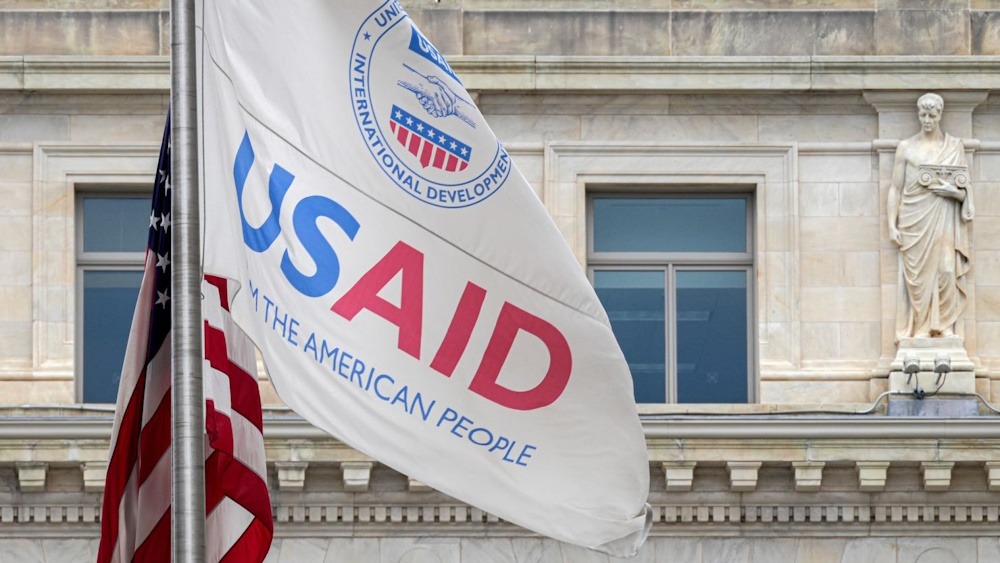
The Trump administration is currently bound by a court order to allocate billions in US foreign assistance funding, which is set to lapse later this month following a federal appeals court’s dismissal of the government’s request for immediate intervention. The recent 2-1 ruling issued on Friday by a three-judge appeals panel represents yet another challenge for President Donald Trump regarding his authority to withhold funds allocated by Congress for international aid programs. The Justice Department has indicated in court documents that it is probable it will request the US Supreme Court to review the case on an expedited basis and suspend the injunction issued by the Washington federal judge in the near future.
An estimated $12 billion of the $30 billion at stake in the court fight is poised to lapse after Sept. 30 unless the State Department and US Agency for International Development establish, at the very least, a commitment to plans regarding its utilization. The recent decision from the US Court of Appeals for the DC Circuit does not constitute a conclusive judgment regarding the legality of initiatives by Trump and other US officials aimed at recovering foreign aid funds. This effort is situated within a broader strategy by his administration to reduce the operations of USAID and significantly diminish US involvement on the global stage.
Judges Cornelia Pillard and Florence Pan of the DC Circuit, both appointed by former presidents Barack Obama and Joe Biden, respectively, have opted to reject the government’s appeal to temporarily lift the injunction imposed by the lower court. Judge Justin Walker, who was confirmed during Trump’s first term, observes that he would have aligned with the government. On September 3, US District Judge Amir Ali determined that the administration’s decision to withhold the aid likely contravened a federal statute that regulates the decision-making processes of federal agencies. He previously suspended the funding block based on the Constitution’s separation-of-powers principles, but shifted to alternative claims following a divided appeals court panel’s decision to overturn that injunction.
The administration has “given no justification to displace the bedrock expectation that Congress’s appropriations must be followed,” Ali wrote, concluding that the defunding decisions violate the Administrative Procedure Act. In the lead-up to Ali’s decision, Trump urged Congress to retract over $4 billion in foreign aid that is scheduled to lapse this year. This includes $3.2 billion from the 2024 appropriations law, as detailed in court filings. Trump’s action, referred to as a “pocket rescission,” is strategically positioned to enable him to forgo the expenditure if Congress fails to act by the conclusion of September. This maneuver is broadly interpreted as a trial of his capacity to bypass legislative authority in future scenarios.
The Justice Department, in its request for the DC Circuit to intervene once more, articulated that it has “every intention of obligating” — indicating that agencies would be prepared to allocate the expiring funds that Trump has not sought to retract from Congress. Government lawyers articulated that the question of whether the executive branch can decline to allocate funds appropriated by Congress “is a matter for the political branches to resolve, not for courts to inject themselves into at the behest of private plaintiffs.” The cases under consideration are Global Health Council v. Trump, 25-5319, and Aids Vaccine Advocacy Coalition v. Department of State, 25-5317, as adjudicated by the US Court of Appeals for the DC Circuit.