The US Supreme Court backs Trump’s freeze on $5 billion in foreign aid
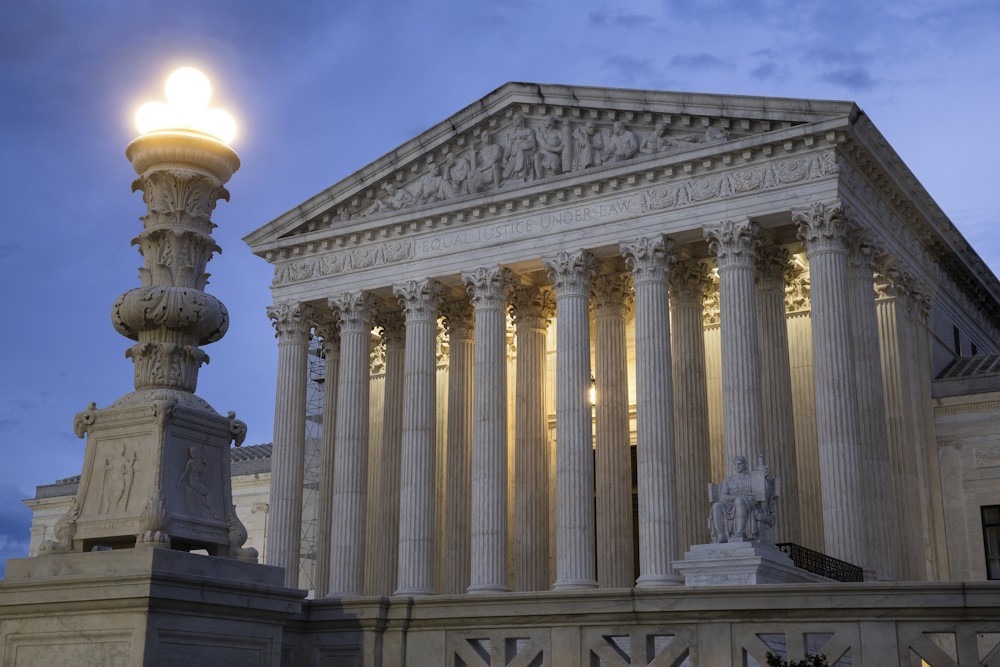
The Supreme Court has prolonged an order permitting President Donald Trump’s administration to maintain the freeze on nearly $5 billion in foreign aid, marking yet another triumph for him in the ongoing debate regarding presidential authority. On Friday, the court responded to the emergency appeal put forth by the Republican administration in a significant case concerning billions of dollars in aid that had been approved by Congress. Last month, Trump stated that he would refrain from spending the money, citing a contested authority that has not been utilized by a president in nearly half a century.
The Justice Department pursued the intervention of the high court following US District Judge Amir Ali’s ruling, which indicated that Trump’s action was likely illegal and that Congressional approval would be necessary to withhold the funding. The federal appeals court in Washington chose not to suspend Ali’s ruling; however, Chief Justice John Roberts issued a temporary block on September 9. The full court has extended Roberts’ order indefinitely. The court has previously paved the way for the Trump administration to eliminate legal protections for hundreds of thousands of migrants, terminate thousands of federal employees, expel transgender members of the military, and dismiss the leaders of independent government agencies. The legal victories, though not definitive rulings, have all emerged through emergency appeals. These appeals, which have been utilized infrequently in prior administrations, serve to expedite cases to the Supreme Court, where decisions are frequently issued without accompanying explanations. In a letter dated August 28, Trump informed House Speaker Mike Johnson, R-La., of his decision to refrain from allocating $4.9 billion in congressionally approved foreign aid, thereby circumventing the legislative process and effectively reducing the budget.
He employed a method referred to as a pocket rescission. That is an infrequently employed strategy when a president presents a request to Congress near the conclusion of a current budget year, seeking to refrain from utilizing the allocated funds. The late notice fundamentally alters the narrative. According to federal law, Congress is required to approve the rescission within a 45-day timeframe; otherwise, the allocated funds must be utilized. However, the budget year will conclude prior to the closure of the 45-day window, and in this context, the White House is contending that a lack of action from Congress permits it to refrain from allocating the funds. The Trump administration has prominently featured significant cuts to foreign aid as a key aspect of its policy agenda. These reductions, however, yield only modest savings when compared to the overall deficit and may inflict harm on America’s global standing, as individuals face diminished access to essential food supplies and vital development programs. Last month, lawyers from the Justice Department informed a federal judge that an additional $6.5 billion in aid, which had been under a freeze, would be allocated before the conclusion of the fiscal year next Tuesday.
The case has been progressing through the courts for several months, and Ali remarked, “I understood that my ruling would not be the last word on the matter. This case raises questions of immense legal and practical importance, including whether there is any avenue to test the executive branch’s decision not to spend congressionally appropriated funds.” In August, the US Court of Appeals for the District of Columbia Circuit overturned a prior injunction issued by Ali, which mandated that the funds be allocated for spending. However, the three-judge panel did not dismiss the lawsuit. Following Trump’s issuance of the rescission notice, the plaintiffs made their way back to Ali’s court, where the judge subsequently issued the order that is currently under challenge.