Tariff Refund System Set to Launch in 45 Days
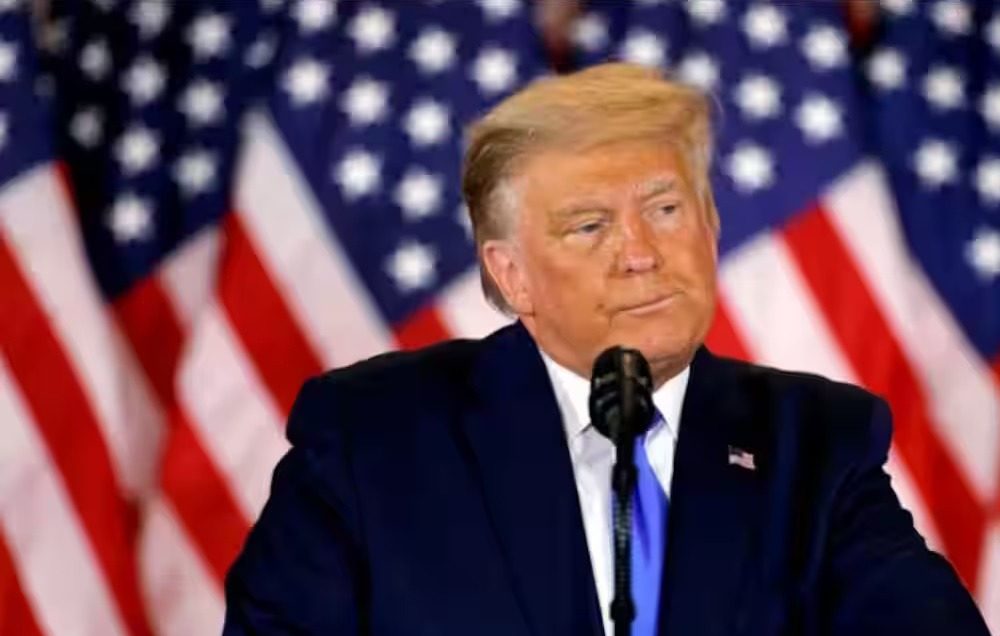
The US customs agency is preparing a system within 45 days to process refunds on US President Donald Trump’s tariffs that were deemed illegal, and importers will not need to pursue legal action for these refunds, a customs official stated in a court filing on Friday. The statement from Brandon Lord emerged as government attorneys convened with a federal trade judge to finalize a procedure for the reimbursement of $166 billion in tariff payments to approximately 330,000 importers. The Supreme Court ruled last month that the tariffs central to President Donald Trump’s economic policy were unconstitutional.
However, the Supreme Court did not specify how the collected tariffs should be refunded, raising concerns among small importers that the process could be prohibitively expensive and time-consuming. “This new process will require minimal submission from importers,” Lord said in his declaration, which was filed with the US Court of International Trade just as government lawyers began meeting with Judge Richard Eaton of the US Court of International Trade. Eaton convened the meeting to address the government’s implementation of his extensive directive issued on Wednesday, which instructs the CBP to initiate refunds of tariffs to potentially hundreds of thousands of importers through the agency’s current internal procedures.
Lord stated that the customs agency expected the refund process to necessitate importers submitting a declaration through the CBP’s computer system, referred to as ACE, which would outline tariff payments. The system, along with CBP, would subsequently validate these payments and process refunds with interest. Each importer would receive a single payment from the Treasury Department, irrespective of the number of distinct entries of goods the importer had submitted. Lord did not provide an estimate for the duration required to process the refunds, but stated that the CBP would be unable to comply with Eaton’s order from Wednesday.
Eaton considered a system where refunds would be automatically processed and returned to importers through the existing framework, requiring no documentation or input from the importer. “Its existing administrative procedures and technology are not well-suited to a task of this scale and will require manual work that will prevent personnel from fully carrying out the agency’s trade enforcement mission,” Lord said in explaining why the agency could not use its existing system. He stated that over 330,000 importers had contributed an estimated $166 billion in tariffs on more than 53 million shipments. Eaton’s order would have necessitated the agency to conduct a manual review of paperwork for each shipment, a process that Lord indicated would demand over 4 million hours of labor.