President Trump’s $100,000 H-1B visa cost may damage US institutions
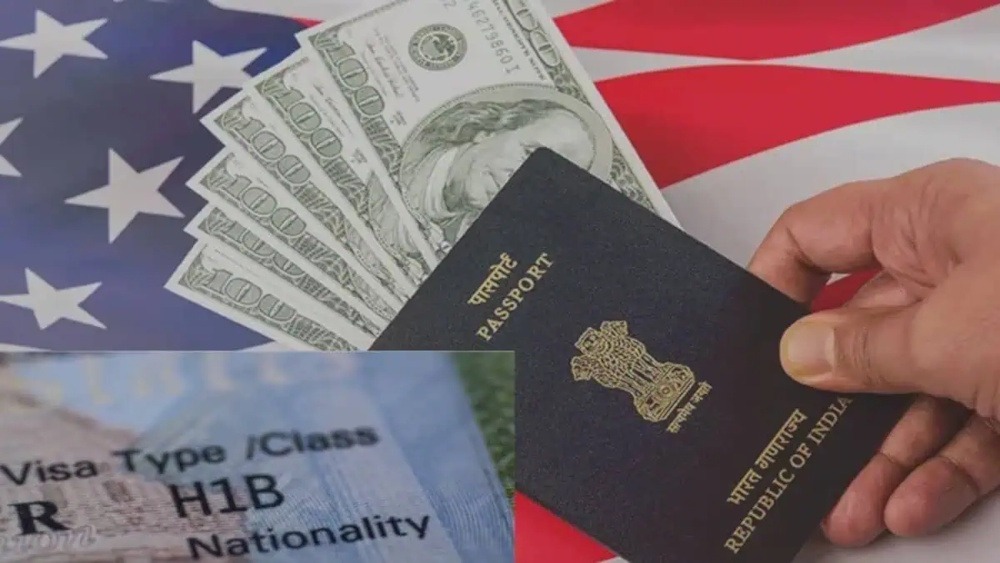
President Trump’s $100,000 fee for new H-1B visas will have significant implications for tech companies and financial firms. However, the implications of the new fee will extend throughout the education system and manifest in classrooms nationwide. Leaders in higher education and public-school superintendents express concern that the significant fee will adversely affect schools reliant on foreign workers to occupy essential teaching positions. Several university and college presidents expressed concerns that it would hinder their capacity to recruit faculty members via the visa program, which permits educated foreign citizens to engage in “specialty occupations.” Some expressed that their school districts were unable to bear the cost, complicating their efforts to recruit math and special education teachers. The change represents yet another setback for colleges and universities that have faced a relentless series of challenges from the Trump administration’s ongoing campaign against higher education. Federal officials have taken significant actions by freezing billions in research funds, demanding substantial payments from leading institutions, intensifying the vetting process for student visas, and pursuing civil rights investigations into numerous universities. Administration officials assert that the H-1B visa program enables employers to marginalize American workers and keep their wages low. They have contended that the new fee will assist in addressing this issue by motivating employers to focus on hiring domestic workers.
However, certain education leaders expressed concerns that the alteration could diminish the competitiveness of institutions and limit their capacity to attract the most qualified candidates. “It’s not as if this is done on a whim because we’re trying to replace American workers,” stated Lynn Pasquerella. “It is done based on what the Trump administration is calling for — on merit and who’s the most qualified.” Dr. Pasquerella stated that numerous schools relied on the visas to occupy roles in the STEM and medical sectors. She expressed particular concern that the pipeline for foreign physicians would face further constraints. She acknowledged that while not all STEM fields experienced worker shortages, there remained a demand in sectors such as nuclear engineering and material science. She stated that the new fee would also hinder universities’ capacity to innovate and progress in areas such as artificial intelligence because “global collaboration is being undermined.” Among the largest users of H-1B visas are tech companies. According to data from US Citizenship and Immigration Services, the professional, scientific, and technical services sector represented nearly half of all approved petitions for H-1B workers in the 2024 fiscal year. Educational services constituted approximately 7 percent, a modest yet significant portion. Stanford University, the University of Michigan, the University of Maryland, and the University of Pennsylvania are among the institutions that have had the most H-1B visas approved in recent years. Some university leaders expressed concern that the policy change would hinder their capacity to hire a sufficient number of employees requiring skilled-worker visas.
“It will depend upon the subject-area expertise,” stated Dr. Jeffrey P. Gold. “But if we had to absorb this cost, it will definitely reduce our ability to hire individuals with H-1B visas.” Dr. Gold stated that approximately 500 employees within the system currently hold H-1B visas. While this figure may seem modest in relation to the university’s overall workforce of approximately 16,000, it is important to note that many of these individuals occupy crucial roles within the technology and precision agriculture sectors, he stated. Some also serve as physicians or hold positions as professors at the university’s medical center. Dr. Gold stated, “The new fee could result in leaving some positions unfilled, cutting expenses in other areas or passing on higher costs to students.” He stated that while the university consistently prioritizes hiring domestic workers, it can be challenging to locate a sufficient number of qualified individuals to occupy specific positions. Dr. Gold stated that those employees also contributed to “enrich the environment,” bringing unique knowledge and experience from around the world. He stated that if the university is unable to fill positions in health care, it may result in longer appointment times and delayed care. Andrew Martin, the chancellor of Washington University in St. Louis, stated that the university sponsors approximately 285 new H-1B visas annually and that officials are currently “in the trying-to-figure-it-out phase.”
“In a world in which we’re on the hook for $100,000 for each of these visas, we’re going to have to think very, very carefully about our hiring practices,” Dr Martin stated. “Most of these positions aren’t positions for which we can hire domestically,” he said, citing, for example, America’s shortage of anesthesiologists. Dr. Martin also stated that the shift posed a risk to the appeal of the United States for international students who may wish to stay in the country after graduation. Several smaller colleges indicated that they would need to cease hiring new employees through the visa program altogether. Elizabeth Kiss, the president of Union College in Schenectady, N.Y., stated that the college employed 16 faculty members with H-1B visas who worked across nine departments. However, she stated that the college could no longer afford to hire individuals through the program. “We are absolutely not in a position in the future to pay the $100,000 fee,” Dr Kiss said, adding that it was a tenfold increase compared with the amount the college had been paying for each visa before. The effects of the new fee will also reach local school districts. Tara Thomas stated that districts nationwide have depended on H-1B visas to address vacancies amid ongoing staffing shortages. “Adding this fee will basically eliminate this as an option for districts,” Thomas stated. “I simply cannot envision how any district could successfully implement it.” Wendy Birhanzel, the superintendent of Harrison School District 2 in Colorado Springs, stated, “Our district employed seven teachers with H-1B visas.” She noted that the district made efforts to hire American workers, but faced difficulties in locating qualified candidates for math, science, and special education positions. Consequently, the district began to employ a greater number of foreign-born workers — primarily from the Philippines, Mexico, and India — roughly ten years ago. She stated that those employees were “on the same teacher pay scale as an American worker.”
The district aims to retain one math teacher and two special education teachers currently on J-1 visas, which are set to expire soon, Dr. Birhanzel stated. However, it faces challenges in covering the higher costs associated with securing H-1B visas for their extended stay. The $100,000 fee is significantly greater than the approximately $7,000 typically required for each visa, she stated. Dr. Birhanzel stated that the district would likely need to depend on long-term substitute teachers or expand class sizes if it were to lose those teachers and be unable to fill their positions. “That could affect student learning because substitute teachers might lack experience in the fields they teach in,” she said. “You could have someone who got a bachelor’s degree in music teaching calculus,” Dr. Birhanzel stated. “We would assign teachers lacking special education expertise to our most vulnerable learners.” Dr. Birhanzel expressed her hope that the Trump administration would grant an exemption for school districts. The administration has offered limited information regarding which positions may be eligible for an exemption. As stated in the proclamation signed by Mr. Trump, the homeland security secretary has the authority to designate specific positions as exempt if employing those foreign-born workers is “in the national interest.” Sophie Alcorn, an immigration lawyer in Silicon Valley, remarked that several universities she advises have halted the submission of new H-1B visa applications for positions that do not require immediate filling. This decision stems largely from the confusion surrounding the process for employers to apply for a national-interest exemption or to make payments to cover the associated fees. “They’re all taking a comprehensive look at their hiring strategies,” Alcorn stated. “A $100,000 fee for an educational nonprofit institution is certainly not feasible this year, as the budget has already been on a downward trend due to various factors, including a decrease in grants and international student enrollment.”
Some university leaders have raised concerns about their potential inclusion in the new fee, considering that higher education institutions typically enjoy an exemption from the 85,000 annual cap for H-1B visas. A White House official stated that the $100,000 fee is applicable to any cap-exempt petition submitted after September 21. Some policy experts expressed optimism regarding the administration’s changes. Elizabeth Jacobs, the director of regulatory affairs and policy at the Center for Immigration Studies, a think tank that advocates for limiting immigration, stated that the new fee would help guarantee that employers had a “legitimate need” when applying for H-1B visas. “I do think it’s a positive change from the status quo,” she stated. “However, I believe we require additional details regarding the implementation of this.” She stated that she did not find a compelling reason to grant universities an exemption, emphasizing the importance of maintaining opportunities for hiring US citizens and green card holders for highly sought-after research positions. However, certain college leaders underscored their focus on the caliber of individuals’ work. Leon Botstein, the president of Bard College in the Hudson Valley, which employs more than two dozen individuals with H-1B visas, stated that the college would be “forced to reconsider getting the best people if they came from abroad.” Dr. Botstein stated “It’s not patriotic. It harms the economy and has nothing to do with excellence.”