When Buybacks Backfire: Using Event-Driven AI to Spot Overhyped Stock-Repurchase Traps
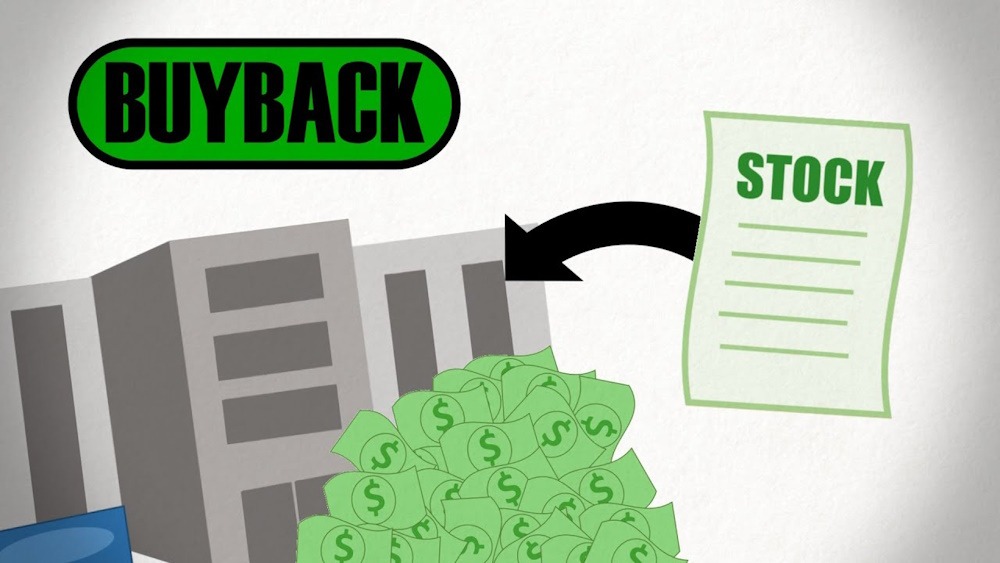
Stock buybacks are a sign that a company is doing well. When a company announces plans to repurchase its stock, investors see it as a sign that the stock is undervalued. Markets reward this with a price increase.
However, history shows that the reality isn’t always so simple. In many cases, buybacks fail to create long-term shareholder value. Companies often repurchase stock when prices are inflated, under-deliver on announced programs, and prioritize financial engineering over productive investment.
This is known as a stock-repurchase trap. In this article, we’ll discuss why it happens and how to use AI to spot it in the market and prevent getting into the trap. AI is already widely used in finance, and XRP exchanges offer AI investment advice and customer service. The role of AI will continue to expand in the years to come, according to experts such as those at CCN.
Buybacks 101: How They’re Supposed to Create Value
Stock buybacks are one of the most common and simplest capital-allocation tools. The company buys back a portion of its own shares, thereby reducing the number of shares outstanding. If the valuation is reasonable, the process increases earnings per share, improves return on equity, and concentrates ownership.
Purchases are made through open-market programs or tender offers. Management decides to go with a buyback when the stock is undervalued, when there are no other investment opportunities, and when it’s preferable to return the cash rather than to let it sit idle.
Markets react positively to this decision, as it’s better from a tax perspective and doesn’t trigger market panic like issuing dividends does. The practice has surged globally over the last couple of decades, and it’s now a standard investment tool. It still needs to be executed with proper timing and honest signaling.
Why Buybacks Often Fail in Practice
Buybacks still often fail in practice, however. There are a few reasons why this is the case.
Buying High, Not Low
Most buyback research shows that companies almost always buy back shares when they’ve already been overvalued. They tend to happen during bull markets when there’s optimism about the outlook, and there’s enough cash flow.
This practice is the opposite of most other shareholder decisions. In most other cases, investors buy an asset when it’s at its lowest and wait for it to regain value before selling high. The returns are therefore low in most cases, and companies resort to buybacks when they don’t have other options.Executive Incentives and EPS engineering
Another structural problem with buybacks comes from executive compensation. Many bonuses and stock awards are tied to how many shares an executive or manager owns. This is usually calculated via an earnings per share (EPS) metric.
All of these metrics are boosted via a buyback, but the business itself isn’t improved. This creates an incentive for executives to focus on a buyback rather than on improving the key qualities of a business and, therefore, its real value.
Opportunity Cost of Capital
Every dollar the company spends on a buyback incurs an opportunity cost, meaning it could be spent elsewhere more efficiently. Companies that organize aggressive buyback programs usually don’t invest enough in research and development or in debt reduction, both of which could be better alternatives.
This means that a decision that signals the company is strong right now may create circumstances that make it weak or less competitive in the years to come.
The “Announcement Effect”: Why Markets Get It Wrong
When a company announces a buyback, it almost always causes a positive market reaction, even before any shares are sold. This is called an announcement effect, and it doesn’t tell us anything about the market’s view of the company, only about the company’s view of the buyback.
Behavior bias then amplifies this response. Investors will conclude that management is optimistic about the company, and other investors will follow along, causing a herd effect. This is usually followed and amplified further by the media response.
The problem with this is that it’s easy to make an announcement and wait for the effects to take hold. Building a business that keeps generating more value is much more difficult. Over time, the initial enthusiasm fades, and it becomes evident that shares were overvalued. This is where naïve investors get trapped.
What Is Event-Driven AI and Why It Matters for Investors
Event-driven AI is a machine learning system designed to analyze market events and the context in which they occur, rather than relying on financial ratios and historical patterns. These systems don’t ask whether buybacks are good or bad, but go into complex questions about why they are happening and how they are organized.
These systems use structured data, such as buyback disclosures, execution reports, and valuation metrics, as well as unstructured data, such as earnings call transcripts, press releases, news coverage, and social sentiment. It uses natural language processing and can uncover market signals that investors and analysts often can’t.
Buybacks are especially easy to analyze in this regard because they are clearly defined events and have measurable follow-through. Event-driven AI won’t replace traditional analysis; it will just enhance it and help analysts cut through the noise that usually follows a decision to do a buyback.
Key Signals Event-Driven AI Uses to Spot Buyback Traps
Announcement vs Execution Gaps
One of the biggest red flags for investors should be a discrepancy between what a company says and what it does. Event-driven AI tracks execution rates over time, flagging firms that consistently repurchase only a small fraction of authorized shares. This is usually proof that the buyback isn’t really accomplishing its goals, and AI can alert investors to this fact. AI also won’t be affected by financial news hype, as it can be trained to ignore it.
Valuation Context at Time of Buyback
AI models can be trained to combine buyback events with broader valuation context to understand a company’s actual value better. Repurchases made at elevated multiples or during peak optimism are statistically associated with weaker forward returns. AI will learn from historical patterns and assign risk scores to the buybacks based on when they occur.
Language and Sentiment Analysis
The communication of a buyback can be used to further analyze and understand it. This includes the announcement itself, the company-organized press events, and the wider market and public response. AI can scrape this information from the internet, combine it with social media chatter, and analyze it in a more profound and sustained way than any human analyst could.
Insider Behavior and Incentives
AI can cross-reference the buyback with the company’s internal decisions. This provides investors with a more balanced and transparent understanding of how compensation structures work. When repurchases coincide with expiring executive options or bonus thresholds, the risk of financial engineering increases. AI can notice the pattern and alert the investors.
How Investors Can Apply Event-Driven AI in Practice
Investors should treat buybacks as conditional signals, not as buy indicators. Event-driven AI can be used to enforce this policy. This is done by including AI into a broader trading workflow. The AI would then flag the risks involved, while the investors make the ultimate decision based on those inputs.
For fundamental investors, AI can be used to thoroughly examine a company’s value and to set capital-allocation priorities. For quantitative and multi-factor strategies, buyback events can be treated in the broader context of execution quality and sentiment metrics, rather than uniformly.
The goal isn’t to let the AI decide on behalf of the investor, but to help investors make their decisions using the best possible data.
Limitations and Risk
There are also limitations and risks involved in using AI for this purpose. Event-driven AI is not perfect, and the technology itself is relatively new compared to traditional market analysis forces. It’s known to make mistakes, and in cases such as these, those mistakes can be costly.
There’s also a risk in how investors plan to use AI. In many cases, investors tend to outsource too much of their decision-making process to AI. The goal shouldn’t be for the AI to replace human work, but to improve it and make it easier. It’s therefore just another tool, even though a sophisticated one.
To Sum Up
Buybacks are a common way for a company to get extra shares and signal its market strength without going outside the business itself. When the company does that, its value rises as the markets see it as a sign of strength. However, this often doesn’t work out. AI can be used to determine whether the buyback will fail to generate additional profits.
This is the case because AI is better at analyzing markets than any person could be, and it can work with a larger amount of data. At the same time, AI shouldn’t be used to make decisions solely to inform investors’ decisions.