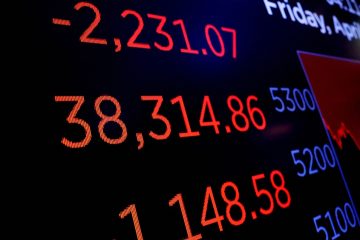
Asian markets unsettled as dismal US data boosts Fed rate drop expectations
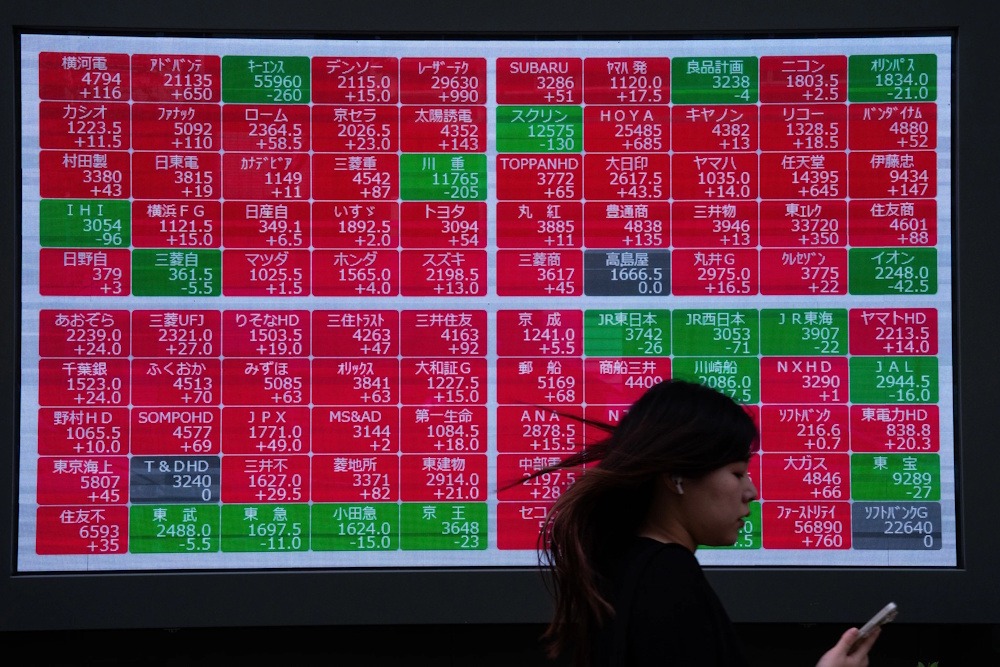
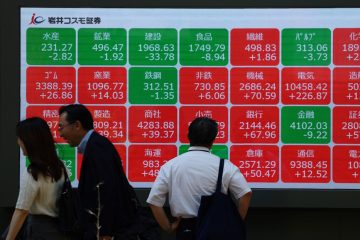
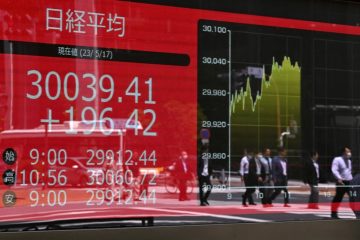
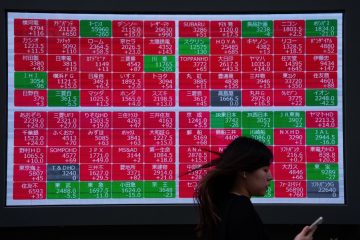
The dollar reached a five-week low as Asian stocks began the trading session on Thursday with a lackluster performance, following economic data that fell short of expectations, reinforcing the belief that the Federal Reserve will reduce interest rates at its upcoming meeting. The Nikkei 225 increased by 0.8 percent, whereas MSCI’s broadest index of Asia-Pacific shares outside Japan was down by 0.1 percent, impacted by declines in Korea and New Zealand. S&P 500 e-mini futures showed minimal movement, as the momentum from US markets overnight diminished in Asia. On Wednesday, stocks saw gains, driven by small-cap companies, with the Russell 2000 index surging 1.9 percent and the benchmark S&P 500 experiencing its second consecutive day of increase. The gains followed a significant decline in US private payrolls data, marking the largest drop in over two-and-a-half years. Enhance your market strategies with The Smart Investor. Receive daily insights on trending stocks and actionable information to inform your investment decisions, delivered straight to your inbox.
In a related development, a distinct survey conducted by the Institute for Supply Management revealed that its gauge of employment within the services sector experienced a contraction in November, accompanied by a decline in the prices paid subindex, which reached a seven-month low. “That move aligns with our view that the recent uptick in supercore inflation is likely to subside, paving the way for a resumption of disinflation in 2026,” said economist Henry Russell. “We remain of the view that it is appropriate for the Fed to continue to cut interest rates to respond to downside labour market risks,” he said, adding the bank expects a 25 basis points cut at next week’s meeting and further easing next year. Fed funds futures indicate an implied 89 percent probability of a 25-basis-point cut at the US central bank’s upcoming meeting on December 12, up from an 83.4 percent chance just a week prior.
The US dollar index, which measures the greenback’s strength against a basket of six currencies, was last down 0.4 percent at 98.878, marking its ninth consecutive session of decline to the lowest level since October 29. The yield on the US 10-year Treasury bond remained steady at 4.0749 per cent, following a report on Wednesday. The report indicated that bond investors have voiced concerns to the US Treasury regarding Kevin Hassett, a candidate for the chair of the Federal Reserve next year, and his potential to aggressively cut interest rates in accordance with President Donald Trump’s preferences, as stated by several individuals familiar with the discussions. The Chinese yuan remained stable in offshore trading in Hong Kong after reaching its highest point against the US dollar in over a year on Wednesday, as the greenback dropped to its lowest level against the renminbi since October 2024. It was last trading unchanged at 7.056 yuan. The Australian dollar strengthened by 0.1 per cent following the release of official data indicating that Australian household spending experienced its most significant increase in nearly two years in October. Additionally, the country’s goods trade surplus expanded more than anticipated, driven by a rise in gold exports for the second consecutive month.
Japanese chip manufacturers in the AI supply chain made significant strides following a report indicating that Trump met with Nvidia’s CEO Jensen Huang on Wednesday to discuss export controls, according to a source. Tokyo Electron experienced an increase of 0.7 percent. Precious metals maintained their recent momentum of success. Gold rose by 0.2 per cent to $4,213.38 per ounce, while silver increased by 0.1 per cent to $58.5415 per ounce, continuing its upward trend that reached a record high of $58.98 on Wednesday for the ninth consecutive day.