Asian Markets Surge despite US Market Retreat
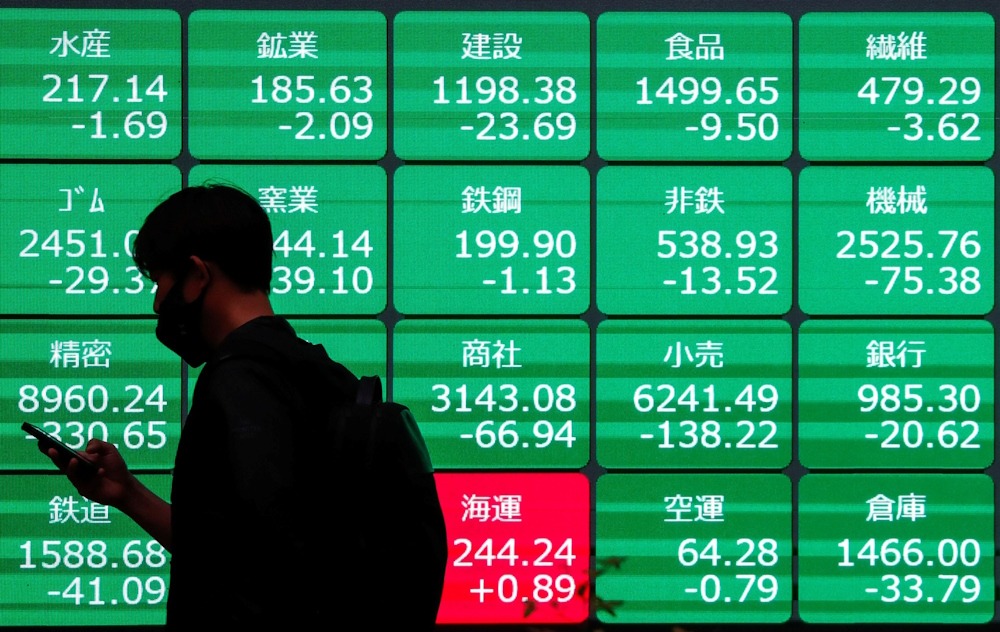
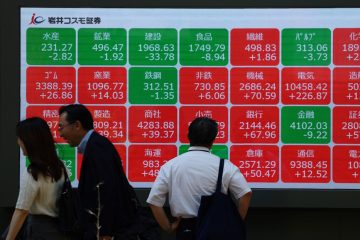
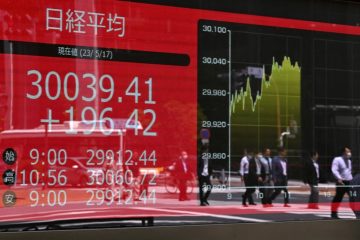
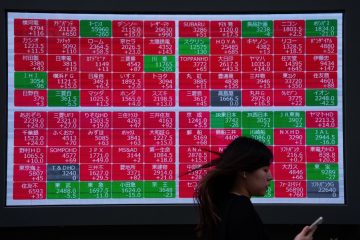
Asian shares predominantly rose on Tuesday following a retreat in US stocks, which surrendered part of last week’s gains under the weight of increasing global bond yields. US futures and oil prices remained relatively stable. Tokyo’s Nikkei 225 rose by 0.5 per cent to 49,534.36, driven by financial shares which emerged as the largest gainers following the central bank governor’s suggestion of a potential interest rate increase this month. In Hong Kong, the Hang Seng surged 0.7 per cent to 26,209.07, whereas the Shanghai Composite index declined 0.3 per cent to 3,902.78. Australia’s S&P/ASX 200 increased by 0.2 per cent, reaching 8,582.80. The Kospi in South Korea experienced a notable increase of 1.5 per cent, reaching 3,977.85, driven by strong demand for technology stocks, particularly Samsung Electronics, which saw a rise of 2.8 per cent. Chip maker SK Hynix surged by 3.4 percent. Enhance your market strategies with The Smart Investor. Receive daily insights on trending stocks and actionable information to inform your investment choices, all delivered directly to your inbox. Taiwan’s benchmark Taiex experienced a rise of 1 per cent, whereas India’s Sensex saw a slight decline of 0.1 per cent.
On Monday, the S&P 500 experienced a decline of 0.5 percent, ending a five-day winning streak and closing at 6,812.63. The Dow Jones Industrial Average fell by 0.9 percent, settling at 47,289.33, whereas the Nasdaq composite decreased by 0.4 percent to 23,275.92. Last week’s rally was primarily driven by increasing optimism that the Federal Reserve will lower its main interest rate next week to support the weakening job market. Jobs are facing challenges at US manufacturers, with most respondents in a survey indicating that their primary focus remains on managing headcount rather than on hiring new employees. Numerous manufacturers have expressed that tariffs are persistently complicating matters. One manufacturer informed the ISM that conditions are more challenging than they were during the coronavirus pandemic regarding supply chain uncertainty.
Yields for longer-term Treasurys experienced an uptick in the bond market, reflecting a global increase in yields following comments from Bank of Japan Governor Kazuo Ueda, who suggested that the central bank might consider raising its benchmark rate at the upcoming meeting later this month. Japan’s benchmark interest rate has stayed close to zero for years in an effort to stimulate sluggish growth. Currently, inflation remains above the Bank of Japan’s target of approximately 2 percent. The prospect of the Bank of Japan resuming its hiking cycle a bit sooner than previously thought has sent tremors through global bond and equity markets this week. However, Thomas Mathews of Capital Markets suggested in a commentary that they could nonetheless weather further tightening. When bonds offer higher yields, they can draw in investors who might otherwise consider purchasing stocks or cryptocurrencies. Increased yields are driving down prices across various investment types, especially those regarded as the most costly. Bitcoin, which was soaring around $125,000 in October, has now dropped towards $85,500. That represents a decline of approximately 6 percent compared to the previous day. Early Tuesday, it was trading at approximately $86,650. Stocks in the crypto industry experienced a decline, with Coinbase Global decreasing by 4.8 percent and Robinhood Markets dropping by 4.1 percent.
On the winning side of market was Synposys, which experienced a rise of 4.9 percent. Nvidia is investing $2 billion in its stock as part of an expanded partnership. Nvidia, now recognised as Wall Street’s most influential stock, reversed an initial loss to achieve a gain of 1.6 percent. The markets exhibited a varied response to what appears to be a robust beginning for the holiday shopping season. Consumer spending during the Black Friday and Cyber Monday retailing bonanza was anticipated to surpass expectations, even amidst uncertainty regarding the outlook for the US economy. Williams-Sonoma experienced a rise of 1.3 percent, while Best Buy saw a decline of 2.6 percent. In Europe, France’s CAC 40 experienced a decline of 0.3 per cent on Monday, influenced in part by a 5.8 per cent drop for Airbus. The European aerospace giant announced on Monday that the majority of its fleet of 6,000 A320 passenger jets has undergone an update following a software glitch over the weekend that had the potential to impact flight controls. Travellers encountered slight disruptions as airlines rushed to implement software updates following Airbus’s warning about the issue on Friday. In other transactions early Tuesday, US benchmark crude oil increased by 2 cents, reaching $59.34 per barrel. Brent crude, the international benchmark, decreased by 4 cents to $63.13 per barrel. The dollar increased to 155.61 Japanese yen, up from 155.41 yen. The euro rose to $1.1612, up from $1.1608.