US Senator Pushes H-1B Overhaul to Favor American Workers
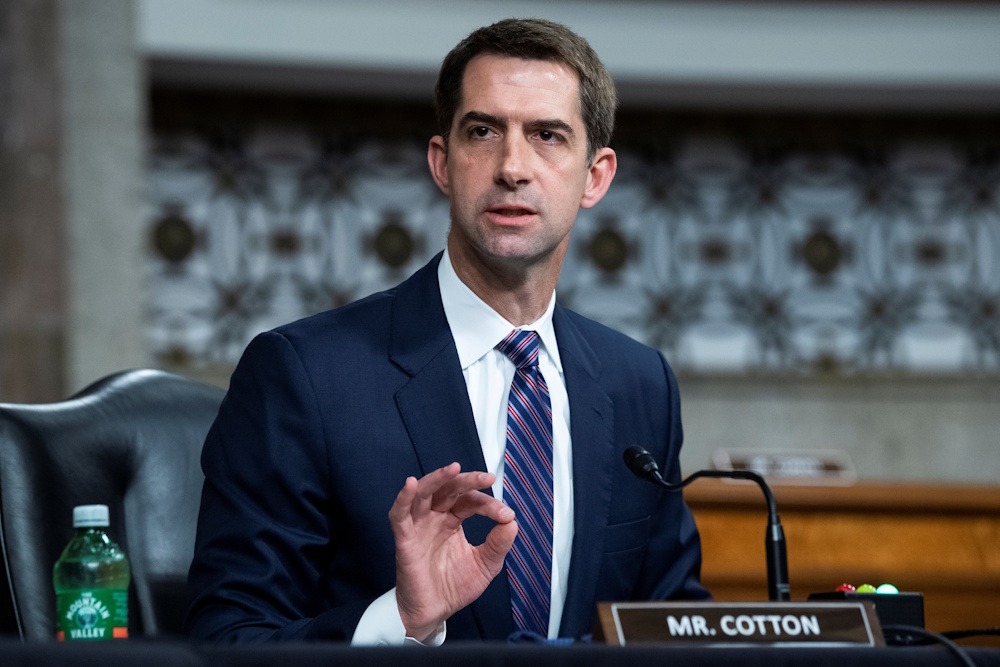
On Friday, US Senator Tom Cotton voiced robust backing for reforming the H-1B visa programme, which has emerged as a contentious issue in the current immigration discourse in the nation. Senator Cotton announced plans to introduce legislation focused on enhancing oversight and prioritizing American workers. His comments coincided with the US Department of Labor unveiling Project Firewall, a new enforcement initiative characterized as one of the most aggressive oversight efforts in the history of the H-1B visa program. Secretary Lori Chavez-DeRemer stated, “By taking action to reform H-1B programs, @POTUS is protecting our workers and ensuring jobs go to Americans first.”
Earlier this week, the Department of Labor unveiled Project Firewall, an initiative aimed at safeguarding highly skilled American workers from the misuse of the H-1B visa. The initiative is being presented as one of the most formidable enforcement efforts in the history of the visa programme. Chavez-DeRemer characterized it as a measure aimed at scrutinizing employers for possible exploitation of the H-1B visa system. “Launching Project Firewall will help us ensure no employers are abusing H-1B visas at the expense of our workforce. By rooting out fraud and abuse, the Department of Labor and our federal partners will ensure that highly skilled jobs go to Americans first,” she said. The Department of Labor stated, “Project Firewall will hold employers accountable and protect the rights of American workers.” The Secretary of Labor will take the initiative to certify investigations of employers suspected of H-1B violations, moving beyond a reliance solely on complaints. Employers are required to compensate H-1B workers with at least the prevailing local wage or provide equivalent pay to similarly qualified US employees. H-1B workers ought to be afforded the same benefits as their American counterparts
Companies might be required to demonstrate that they have made “good faith” efforts to hire American workers prior to seeking the H-1B visa. Employers discovered to be in breach of regulations may incur back wages, civil fines, or temporary prohibitions on the use of the visa. The Labor Department will collaborate with the Justice Department, EEOC, and USCIS to prevent fraud and discrimination. “Launching Project Firewall will help us ensure no employers are abusing H-1B visas at the expense of our workforce,” Chavez-DeRemer emphasized in a press release from her department. The Ministry of External Affairs on Friday stated that India remains in active discussions with the US administration and industry stakeholders concerning H-1B visas. The ministry emphasized that exchanges of skilled talent have been advantageous for both nations and conveyed optimism that the recent restrictions might be lifted. “We have seen the notice by the US Department of Homeland Security regarding the proposed rulemaking. I understand that stakeholders, including the industry, have one month to provide their comments,” Randhir Jaiswal stated on Friday. “This is still an evolving situation and we remain engaged at various levels,” Jaiswal stated on Friday. “Skilled talent mobility and exchanges have contributed enormously to technology development, innovation, economic growth, competitiveness and wealth creation in the US and India.”
Last week, the Trump administration unveiled a significant reform of the H-1B visa programme, implementing a $100,000 annual fee for each visa. The change is anticipated to profoundly impact the hiring practices of US companies regarding skilled foreign workers, especially influencing Indian IT professionals, who constitute the largest segment of H-1B beneficiaries. Commerce Secretary Howard Lutnick announced the fee increase, stating: “A company that wants to buy an H-1B visa… it’s $100,000 per year.” The visa itself remains unchanged, valid for three years with a one-time renewal for a total of six years. Visa quotas remain unchanged, with 65,000 allocated for regular applicants and 20,000 designated for holders of US advanced degrees. Nevertheless, officials expect a decline in applications owing to the high expenses involved. Lutnick stated, “Remember, these are the same cap, it’s the same visa. There’ll just be less of them issued because they used to be free, and now they cost $100,000.”
The decision may significantly affect Indian IT companies such as Infosys, TCS, and Wipro, which often send engineers to the US. Lutnick stated, “If you have a very sophisticated engineer and you want to bring them in because they have expertise, then you can pay $100,000 a year for your H-1B visa.” JPMorgan economists estimate that the fee may reduce work authorisations by as many as 5,500 each month, with technology companies and Indian talent experiencing the greatest pressure. According to reports, nearly two-thirds of H-1B approvals in FY24 were for computer roles, with 71 per cent of approved petitions going to Indian nationals.