Is US economic data still accurate and reliable?
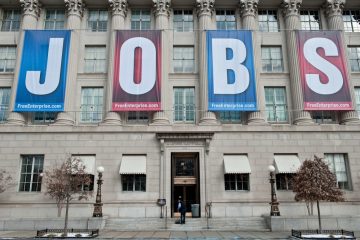
As we navigate the complexities of our current reality, one must ponder: have we already entered a post-truth world, and are we on the brink of an era defined by post-truth statistics? Every month, the US employment report stands out as a key indicator of the health of the world’s largest economy, drawing significant attention from analysts and economists alike. Financial markets are susceptible to significant fluctuations based on the robustness of the data presented. This month, the jobs report showed signs of weakness. Hours later, US President Donald Trump described the numbers as “phony” and dismissed the head of the agency, Erika McEntarfer.
The Bureau of Labor Statistics, the government’s impartial statistics body, faced an unprecedented attack. The agency in question is tasked with monitoring jobs, wages, and inflation—essential metrics that provide insight into the true state of the economy. This week, Trump escalated his criticism by launching another attack on the nation’s economic institutions. In a recent social media post, he asserted that he had dismissed one of the governors of the US central bank, the Federal Reserve. Governor Lisa Cook stated, “he had no authority to do so.” In light of Donald Trump’s ongoing conflict with numerical data and established institutions, one must question the reliability of US economic data moving forward.In the realm of financial markets, certain players are turning their attention to unconventional data sources to gauge the economy’s health in real-time. One notable example includes the analysis of satellite images that capture the shadows cast by oil tankers.
At first glance, the decision to appoint a Trump loyalist as the head of the Bureau of Labor Statistics (BLS) may seem inconsequential. However, it is important to note that a BLS commissioner cannot independently manipulate the data. The agency boasts a sizable workforce of professional staff, with data being processed through well-established systems and checks. However, the matter extends well beyond the dismissal of a single official. The Trump administration has implemented a number of measures that undermine the quality and independence of economic data in the United States. Following the dismissal of McEntarfer, Trump appointed a loyalist who proposed the controversial notion of withholding the jobs data entirely. The employment report stands as a critical barometer of the US economy, revealing the monthly fluctuations in job creation and loss. Without it, millions of Americans would lose a crucial resource for determining whether the economy is expanding, contracting, or facing difficulties.
In a significant development, hundreds of US datasets and over 8,000 government webpages have disappeared following the termination of the staff responsible for their upkeep. The datasets, funded by taxpayers and relied upon by researchers, now face a precarious future. Academics have initiated the Data Rescue Project with the aim of preserving and publicly sharing data that the government may cease to provide. Critical economic statistics agencies, including the Bureau of Labour Statistics among others, have implemented staff reductions. The reduction in staff leads to less precise data, as fewer personnel result in fewer surveys, slower updates, and a greater dependence on estimates. In a striking turn of events, the administration is now targeting and dismissing officials, claiming that the data is unreliable. This unreliability, however, stems directly from the budget cuts implemented by the administration itself. It presents a political catch-22: reduce the agency’s funding, and then hold it accountable for the decline in quality that such underfunding has led to.
Data is characterized as a public good, indicating that it provides benefits to many. However, it is often the case that data users either cannot or choose not to pay for it. The collection and publication of data on the labour market, inflation, and economic growth (gross domestic product) is a responsibility of the government, funded by taxpayers’ money. High-quality data is essential for making informed policy decisions. The Federal Reserve meticulously analyzes the BLS jobs report and inflation figures to determine US interest rates. The consumer price index (CPI), known for its significance in tracking inflation, serves as a crucial benchmark for the US central bank’s commitment to maintaining inflation at its 2 percent target. The quality of the CPI establishes the baseline for interest rate decision-making. Financial markets closely monitor government data. The US stock and bond markets, valued in the trillions, react significantly to reports on jobs and inflation.
Institutional traders, particularly hedge funds, have historically gained significant advantages by utilizing superior data resources. Some hedge funds, for instance, utilize satellite images of Walmart parking lots to tally the number of cars, aiding in the prediction of quarterly sales. This enables them to profit from the insights prior to the public release of Walmart’s sales data. Can these alternative data sources also assist in evaluating the robustness of various sectors of the economy? A recent academic paper explores the potential of private satellite data as a substitute for official data. By concentrating on two particular indicators – US crude oil prices & Chinese manufacturing – the study reveals that satellite data has become so prevalent among traders that market responses to government data releases, including weekly surveys of crude oil inventories, have diminished.
Nevertheless, two caveats must be noted. Not every type of macroeconomic data supports trillion-dollar markets such as crude oil. This reality makes it profitable for traders to analyze the geometry of shadows cast by the floating roofs of oil tankers, as they estimate the quantities of oil stored in these tanks. Moreover, access to this data is limited to a select group of affluent investors willing to invest in it. For many in the market, acquiring satellite-imagery data from firms such as Privateer or RS Metrics remains out of reach due to high costs. The situation leads to disparities in data access, ultimately compromising the fairness of the market. The rapid technological advancements in artificial intelligence and the commercialization of space have rendered satellite data increasingly ubiquitous. However, this data remains years from supplanting hand-collected inflation figures or labor market surveys, which provide public statistics accessible to all, rather than just to those willing to pay.