A Surprising Economic Trend Worries the Fed
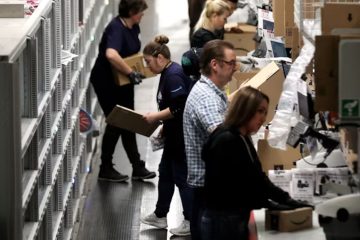
There is a disconnect in the US economy that is causing concern among those responsible for managing inflation and maintaining the stability of the labor market. US companies have significantly reduced their hiring this year, cautious about making investments amid uncertainty regarding the comprehensive impacts of President Donald Trump’s extensive economic policies. According to the Labor Department, the economy experienced job losses in June and August, with the average rate of job growth for the three months concluding in September being merely about 62,000. Nevertheless, workers’ productivity, an essential factor in economic output, continues to be elevated. Gross domestic product, which encompasses all the goods and services produced in the economy, has remained strong. The contrast between an expanding economy and a softening labor market poses a challenge for policymakers at the Federal Reserve, complicating their efforts to assess whether the economy requires cooling or stimulation. “The divergence between solid economic growth and weak job creation created a particularly challenging environment for policy decisions,” Fed officials noted in their October meeting, according to minutes released Thursday. A growing economy, supported by resilient consumers and significant investments in AI, ought to be driving hiring, particularly now that the Fed has begun to lower borrowing costs. However, that has not occurred, and concerns persist that it may not happen.
“When it comes to monetary policy, the narrative next year is going to be about how to handle a jobless expansion,” Ryan Sweet said. “What strategies do you employ to encourage businesses to increase their hiring?” The recent series of record highs in the stock market indicates a prevailing optimism among numerous American businesses regarding the value of AI. Nevertheless, that confidence has yet to result in an increase in their workforce. According to data from the Commerce Department, business spending on information processing equipment and software represented 4.4% of GDP in the second quarter. This figure is slightly below the peak of 2000, a time when businesses significantly increased similar investments during the dot-com boom. Robust consumer spending this year has also sustained company profits. “Firms are investing a lot in this new technology, but sometimes that means reducing other expenditures, such as hiring,” stated Eugenio Alemán. He stated that robust AI investment likely continued in the third quarter and is expected to reach its peak sometime next year. The government shutdown is expected to have a negative impact on GDP during the current quarter, which runs from October to December. However, the US economy is anticipated to recover a significant portion of those losses in the early part of next year.
Meanwhile, the US labor market has faced challenges due to Trump’s significant policy changes since the beginning of the year. “It’s been a challenging year for employment precisely because of the changes in trade and immigration policy affecting both labor supply and demand,” stated James Ragan. Economists say it’s unclear whether rate cuts can eventually counteract the corrosive effects of major policy changes that have stoked uncertainty to bolster hiring. “Fortunately, we’re not seeing a lot of layoffs, because that’s how you turn a jobless expansion into a recession,” Sweet said. “The economy can grow without creating a lot of jobs, but productivity growth has to be decent.” According to the latest economic projections from September, Fed officials are anticipated to implement several additional rate cuts through 2026. A jobless expansion may swiftly lead to a recession. “You’re very vulnerable to anything that goes wrong,” Sweet stated. “The labor market is your line of defense, and if that starts to fray, then it’s game over.” It also heightens the possibility that the Fed makes a policy error. In a speech last month, Fed Governor Christopher Waller characterized the gap between GDP and job growth as a “conflict” that is expected to resolve itself — for better or worse.
“Something’s gotta give — either economic growth softens to match a soft labor market, or the labor market rebounds to match stronger economic growth,” he stated. Should job growth continue to be inconsistent with GDP, it places the US economy in a precarious position. Persistently strong economic growth also makes Fed officials less confident that they should be lowering interest rates, and there’s already plenty of hesitance to continue with rate cuts within the central bank’s rate-setting committee. “With two rate cuts now in place, I’d find it difficult to cut rates again in December unless there is clear evidence that inflation will fall faster than expected or that the labor market will cool more rapidly,” Dallas Fed President Lorie Logan said Friday at an event in Zurich, adding that there are signs that “policy most likely isn’t very restrictive.”