Crypto markets contemplate rate cuts due to sticky inflation
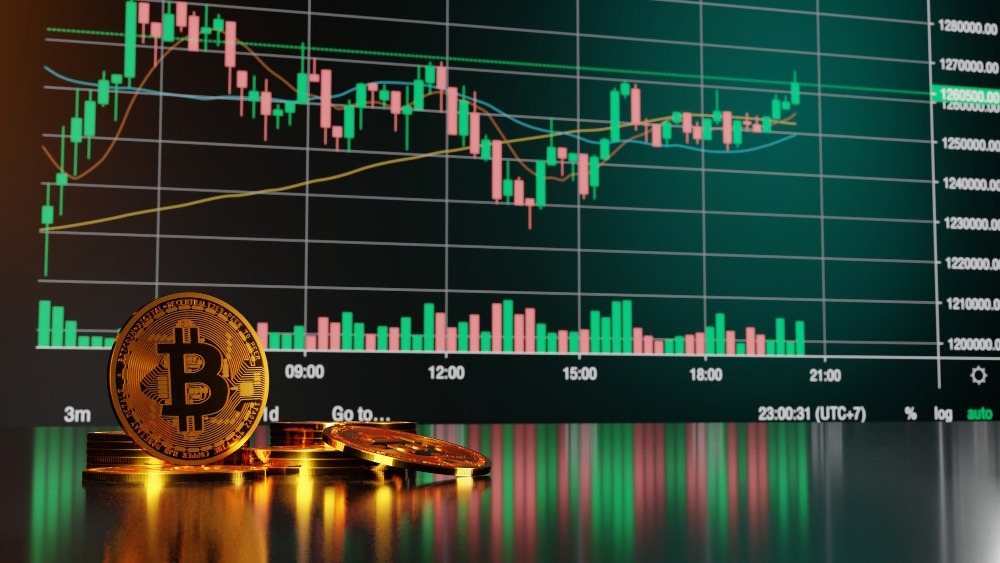
The cryptocurrency market remained in a consolidation phase on Thursday, with Bitcoin trading within the $69,000–$70,000 range following the release of the latest U.S. inflation data, which aligned closely with expectations. Analysts indicate that the data has strengthened the perspective that the Federal Reserve is not expected to lower interest rates in the near future, which maintains liquidity conditions relatively tight for risk assets and constrains the potential for a significant directional shift in the crypto market. Bitcoin saw a momentary surge past $71,000, yet it couldn’t hold onto those gains and subsequently fell back under the $70,000 threshold. At the latest update, the leading cryptocurrency was trading 0.76 percent lower at $69,404, accompanied by a 24-hour trading volume of $43.61 billion. Throughout this timeframe, it fluctuated between $68,998 and $71,337.66, as reported. Amid the recent downturn, Bitcoin is presently valued approximately 45 percent lower than its October 2025 high of $126,198. “Bitcoin is trading near the $69,000 to $70,000 range after the latest US inflation data came largely in line with expectations, reinforcing the view that the Federal Reserve is unlikely to cut rates in the near term,” said Avinash Shekhar. “With liquidity conditions expected to remain tight, markets seem to be entering a consolidation phase rather than a strong directional move.”
In the last five weeks, Bitcoin has consistently encountered resistance around the $74,000 mark, indicating that the market is still on the lookout for new catalysts before making a significant move,” he added. Shekhar observed that the wider crypto market could stay within a range in the short term, with Bitcoin expected to fluctuate between approximately $68,000 and $74,000. He also highlighted that on-chain indicators indicate a subtle accumulation by large holders, despite the overall demand being inconsistent and investor sentiment remaining cautious. Riya Sehgal shared her insights, stating that Bitcoin remains in a consolidation phase as macro uncertainty dampens positive institutional demand. The latest US CPI inflation data arrived at approximately 2.4 percent year-on-year, aligning closely with expectations. “At the same time, the probability of near-term Federal Reserve rate cuts remains low, keeping risk assets in a cautious environment,” Sehgal said. However, she noted that institutional demand continues to be robust, with spot Bitcoin ETFs seeing over $250 million in recent inflows. Additionally, on-chain data reveals that whale holdings have increased to approximately 3.2 million BTC, suggesting ongoing long-term accumulation by significant players.
Akshat Siddhant noted that Bitcoin has made a rebound toward the $70,000 level following the easing of market concerns due to inflation data, although the overall sentiment continues to be cautious. “Options data suggests there is only approximately a 17 percent chance of a breakout above $75,000 in the near term. “Despite steady ETF inflows, BTC continues to trade within a range as traders wait for a stronger catalyst,” said Siddhant. From a technical standpoint, Sehgal highlighted that Bitcoin remains within a trading range of $63,000 to $71,000, with the $71,000 to $72,000 zone serving as a crucial resistance level, corresponding with the 0.78 Fibonacci level. “A decisive breakout could open the path toward $75,000–$78,000, while failure to reclaim this level may push the market back toward the $63,000–$65,000 support area,” said Sehgal.
Meanwhile, Ethereum faced ongoing pressure but managed to stay above the $2,000 threshold after encountering resistance around $2,100. The token was recently observed trading at $2,025, reflecting a decrease of 0.46 percent, accompanied by a 24-hour trading volume of $19.37 billion. In the last 24 hours, Ethereum fluctuated between $2,008 and $2,085, according to data. In the current market landscape, Solana, XRP, BNB, and Cardano continue to face downward pressure, whereas Hyperliquid and TRON have demonstrated signs of recovery.