US Oil Exports Surge as WTI-Brent Gap Hits 11-Year High
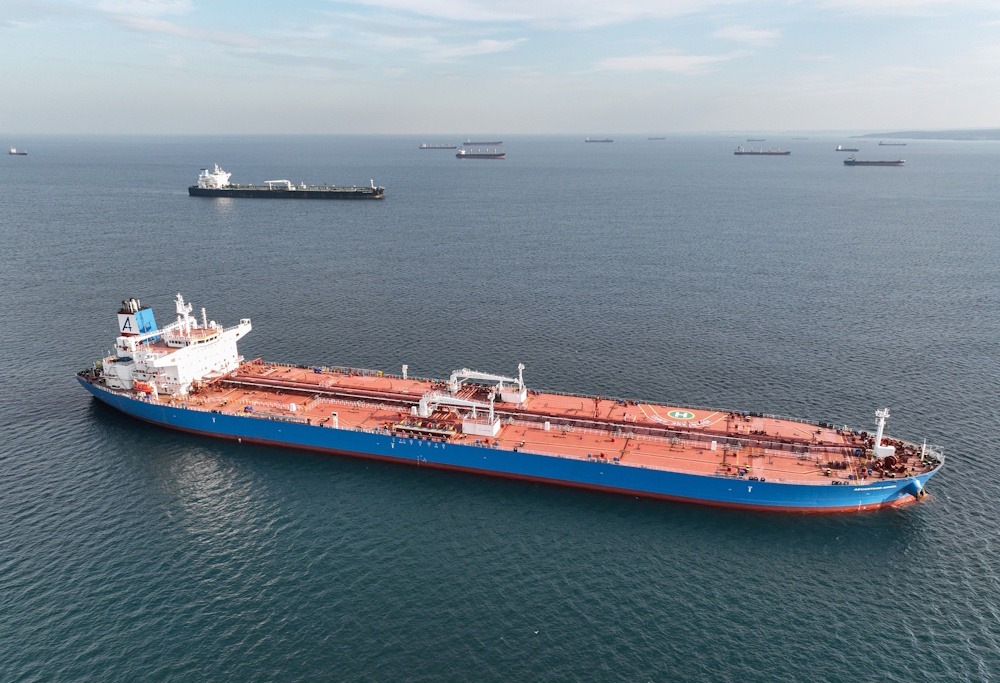
The discount for US crude futures compared to Brent on Wednesday reached its widest margin in 11 years, as assaults on West Asian oil infrastructure propelled the global benchmark upward, while increasing supply in the US prepared the ground for a surge in oil exports. The US-Israeli war on Iran has caused significant disruption in global oil markets, pushing crude and fuel prices to multi-year highs as a crucial trade route has largely been closed and certain energy production in West Asia has been halted. The increase in Brent prices compared to US crude futures presents an arbitrage opportunity for traders aiming to capitalize on the price differential by transporting oil to markets where it commands a higher price.
On Wednesday, US West Texas Intermediate crude experienced a significant trading session, reaching a discount of $12.05 a barrel compared to Brent, marking its largest gap since March 2015. Despite the surge in freight prices for an Aframax transporting up to 700,000 barrels of crude from the US Gulf Coast to Europe, which rose to approximately $6 million on Wednesday from $4.36 million prior to the war, the arbitrage opportunity persists. This is due to the sufficiently wide WTI/Brent spread that can counterbalance the freight costs, as noted by Georgios Sakellariou. “Today we saw more crude cargoes getting picked up from the US Gulf Coast for loading in March to the start of April because of the widening WTI/Brent spread,” Sakellariou said, adding that they expect more ballast vessels will head to the US in the coming days to load crude for Europe. Brent experienced a notable increase of 3.8 per cent on Wednesday following Iran’s threats to target Gulf energy assets, coupled with an attack on Iran’s significant South Pars gas field.
WTI increased by 0.1 percent. “Brent is ripping on South Pars; I think infrastructure attacks will be the main driver of more Brent rallies rather than anything else, and that tends to be reflected in Brent over WTI,” said Neil Crosby. The US-Israeli conflict with Iran and Tehran’s assaults on Gulf neighbors have significantly interrupted oil and natural gas exports from West Asia, leading to production halts. “WTI looks extremely cheap in our arbs now and will go nicely to Europe,” Crosby said. “Prices today suggest the flow should be maxed,” he said, adding that US crude loadings for export will likely rise in the next few weeks, given the current WTI/Brent spread. “Weighing on WTI, countries in the International Energy Agency agreed to release 400 million barrels of crude from reserves in an effort to tame prices, with the US set to release 172 million barrels from the SPR, and that is putting pressure on WTI,” said Rohit Rathod.
Meanwhile, US crude stocks at Cushing, Oklahoma, the delivery and pricing point for West Texas Intermediate crude futures on the New York Mercantile Exchange, rose last week to 27.52 million barrels, their highest since August 2024, the Energy Information Administration stated on Wednesday. A trader noted, “This build in Cushing inventory along with the SPR release is suppressing WTI.” The increasing demand for crude exports from the US is driving up freight prices, which may lead to the closure of the arbitrage window as shipping costs become unsustainable, thereby limiting the volume of crude that can be exported from the US.