Oil Soars, Trump Dismisses Strategic Reserve Need
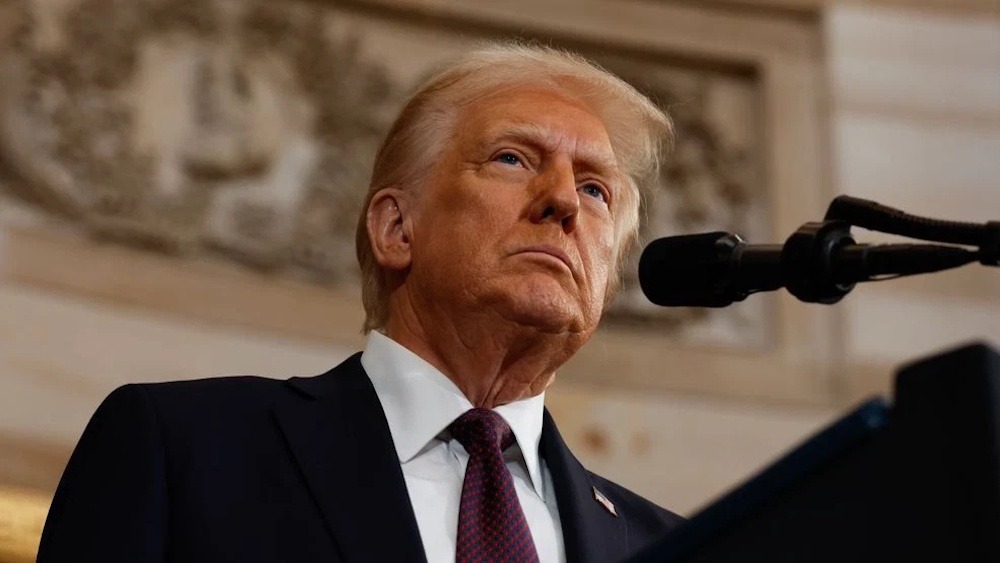
Oil prices have surged in the week following the initiation of hostilities between the US and Israel against Iran. However, President Donald Trump on Saturday minimized the notion of utilizing America’s Strategic Petroleum Reserve to alleviate the strain. Trump was queried by reporters aboard Air Force One regarding his potential consideration of tapping the reserve. As the conflict intensifies throughout West Asia, particularly in regions vital to the production and transportation of oil and gas, the global energy sector faces significant strain. In the US, consumers are already confronting elevated gas prices, a significant expense in their cost of living. We possess a substantial amount of oil. “Our country has a tremendous amount,” Trump said. “There is a significant amount of oil available. That will get healed very quickly.” Trump’s Republican Party faces mounting pressure regarding the issue of affordability as the November mid-term elections approach. Utilizing the reserve stands as one of the limited actions a president can independently undertake to influence oil prices.
Here is an examination of what would be involved: What is the Strategic Petroleum Reserve? The Strategic Petroleum Reserve consists of underground salt caverns located in Texas and Louisiana, with a capacity exceeding 700 million barrels of oil, though it is not at full capacity at present. The reserve contained over 415 million barrels at the close of last month, an increase from approximately 395 million barrels during the same period in 2025, as reported by the US Energy Department. The reserve was established following the Arab oil embargo of the 1970s to ensure that the United States had a supply available for emergencies. According to Energy Department data, the amount of oil inside reached its highest point over a decade and a half ago, when the reserve contained more than 726.6 million barrels at one time. What is its application? Today, the United States exports more petroleum than it imports. However, the reserve persists and has been utilized for a variety of reasons throughout the years, including mitigating the effects of hurricanes and ship-channel closures, as well as generating funds for deficit reduction.
Former presidents have utilized the reserve in response to supply disruptions stemming from geopolitical conflicts, aiming to increase market supply with the intention of lowering prices. President Joe Biden made substantial withdrawals from the reserve in 2022 in response to Russia’s invasion of Ukraine, reducing the stockpile to its lowest point since the 1980s. In 1991, President George H W Bush authorized the withdrawal of nearly 34 million barrels during the Gulf War; however, only 17 million barrels were utilized. In 2011, President Barack Obama made the decision to approve the release of 30 million barrels to counteract the supply disruption caused by the situation in Libya. Why isn’t Trump utilizing the reserve at this moment? With the ongoing escalation of the Iran war, oil prices have surged dramatically, hitting their peak since 2023. The price for a barrel of Brent crude, the international standard, surged 8.5 per cent to $92.69 on Friday — a significant increase from nearly $70 a barrel just late last week. Meanwhile, benchmark US crude surged 12.2 percent, reaching $90.9 a barrel on Friday.
Last week, the Trump administration made a move to address rising prices: the Treasury Department announced that India is permitted to purchase crude oil and petroleum products from Russia until April 4, describing the sanctions waiver as a “stop-gap measure” aimed at “alleviating pressure” on the market. When asked if he would consider additional measures, such as tapping the SPR, Trump minimized the necessity of utilizing the supplies, emphasizing that the US possesses “a tremendous amount” of oil. He then shifted his attention to criticizing Biden, his predecessor, for depleting the reserves. Trump stated he would start replenishing the SPR at the “appropriate time, which is basically a gut instinct”. Would tapping the reserve lead to a decrease in gas prices? Numerous elements contribute to the prices at the pump. In the US, the average price for gasoline has already climbed nationally, now sitting at approximately $3.41 per gallon on Saturday, an increase of about 43 cents from a week ago, according to motor club AAA.
However, refineries purchase crude oil ahead of time, which means that the impact of rising prices could intensify if the conflict continues. Even if additional oil were extracted from the Strategic Petroleum Reserve, refineries might still be operating with a more costly supply for a period of time. As is often the case, certain states exhibit higher average prices than others, influenced by factors such as proximity to refinery supply, local fuel requirements, and varying tax rates. On Saturday, California recorded the highest average price at nearly $5.08 per gallon, whereas Kansas reported the lowest at approximately $2.90 per gallon. Gas prices disproportionately affect lower-income individuals, as they tend to allocate a larger portion of their income towards fuel compared to wealthier Americans. Thus, increases impact the consumers who are most sensitive to price the hardest. How is the oil extracted? Oil is less dense than water — this is the reason disasters such as those involving the Exxon Valdez tanker and the Deepwater Horizon drilling rig result in slicks forming on the surface. Water is pumped into the salt caverns to extract oil from the reserves, causing the crude to float to the surface. Once there, it is captured and transported through pipelines to refineries.