Oil Soars 9% as Iran War Disrupts Shipping Routes
Oil surged 9% on Monday after retaliatory Iranian attacks disrupted shipping in the crucial Strait of Hormuz, following the weekend’s bombing by Israel and the United States that killed Iranian Supreme Leader Ali Khamenei. A sustained increase in prices would pose a threat to a global economic recovery, ignite inflation, and potentially elevate US retail gasoline prices, a precarious outcome for President Donald Trump as midterm elections approach this November. The price surge upon the resumption of trading after the weekend, however, fell short of certain analyst predictions. Brent crude futures experienced a significant increase, climbing as much as 13% to reach $82.37 a barrel, marking their highest level since January 2025. However, they later retreated to a trading position of $78.87 a barrel, reflecting an increase of $6.00, or 8.2%, by 0919. US West Texas Intermediate crude reached an intraday peak of $75.33, marking an increase of over 12% and its highest level since June. However, it subsequently reduced its gains, settling at $72.17, which reflects an increase of $5.15, or 7.7%. “The latest move reflects uncertainty around the scale and duration of the current conflict and recognises that Iran’s political future may have major implications for the stability of the West Asia,” said James Hosie.
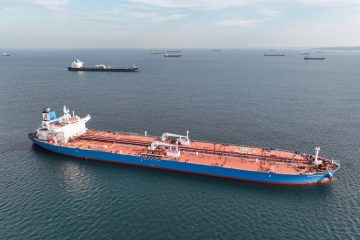
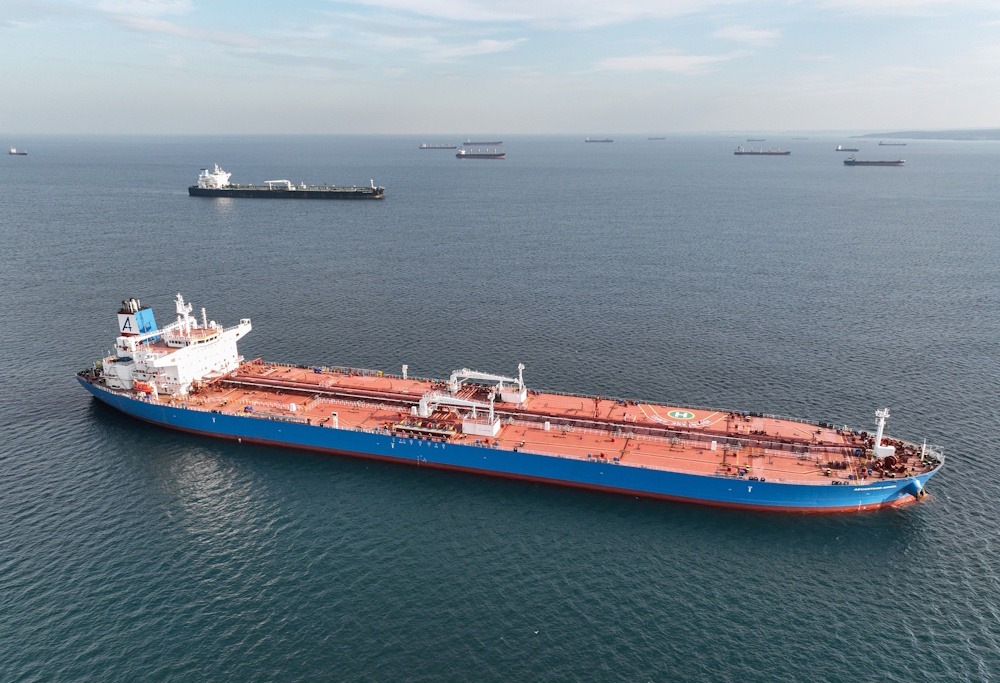
On Sunday, several analysts forecasted that oil would commence trading on Monday at over $90 a barrel, potentially nearing $100. Prices surged as a series of counterattacks inflicted damage on tankers and interrupted shipments in the Strait of Hormuz, which links Iran and Oman, connecting the Gulf to the Arabian Sea. On a typical day, vessels transporting oil that accounts for approximately one-fifth of global demand from Saudi Arabia, the UAE, Iraq, Iran, and Kuwait navigate through the Strait, accompanied by tankers delivering diesel, jet fuel, gasoline, and other fuels from their refineries to significant Asian markets, including China and India. On Sunday, shipping data revealed that over 200 vessels, including oil and liquefied gas tankers, have anchored outside the Strait. In attacks occurring in Gulf waters, three tankers sustained damage and one seafarer lost their life. Oil reduced its gains following a significant rise in early Asian trading, a shift that analysts linked to buyers incorporating a risk premium into prices in expectation of the conflict. Brent had risen over 19% this year until Friday’s close, while WTI was trading about 17% higher. “Markets are acknowledging the seriousness of the conflict, but are also signalling that, for now, this is a geopolitical shock, not a systemic crisis,” said Priyanka Sachdeva.
OPEC+ reached an agreement on Sunday to increase oil output by 206,000 barrels per day for April. “Every OPEC+ producer is essentially producing at capacity except for Saudi Arabia,” analyst Helima Croft said. On Sunday, Fatih Birol stated that the International Energy Agency is in communication with major producers in West Asia. The energy watchdog oversees the distribution of strategic petroleum reserves from developed nations in times of crisis. According to a note, globally, visible oil inventories reached 7.827 million barrels, sufficient for 74 days of demand, which is close to a historical median. Analysts anticipate that Brent will fluctuate between $80 and $90 a barrel this week due to the ongoing conflict. “Our baseline view is that the Iranian leadership changes, or that the regime changes sufficiently as to stop the war within 1-2 weeks, or the US decides to de-escalate having seen a change in leadership and set back Iran’s missiles and nuclear program over the same timeframe,” analysts wrote.
Analysts are cautioning that retail gasoline prices in the US, the world’s largest fuel consumer, could surpass $3 a gallon due to the ongoing conflict, a development that poses potential risks for Trump and his Republican Party as midterm elections approach. US gasoline futures experienced a significant increase, rising by as much as 9.1% to reach $2.496 a gallon, marking their highest level since July 2024, with the latest figures showing an uptick of 4.3%.