Oil Prices Surge to $120 a Barrel Amid Iran Conflict
Oil prices surged close to $120 per barrel before retreating on Monday as the conflict in Iran escalated, jeopardizing production and shipping in the Middle East and impacting financial markets significantly. The price for a barrel of Brent crude, the international standard, initially surged to $119.50 per barrel early in the day but later settled at $107.80 per barrel. West Texas Intermediate, the light, sweet crude oil produced in the United States, experienced a surge to $119.48 per barrel before retreating to $103 per barrel. The impact of the war on civilian infrastructure intensified as Bahrain charged Iran with attacking a desalination plant crucial for drinking water, while oil depots in Tehran burned after overnight assaults by Israel. Oil prices have surged as the war, now in its second week, ensnares countries and regions that are vital to the production and transportation of oil and gas from the Persian Gulf.
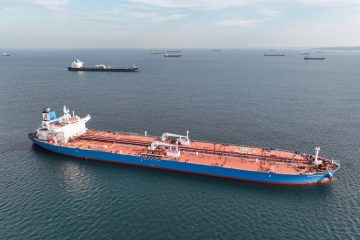
Prices moderated following a report from the Financial Times indicating that certain members of the Group of Seven industrial nations were contemplating the release of strategic oil reserves to ease market pressures. The unverified report referenced anonymous sources knowledgeable about the discussions. On Saturday, President Donald Trump minimized the notion of utilizing America’s Strategic Petroleum Reserve, asserting that US supplies were sufficient and that prices would soon decrease. According to independent research firm, approximately 15 million barrels of crude oil, which accounts for about 20% of the world’s oil, are typically shipped daily through the Strait of Hormuz. The looming danger of Iranian missile and drone assaults has effectively halted the passage of tankers through the strait, which is flanked to the north by Iran, transporting oil and gas from Saudi Arabia, Kuwait, Iraq, Qatar, Bahrain, the United Arab Emirates, and Iran.
Iraq, Kuwait, and the UAE have reduced their oil production as storage tanks reach capacity due to diminished export capabilities for crude oil. Since the onset of the war, Iran, Israel, and the United States have targeted oil and gas facilities, intensifying supply concerns. The rise in costs for oil and natural gas is driving fuel prices upward, creating a ripple effect across various industries and impacting Asian economies that are particularly susceptible due to their significant dependence on imports from the Middle East. The most recent occasion when Brent and US crude futures approached the current level was in 2022, following Russia’s invasion of Ukraine. Rising energy costs are contributing to increased inflation, placing pressure on household budgets and negatively impacting consumer spending, which is a key driver of many major economies. On Monday, Tokyo’s benchmark Nikkei 225 index experienced a decline of 5.2%, with other markets also struggling. US futures experienced a decline of over 1.5%. On Friday, the S&P 500 experienced a decline of 1.3%, while the Dow faced a significant drop of up to 945 points, ultimately closing with a loss of approximately 450 points. The Nasdaq composite declined by 1.6%. On Sunday, the price of a gallon of regular gasoline in the US reached $3.45, reflecting an increase of approximately 47 cents compared to the previous week, as reported.
Diesel was priced at approximately $4.60 per gallon, reflecting a weekly rise of around 83 cents. Chris Wright, in an appearance stated that US gas prices would return to under $3 a gallon “before too long.” Wright added “Look, you never know exactly the time frame of this, but, in the worst case, this is a weeks, this is not a months thing.” If oil prices remain above $100 per barrel, certain analysts and investors suggest it may be more than the global economy can bear. Authorities in Iran reported that Israeli strikes on oil depots in Tehran and a petroleum transfer terminal early Sunday resulted in the deaths of four individuals. Israel’s military stated that the depots were utilized by Iran’s military for fuel to launch missiles. Mohammad Bagher Qalibaf, the speaker of Iran’s parliament, cautioned that the war’s repercussions on the oil industry would escalate. Iran exports approximately 1.6 million barrels of oil daily, primarily to China. Should Iran’s exports face disruption, China may need to seek alternative sources for supply, a situation that could further elevate energy prices. The price of natural gas has indeed risen during the war, although the increase is not as significant as that of oil. It was priced at approximately $3.33 for every 1,000 cubic feet late Sunday. The figure represents a 4.6% increase from its closing price of $3.19 on Friday, following a rise of approximately 11% in the previous week.